Retail security does not have to hide the display behind a solid barrier. Transparent security shutters for retail across the UAE are used in shopping malls, stores, showrooms, shopfronts, display areas, and luxury retail spaces where visibility matters after closing. Polycarbonate shutters offer one way to keep a storefront visible behind a physical barrier.
Choosing a shutter involves more than appearance. The right fit depends on the opening, frequency of use, preferred operation, installation conditions, maintenance needs, and exposure to the elements.
This guide explains where polycarbonate shutters are used and what to compare before choosing a system. It covers manual and motorized operation, installation and routine care, and weather-related considerations for retail settings in the UAE. Use these factors to choose a practical option for your storefront and daily operations.
Key Takeaways
- Polycarbonate shutters suit shopfronts and display areas where maintaining visibility after closing is important.
- Plan installation around the opening, available space, operating frequency, and the conditions at the storefront.
- Compare manual and motorized operation based on how the shutter will be used day to day.
- Keep guide rails and surrounding areas clean, inspect shutter components regularly, and use non-abrasive cleaning agents.
- Compare polycarbonate, perforated, motorized, and GI rolling shutter options against your shop’s visibility, access, and security needs.
Why Choose Polycarbonate Roller Shutters?
Polycarbonate roller shutters suit retail shopfronts where security and product visibility both matter. Across the UAE, the choice depends on what the storefront needs to show after closing.
Shopfront and Display Area Use
Retailers use these transparent security shutters for retail Dubai/UAE at shopping malls, stores, showrooms, commercial shopfronts, and display areas. They can also keep merchandise visible behind a closed barrier in luxury retail settings. Consider which products should remain in view, how the shutter fits the frontage, and whether customers need a clear view across its full width. For a window display, uninterrupted visibility may matter more than concealing stock.
Panel Strength and Impact Resistance
Polycarbonate panels are described as 250 times stronger than glass, making impact resistance a key reason retailers consider them. Listed panels are typically 2-3 mm thick. Those figures describe the material and panel thickness, not a guarantee that every shutter will withstand every impact. The assembled system, installation, and conditions at the shopfront also matter. Assess the barrier as a complete shutter rather than judging strength from material alone.
Visibility Through Shutters
Transparent panels let customers see the display while the shop is closed, unlike a solid shutter that blocks the view. This keeps window merchandise part of the shopfront after business hours. Check the display from the mall corridor or street, noting how reflections, lighting, and product placement affect visibility. Since stock remains on view, consider carefully what to place near the frontage.
Comparing Shopfront Security Options
Transparent shutters prioritize visibility alongside a physical barrier. Solid roller shutters conceal the interior, while grilles leave the shop more visually open; glass storefronts provide visibility but are not a rolling shutter. These options serve different storefront needs, so compare the display, barrier, and closing arrangement together. For combined entrance planning, automatic door options may be considered alongside the shutter.
Applicable building, fire-safety, and security requirements for UAE shopfronts depend on the project and site approvals. Polycarbonate material alone does not establish compliance. Scratched or damaged panels, obstructed guides, and dirt that reduces visibility are practical concerns. Inspect the panels and shutter components, keep guide rails and surrounding areas clean, and address visible damage before it affects operation. These steps help preserve a clear display and a functional barrier.
Maintenance teams should always ensure moving parts remain clear during routine checks. The PolyClear Max polycarbonate shutter is listed with 75% visibility transmission. Individual panels make repairs fast, easy and economical if damage occurs.
For expert installation and reliable service backed by Sahara Doors & Metals LLC, contact us today to secure your retail space with premium transparent solutions.
Installation and maintenance considerations
Accurate measurements and suitable mounting help a shutter fit and operate properly. Plan installation around the opening, access, and intended controls.
Measurement, Fitting, and Controls
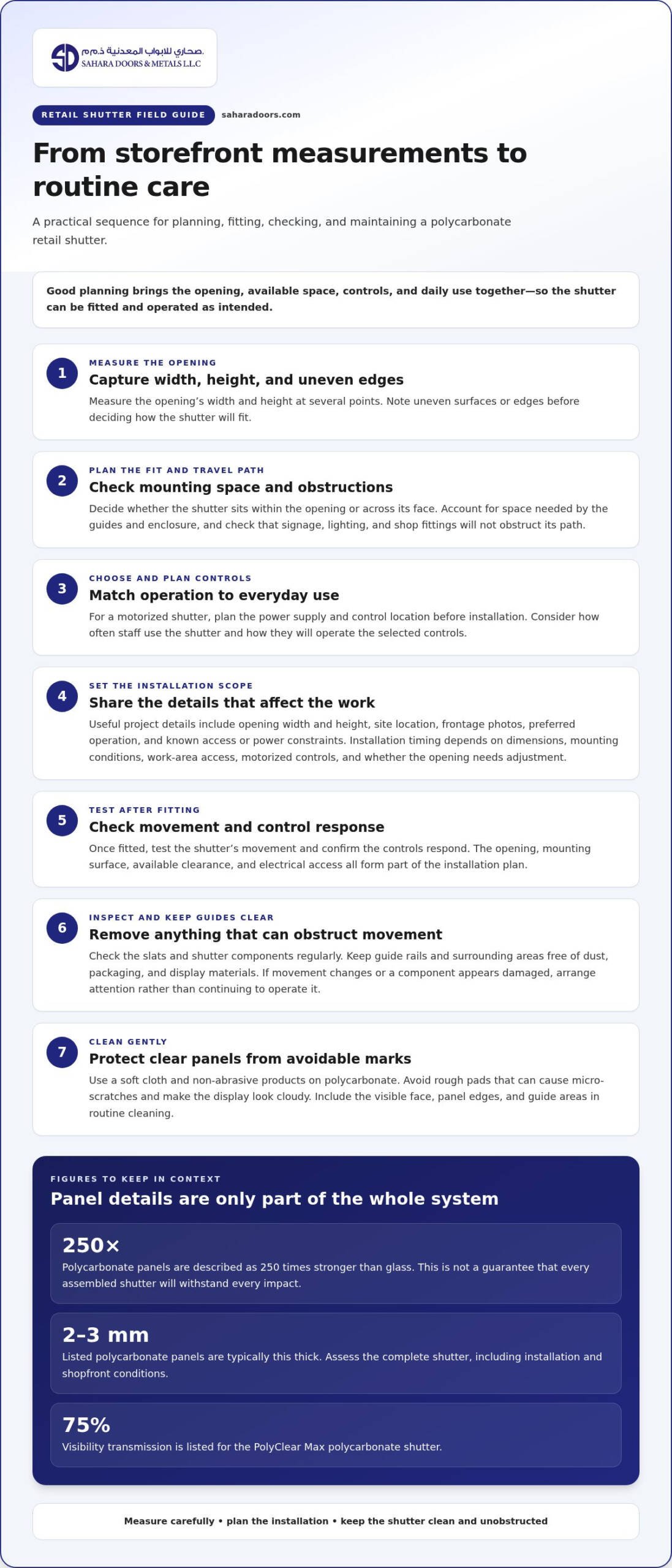
Measure the opening’s width and height at several points, and note uneven edges or obstructions. Record whether the shutter will sit within the opening or across its face, as this affects the space required for the guides and enclosure. Ensure the shutter has a clear path without catching on signage, lighting, or shop fittings.
For motorized operation, include the power supply and control location in the installation plan. The motor raises and lowers the shutter, while the selected controls determine how staff operate it. Review the opening dimensions, mounting surface, available clearance, and electrical access together before fitting.
- Measure the full opening and note uneven surfaces.
- Identify obstructions, mounting space, and the shutter’s travel path.
- Plan motor power and control locations before installation.
- Test movement and control response after fitting.
Installation Timing and Quote Details
Installation time depends on the opening dimensions, mounting conditions, work-area access, and whether motorized controls are included. A straightforward shopfront opening calls for different preparation from a site with restricted access. The work also depends on whether the opening is ready for fitting or needs adjustment first.
To request a useful UAE quote, provide the opening width and height, site location, frontage photos, preferred operation, and any known access or power constraints. Explain how often staff use the shutter and whether installation needs to coordinate with other shop work—such as when working alongside interior fit-out specialists like rightsolutionuae.com to align storefront elements with the broader store layout. These details help define the system and installation scope. Pricing depends on the project and is provided after a quote request; opening size, installation conditions, and operation all affect it.
Routine Care for Durability
Regular care helps maintain smooth movement and clear panels. Inspect the shutter slats and components, and keep guide rails and the surrounding area clean. Dust, packaging, or display materials can obstruct the rails, so clear the path before operating the shutter. If movement changes or a component appears damaged, arrange attention rather than continuing to use it.
Clean polycarbonate surfaces with a soft cloth and non-abrasive products to reduce the risk of micro-scratches. Avoid rough pads that can mark the panel and make a retail display look cloudy. Include the visible face, edges, and guide areas in the cleaning routine. Regular inspection and gentle cleaning support durability without harsh treatment, especially at shopfronts that open and close frequently.
Manual, motorized and remote-controlled operation
Polycarbonate roller shutters can use manual, motorized, or remote-controlled operation. Choose by considering opening frequency, staff routines, and how the storefront is accessed.
Manual Operation for Straightforward Use
A manual shutter is operated directly by the user. It can suit a shopfront opened and closed occasionally, where staff can easily reach the operating point. Consider who will operate it and whether its size and daily use make manual operation practical. A small boutique with one closing shift may have different needs from a shop that opens its frontage repeatedly throughout the day.
Manual operation may be straightforward, though it requires staff involvement. Set a clear opening and closing procedure, and keep its travel path clear. Staff should notice changes in movement rather than force a shutter that appears obstructed. This supports consistent daily use while recognizing that manual operation is not right for every opening.
Motorized and Automatic Operation
A motorized shutter uses a motor to raise and lower the curtain. Powered operation can be more convenient when staff open and close the frontage repeatedly as part of their routine. Before choosing this option, consider electrical access, control placement, and who needs permission to operate the system. These details determine how well motorization fits the shop.
Motorized operation does not automatically mean remote control. Controls can be arranged around the user’s routine, and remote-controlled options allow operation from a distance. Polycarbonate rolling shutters are available with remote-controlled operation. Selected motorized systems can also be compatible with access-control systems, coordinating shutter operation with an established entry arrangement.
Choosing the Right Control Method
Compare the options against the shop’s daily workflow, not convenience alone. A manually operated shutter may suit an opening used infrequently, while motorized operation can better fit repeated daily use. A remote control lets staff operate the shutter without standing at its control point. The right choice depends on how the entrance is used and where operators need to be.
- Manual: Direct operation by staff at the shutter.
- Motorized: Powered movement through a control arrangement.
- Remote-controlled: Operation through a remote control.
For a shopfront anywhere in the UAE, map the opening routine from staff arrival through closing. Note the operator, control location, and electrical access, then match those needs to the system. The polycarbonate rolling shutter options can help frame that comparison around the storefront’s material and operation requirements.
Shutter options for shops and warehouses
Retail shops across the UAE can choose polycarbonate rolling shutters for clear visibility, or perforated shutters for partial visibility. Solid shutters suit openings where concealing the interior matters more than displaying merchandise.
Start by defining the shopfront barrier’s purpose. Polycarbonate panels keep merchandise visible while the shutter is closed. Perforated shutters have openings that offer partial views and ventilation alongside a physical barrier. A solid shutter conceals the display, which may suit stockrooms or shopfronts where visibility after closing is not needed.
Warehouses often prioritize durability and rapid access over display visibility. MS or high-speed shutters are typical options for those needs, while retail outlets commonly consider polycarbonate or aluminium shutters when visibility matters. The distinction is practical: a warehouse entrance may serve frequent movement of goods, while a mall shopfront may need to keep products visible when closed.
- Polycarbonate: Keeps a retail display visible behind a closed shutter.
- Perforated: Provides partial visibility and ventilation with a physical barrier.
- Solid: Conceals the interior, useful where display visibility is unnecessary.
- High-speed or MS: Suits warehouse priorities such as durability and rapid access.
Before choosing, assess the opening size, frequency of operation, required security, wind exposure, electrical supply, installation space, and maintenance needs. These factors work together. For example, frequent use and limited installation space can influence the system choice as much as appearance. Wind exposure also matters when comparing options for an exposed frontage.
A polycarbonate shutter may suit a retailer who wants the display visible after closing. A perforated shutter may be a better fit for a storefront that needs partial visibility and airflow. For warehouse access, compare options based on traffic patterns and operating speed. Match the shutter to the opening’s daily purpose rather than choosing by material or appearance alone.
MS or high-speed shutters are typical options for warehouses that need durability and rapid access. Perforated roll-up shutters are suited to retail outlets, shopping centres, commercial stores, showrooms, and high-end retail spaces. This distinction helps separate shopfront applications from warehouse access needs when comparing styles. Where airflow and a view through the barrier matter, slotted roll-up shutters provide ventilation, partial visibility, and a physical barrier. Consider these features alongside how much concealment the opening requires.
Noise may also factor into a shopfront or commercial-space comparison. Sahara Doors & Metals LLC notes that polycarbonate shutters generally operate more quietly than traditional steel shutters. This can be considered alongside visibility and the opening’s daily purpose, without replacing assessment of security and installation requirements. Industry standards also indicate these shutters can be integrated with fire-rated roller shutters for enhanced protection. When considering that option, weigh visibility, ventilation, operating characteristics, and protection requirements for the specific opening. Retail and warehouse needs differ, so compare the stated features with how the entrance or frontage is used.
UV stabilization and weather resistance
For an outdoor-facing shopfront in Dubai, assess sun exposure and weather conditions alongside visibility. UV stabilization and weather resistance describe different considerations, so review them separately when comparing shutter materials.
What UV Stabilization Means
UV stabilization refers to material treatments intended to limit the effects of ultraviolet exposure. Not every polycarbonate panel has the same treatment or performance. For a storefront exposed to direct sun, review product information that identifies the panel’s UV protection and intended use. Transparency alone does not indicate resistance to prolonged exposure.
Use the actual frontage as your reference. A shaded mall entrance and an exposed shopfront in direct sun have different conditions, even in the same city. That difference can affect which material information matters most. Consider whether clear visibility needs to be maintained over time, and include the display’s position and lighting in your assessment.
Assessing Weather Exposure
Weather resistance involves more than one feature. A shop shutter faces conditions around its opening, including wind exposure and the space available for installation. A sheltered entrance and an exposed frontage may call for different considerations. Note the opening’s orientation, surrounding buildings, and whether the shutter sits inside or outside the shopfront line. These details help describe the site accurately.
Assess the shutter as a complete system rather than judging the panel alone. Guides, fixing points, and the installation arrangement affect how the shutter fits the opening. Keep the intended use in view: a display frontage needs clear visibility, while a service entrance may prioritize other functional requirements. A material description alone does not prove performance in every site condition.
Practical Checks Before Selection
Before choosing a shutter, make a short site record. Note direct sun exposure, wind exposure, opening dimensions, and nearby obstructions. Photograph the shopfront in daylight, then review what customers can see through the display area. For a Dubai retailer, this simple comparison helps connect material choices with the actual frontage, rather than relying on appearance alone.
Review the panel’s product information and care instructions as part of the specification. Include cleaning methods, inspection needs, and the exposure the shutter is intended to handle. For routine care, use non-abrasive products on polycarbonate to avoid micro-scratches. Cleanliness also affects visibility: residue on a clear panel can obscure merchandise even when the shutter is operating.
Compare stated material properties with your storefront’s exposure and use. A west-facing shop, a covered mall unit, and a warehouse entrance have different conditions. Choose based on the actual opening, desired visibility, and maintenance routine, not a broad weather-resistance label alone.
Sahara Doors & Metals: GI Rolling Shutter
Sahara Doors & Metals helps retailers across the UAE match shutter options to storefront priorities. Choose a Polycarbonate Rolling Shutter when merchandise visibility matters, or consider a Perforated Rolling Shutter for partial visibility. A GI Rolling Shutter is an alternative when a transparent display is not the priority. For a frequently operated entrance, a Motorized Rolling Shutter offers powered operation.
Before selecting, bring together the opening measurements, preferred visibility, operating routine, and site conditions. This gives a clear basis for comparing shutter types against the needs of a Dubai shopfront or UAE commercial space.
Contact Sahara Doors & Metals to discuss a shutter for your retail opening, or visit saharadoors.com.
Choose a Shutter That Fits Your Next Retail Move
Your storefront may change as displays, opening routines, or security priorities evolve. Choose a shutter around the job it needs to do today, while considering how the entrance is used during busy periods and after closing. For retailers assessing transparent security shutters for retail in Dubai and the UAE, the next step is to match visibility and operation to the actual shopfront.
Sahara Doors & Metals offers GI Rolling Shutter, Motorized Rolling Shutter, and Polycarbonate Rolling Shutter options. Share the opening dimensions, preferred visibility, and operating needs when discussing your project. These details help focus the conversation on a suitable shutter category for your storefront.
A considered choice can support a more functional storefront and a display that works for your business. Contact Sahara Doors & Metals to discuss the right shutter for your opening.
Frequently Asked Questions
Where are polycarbonate shutters commonly used?
Polycarbonate shutters are commonly used at retail storefronts, shopping malls, showrooms, commercial shopfronts, and display areas. They suit businesses that want merchandise visible behind a closed barrier, such as a fashion display or product showcase. Transparent security shutters for retail in the UAE help keep products in view after closing. The right application depends on the frontage and what the business chooses to display.
Which materials and specifications offer the best security, visibility, and durability?
No single material or specification is best for every opening. Polycarbonate panels are described as 250 times stronger than glass, and listed panels are typically 2-3 mm thick. Those figures alone don’t establish the security of a complete shutter. Consider the assembled system, opening, and intended use together. For visibility, inspect the finished panel and display under the shop’s actual lighting, not just a sample.
Which UAE suppliers and installers provide transparent retail security shutters?
Sahara Doors & Metals LLC manufactures and installs rolling shutters in the UAE, including polycarbonate options for storefronts. Its range also includes GI, motorized, and perforated rolling shutters, allowing businesses to compare visibility and operation. For transparent security shutters for retail in the UAE, prepare the opening dimensions and describe how the frontage is used. This helps focus the discussion on a suitable shutter category.
What maintenance, cleaning, warranty, and repair services do transparent shutters need in the UAE climate?
Keep the shutter guides clear, inspect moving components, and clean polycarbonate with non-abrasive products to reduce surface scratching. Sahara Doors & Metals offers annual maintenance contracts for rolling shutters. Warranty coverage depends on the written terms supplied with the selected system; keep those documents for reference. If damage or unusual movement appears, do not force the shutter. Arrange a qualified assessment before continuing to use it.