An aluminum roof may sound like the obvious choice, but material alone won’t tell you how well a shade system fits your outdoor space. With aluminum vs fabric retractable pergolas, the key difference is how the roof provides coverage: an aluminum system may use fixed or adjustable roof components, while a fabric system uses a canopy that retracts to open the space to the sky.
It’s worth weighing structure, flexibility and upkeep before choosing, especially when the amount of sun and the way you use the area vary throughout the day. The right option depends on whether you want a more defined overhead structure or a canopy you can draw back when you want an open-air setting.
This guide compares structure, shade control and maintenance, then covers the project details that shape your decision, including space, intended use and preferred operation. You’ll come away with practical criteria for assessing your options and planning a tailored retractable pergola shade solution.
Key Takeaways
- Understand how a rigid aluminum structure differs from a movable fabric canopy, and why the roof design matters to everyday use.
- Compare aluminum vs fabric retractable pergolas by structure, adjustability, visual openness and maintenance. Separate general material traits from system-specific details.
- Match the shade approach to how people use the space, whether it’s a residential patio or a shared commercial area.
- Assess coverage needs, desired control, visual style and access around the structure before settling on a solution.
- Sahara Doors & Metals offers retractable pergola shades in manual and motorized options, with project requirements shaped through site surveys.
Aluminum vs. Fabric Retractable Pergolas: What Is Actually Different?
The comparison can sound like a choice between two competing roof materials, but it often involves two separate decisions: what supports the structure and what provides overhead shade. An aluminum pergola uses a rigid frame as its primary structure. A fabric retractable pergola describes a shading arrangement with a movable fabric canopy supported by a structure beneath it. The frame and canopy don’t have to be made from the same material.
That distinction matters because “aluminum” alone doesn’t tell you whether the roof is fixed or adjustable, and “fabric” doesn’t specify how the canopy moves. Systems vary in configuration and operation. The Pergola Wikipedia article offers general background on pergola forms and materials, but a specific system’s features depend on its design.
How an aluminum pergola system provides shade
The frame forms the supporting structure overhead, connecting the vertical supports and carrying the roof components. Depending on the design, the roof may be fixed or use adjustable elements. These are broad system possibilities, not features shared by every aluminum pergola. The frame material describes part of the construction; it doesn’t establish how much shade the roof provides or how it responds to particular site conditions.
For example, a fixed roof and an adjustable one can offer different levels of control, even if both use aluminum in the structure. Look at the roof configuration separately from the frame. This keeps the comparison focused on the actual design rather than assumptions about performance.
How a fabric retractable pergola changes coverage
A retractable fabric canopy changes how much of the overhead area is covered. It can be extended to provide shade or drawn back to open the space above. The supporting frame remains the structural element, while the canopy is the movable shading component. The fabric and operating mechanism vary by system, so neither should be assumed from the word “fabric.”
Think about the practical effect. If people use a patio for dining at some times and prefer open sky at others, retracting the canopy can change the coverage. The degree of adjustment depends on the selected design. A fabric shade doesn’t mean the whole structure retracts, just as an aluminum frame doesn’t automatically mean its roof moves.
In short, aluminum vs fabric retractable pergolas isn’t always a direct comparison of like-for-like systems. One term may describe the frame; the other describes the canopy and its movement. When assessing a design, identify each component: the supporting structure, the overhead shade element and how that element operates. This makes it easier to compare what a system actually does and distinguish general material characteristics from features that depend on its configuration.
How Aluminum and Fabric Pergola Systems Differ in Everyday Use
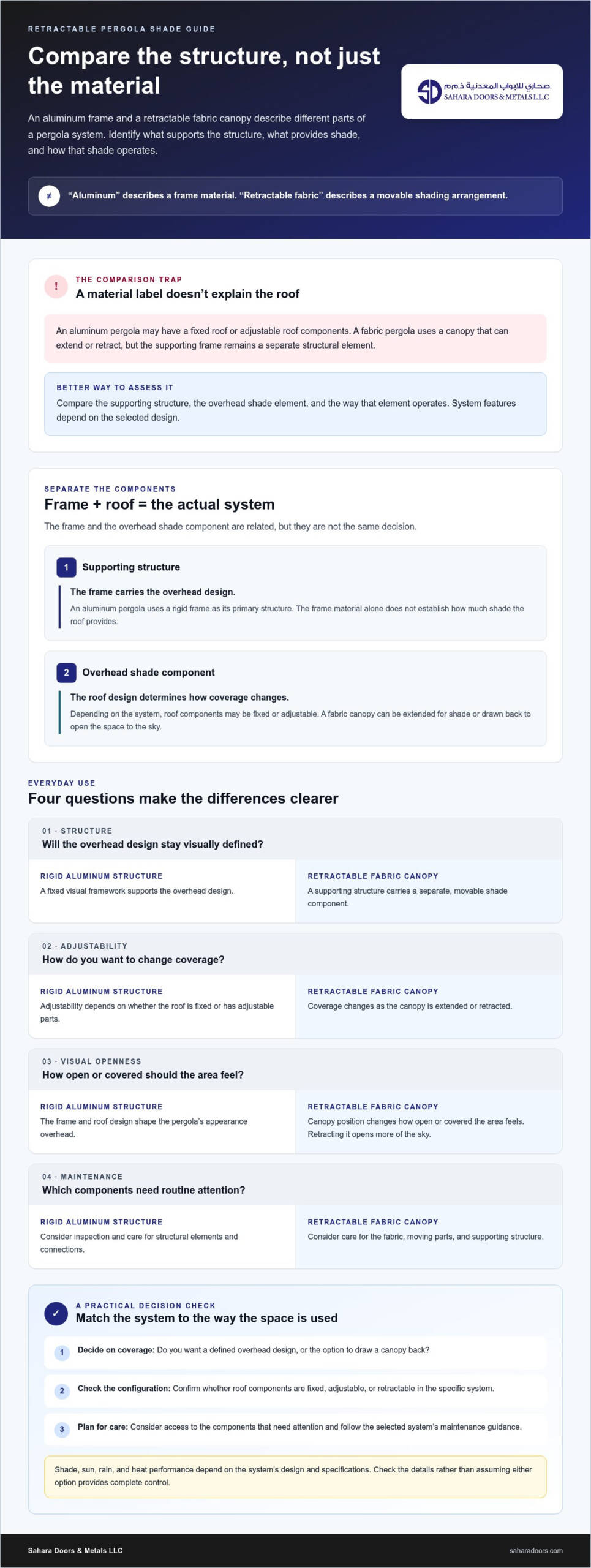
Material labels don’t tell the whole story once a pergola is in use. An aluminum frame describes a structural element, while a retractable fabric canopy describes a way to change overhead coverage. The details below compare general considerations, not fixed promises. Operation, finish and care requirements depend on the selected system.
| Everyday consideration | Rigid aluminum structure | Retractable fabric canopy |
|---|---|---|
| Structure | A fixed visual framework supports the overhead design. | A supporting structure carries a separate movable shade component. |
| Adjustability | Depends on whether the roof configuration is fixed or has adjustable parts. | Coverage changes as the canopy is extended or retracted. |
| Visual effect | Frame and roof design shape the pergola’s appearance overhead. | Canopy position changes how open or covered the area feels. |
| Maintenance questions | Consider the inspection and care needed for structural elements and connections. | Consider care for the fabric, moving parts and supporting structure. |
Aluminum is used in construction for characteristics such as its relatively light weight and corrosion resistance; Advantages of Aluminum in Construction provides general material context. Those characteristics don’t establish the performance of a particular pergola. A fabric canopy’s behavior likewise depends on its design and specifications, not simply on the fact that it retracts.
Shade control, openness, and visual effect
A rigid frame maintains a defined presence above the space, while a movable canopy lets users alter how much of the roof area is covered. Retracting the fabric opens more of the sky; extending it changes the overhead coverage and the light entering the area. The result depends on canopy size, position and system design. Don’t assume either option provides complete control of sun, rain or heat without checking the system specifications.
Cleaning, inspection, and ongoing care
Ongoing care varies with the pergola’s materials, design and exposure. A fabric system calls for attention to the canopy and its moving components; a rigid structure calls for attention to accessible structural elements and connections. These are useful areas to consider, not a universal maintenance schedule. Follow the maintenance guidance for the selected system rather than applying a routine intended for a different design.
Before choosing, consider who will handle routine checks and whether the components needing attention are accessible once installed. For a shared space, a clear care plan helps staff understand what to observe and where to find the system’s maintenance instructions. In a home setting, the same planning keeps care practical without assuming one material always needs less attention.
The right system depends on the balance you need between structure and adjustable coverage. In the aluminum vs fabric retractable pergolas comparison, focus on how the system works in your space, not just the material named in its description.
A site survey can connect those everyday priorities to your layout and intended use. Discuss your retractable shade requirements with Sahara Doors & Metals as part of planning a tailored solution.
Which Retractable Pergola Suits Your Space and Project Priorities?
Choose around the job the shade needs to do, not the material label alone. Start with four priorities: how defined you want the overhead structure to look, whether coverage should change, how open the area should feel, and who will use it. A home patio used for occasional dining has different day-to-day demands from a shared outdoor area used by customers, residents or staff.
Then consider the site. Measure the usable area, note nearby doors and circulation routes, and identify potential fixing points. An arrangement that fits a clear patio could obstruct a walkway or access route in a busy shared space. Site dimensions, attachment conditions and patterns of use all shape which design is practical. Record these details before settling on a system.
When a rigid aluminum-led design may fit the brief
A rigid aluminum-led design may suit a project where the overhead structure is a prominent architectural feature and a consistent roof outline is a priority. That preference alone doesn’t establish suitability: the selected system, site conditions and fixing points still matter. Consider how the structure will sit alongside the building and whether its footprint works with the routes people use. This describes a general design approach, not a specification for Sahara’s retractable shades.
When adjustable fabric coverage may fit the brief
A retractable fabric canopy may suit users who want to change how much of the overhead area is covered. For instance, someone might prefer more open sky at one time and more shade during another part of the day. A fabric canopy can offer that adjustment, depending on its design and operation. The Fabrics in Construction Guidelines provides broader construction context, but isn’t a pergola specification guide.
Residential projects often turn on how a household uses its patio, whether for dining, relaxing or moving between indoor and outdoor areas. In commercial or shared spaces, consider circulation, the number of people using the area and how the shade will be operated during regular activity. Sahara’s retractable shades are available in manual and motorized options. The preferred operation depends on the project and how users interact with the shade.
Keep vehicle shade as a separate brief. A parking area has different layout and coverage needs from a patio, so it may call for a dedicated car-park shade solution rather than treating a pergola as a substitute.
For a tailored decision, record the space dimensions, fixing locations, access routes, typical users and preferred level of shade adjustment. Sahara Doors & Metals can use a site survey to assess the setting and develop a customized retractable shade solution. Discuss your outdoor shade requirements as part of planning the project.
How to Choose Between Aluminum and Fabric Retractable Pergolas
A clear decision starts with the site and the people who’ll use it. Work through this checklist, then use the details to guide a project survey and compare system specifications with your priorities.
- Describe the space and its use. Note whether it’s a residential patio, commercial setting or shared-use area. Record the activities beneath the shade, who uses the space and how people move through it.
- Map the site. Measure the area you want to cover and note nearby walls, doors, access routes and potential fixing conditions. Include surrounding structures that may affect the layout, so the proposed design can be assessed in context.
- Set your coverage preference. Decide whether you want a more defined overhead structure or the ability to change the covered area. Think through when users prefer shade and when they’d rather have open sky above them.
- Choose the desired operation. Consider how often the shade will be adjusted and who will operate it. Sahara’s retractable shades are available in manual and motorized options, so include your preferred operating method in the project brief.
- Record the visual and practical details. Note the finish and overall appearance you want, plus any access or integration considerations. Separate preferences from technical requirements, which depend on the selected system and site conditions.
Assess the site and intended use
Usage patterns can change what matters most. A household may want the shade to support outdoor dining while preserving easy movement between a patio and the home. In a shared commercial space, consider the routes customers or staff use, how the shaded area fits into daily operations, and who will adjust the system. These observations help distinguish a design preference from a practical site requirement.
Bring measurements, photographs and notes about access and fixing conditions to the survey. They won’t replace a technical assessment, but they provide a useful starting point for discussing the layout and intended use.
Compare operation, customization, and support
Manual operation may suit users who expect to adjust the shade occasionally and want a straightforward control method. Motorized operation may be preferable when users value powered adjustment. The right choice depends on how the system will be used and the project requirements. Don’t assume the operating method determines the canopy material or frame design; evaluate each system detail separately.
Consider how the finish and structure should complement the surrounding building. Customization can inform design discussions, while a site survey and technical support help shape a tailored solution. Sahara provides site surveys, technical support and customized solutions for shading projects. Include the selected system’s specifications and care guidance in your planning rather than relying on general assumptions about a material.
A useful comparison starts with site needs, then evaluates system details. With dimensions, access, use patterns and operating preferences clearly recorded, it’s easier to weigh aluminum vs fabric retractable pergolas against your project requirements.
Plan a Retractable Pergola Shade Solution with Sahara Doors & Metals
Once you’ve compared the choices, turn your priorities into a project brief. Sahara Doors & Metals supplies, installs and maintains retractable pergola shades as part of its wider shading-solutions portfolio. Its retractable shades are available in manual and motorized options, with the approach shaped around the site and how people will use the space.
That distinction matters in the aluminum vs fabric retractable pergolas discussion: a comparison can clarify what you value, but the project plan should be grounded in actual site conditions and the requirements of the selected system. A site survey gives the team an opportunity to assess the space and plan a customized solution based on the project, rather than assumptions about materials or performance.
From site survey to a tailored shade plan
A survey connects your intended coverage with the available space, access around the structure and the way the area is used. It also brings site conditions into installation planning early. Share layout constraints, nearby structures and access considerations that could affect shade placement or movement beneath it.
Customization should respond to the project brief. That might mean clarifying the area to cover, preferred operation and how the shade fits the surrounding design. Sahara’s installation, technical support and post-handover support help carry the plan from assessment into use. The aim is a considered solution for your requirements, not a blanket claim that one material or system suits every space.
What to prepare before discussing your project
A few practical notes make the first project discussion more focused. Gather approximate coverage dimensions, describe the space’s everyday use and note when users want shade or prefer an open overhead area. Include access routes and visible fixing conditions, such as nearby walls or other structures. These details help inform the site survey; they don’t replace a technical assessment.
- Area and layout: Note approximate dimensions, boundaries and anything that could affect access or placement.
- Use patterns: Explain who uses the space and what activities take place beneath the shade.
- Operating preference: Consider whether manual or motorized operation better suits the people who’ll use the system.
- Design priorities: Describe the look you want and how the shade should relate to the surrounding building.
If the project also involves covering vehicles, treat that as a separate requirement with its own layout and use considerations. Sahara provides car-park shade solutions for vehicle-shading needs, distinct from planning a pergola shade for an outdoor living or shared-use area.
Bring these notes to a site survey, then use the discussion to refine coverage, operation and project details. It’s a practical way to move from comparing options to planning a solution around the people and place it needs to serve.
Turn Your Shade Priorities into a Clear Project Brief
Before settling on a design, picture an ordinary day in the space. Consider how the overhead area should feel during a meal, a quiet break or a busy period, and what you’d want to change as those activities shift. This can reveal which features matter in practice and which are only appealing on paper.
Use that picture to guide your aluminum vs fabric retractable pergolas decision. Rather than choosing by material label alone, focus on the experience you want the finished space to support. A well-defined brief makes it easier to discuss the details that shape a suitable solution.
Bring your preferred outcome to the project discussion. Sahara Doors & Metals can help translate your priorities into a tailored retractable shade plan, considering the people and setting it needs to serve.
Start with how you want to use the space, then plan the shade around those priorities.
Frequently Asked Questions
What is the difference between an aluminum pergola and a fabric retractable pergola?
An aluminum pergola is described by its structural frame, while a fabric retractable pergola is described by its movable canopy. Those labels can refer to different parts of one design rather than mutually exclusive systems. A shade system, for example, can have a supporting frame and a canopy that moves across it. Compare the structure, canopy movement and intended use in the details for the specific system.
Is a fabric retractable pergola better than an aluminum pergola?
Neither option is universally better. In the aluminum vs fabric retractable pergolas comparison, a retractable fabric canopy may suit people who value changing overhead coverage, while an aluminum-led design may fit a project that prioritizes a defined architectural frame. Consider your site, preferred coverage, operation and intended use. Then assess the particular system’s specifications, since material labels alone don’t establish how it will perform.
Can a retractable pergola provide both sun and rain protection?
A retractable pergola’s protection from sun or rain depends on its canopy material, design, installation and documented specifications. Don’t assume that a shade canopy is waterproof or includes a particular drainage arrangement or weather rating. If you need protection from both sun and rain, include those requirements in the project brief and compare them with the selected system’s details and the conditions at the installation site.
How do you maintain a fabric retractable pergola?
Care for a fabric retractable pergola varies with the canopy, operating mechanism and exposure. Follow the product’s care instructions rather than using a cleaning formula or schedule intended for another system. Keep moving components clear as directed, and arrange an inspection if the canopy starts moving differently or operation becomes difficult. Paying attention to changes can help identify a concern early, without assuming a fixed service interval or lifespan.
Are retractable pergolas available with manual or motorized operation?
Yes. Sahara Doors & Metals offers retractable shades in manual and motorized options. Manual operation involves adjusting the shade by hand; motorized operation uses a powered mechanism. Think about who will use it and how often they expect to open or retract the canopy. The selected system determines its controls and operating features.
What should I measure before planning a retractable pergola?
Note the approximate dimensions of the area you want shaded, along with access routes, nearby structures and the preferred direction or extent of canopy movement. For example, record whether doors, walkways or other features sit close to the proposed coverage area. These observations give a site survey a useful starting point for project planning. Any clearances or fixing requirements depend on the installation and selected system.