Article by
Sahara Doors & Metals LLC
Leaders in rolling shutters
Did you know that selecting a budget fabric can actually double your long-term expenses before the first three years are up? In the intense heat of the Emirates, identifying the true tensile shade structures cost in UAE requires looking beyond the initial quote to evaluate material science and structural integrity. You need a solution that survives 120 km/h wind loads while meeting the latest Dubai Municipality Al Sa’fat 2.0 Silver rating standards for sustainable construction.
We agree that navigating the technical differences between PVC and PTFE membranes shouldn’t feel like a guessing game for property owners or developers. This guide promises to demystify your investment by breaking down the engineering factors and fabrication quality that drive project value in 2026. You’ll gain a clear understanding of the turnkey installation process, a direct comparison of material lifespans, and the specific criteria for choosing an industrial-grade partner who prioritizes both safety and architectural excellence. We’ll show you how to move from confusion to a durable, compliant shade solution that protects your assets for a decade or more.
Analyze why the UAE’s thermal demands and 120 km/h wind standards require specialized tensile engineering rather than standard architectural covers.
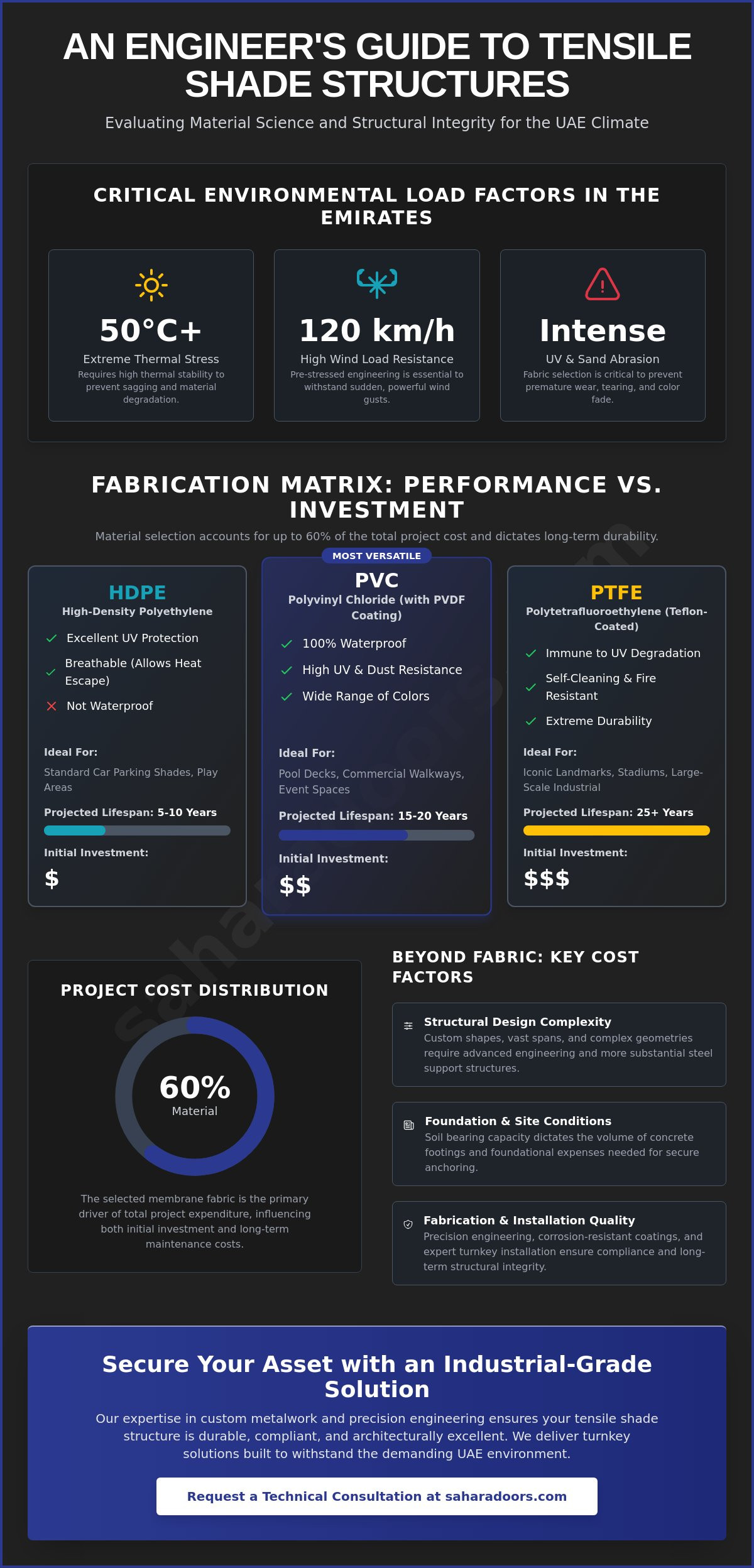
Compare the financial and functional benefits of HDPE, PVC, and PTFE membranes, which typically represent up to 60% of the total tensile shade structures cost in UAE.
Examine how structural design complexity and soil bearing capacity determine the volume of concrete footings and overall foundational expenses for your project.
Streamline your procurement process by following a technical roadmap that covers everything from initial site analysis to final industrial-grade fabrication and turnkey installation.
Understanding Tensile Shade Structures in the UAE Climate
A tensile structure is an architectural form that relies on tension to maintain its shape and stability. Unlike traditional buildings that use compressive force or heavy weight, these systems utilize high-strength membranes stretched over a rigid frame. This engineering approach is vital when evaluating the tensile shade structures cost in UAE, as the desert environment places extreme physical stress on materials. For a foundational overview of these systems, you can explore how Tensile Structures Explained by Wikipedia details their historical evolution and structural mechanics.
In the UAE, standard solutions aren’t enough. Our climate demands specialized engineering to handle summer peaks exceeding 50°C and sudden wind gusts up to 120 km/h. Desert-grade fabrics must possess high thermal stability to prevent sagging or tearing under intense UV exposure. A professional installation consists of three critical elements:
- The Membrane: High-performance fabrics like PVC, PTFE, or HDPE.
- Steel Supporting Structure: Precision-engineered frames that provide the necessary anchoring points.
- Tensioning Hardware: Specialized cables and fittings that maintain the membrane’s tautness.
The Science of Pre-stressed Membranes
Pre-stressing involves applying tension to the fabric before it encounters external loads like wind or sand accumulation. This technique eliminates the need for bulky internal support columns, allowing you to maximize usable space for car parks or commercial courtyards. Because fabrics naturally expand in extreme heat, our fabrication process accounts for material elasticity. We ensure the membrane maintains its structural integrity even during the hottest July afternoons when traditional materials might fail. This precision engineering is a key factor in the long-term tensile shade structures cost in UAE, as it prevents premature wear and structural fatigue.
Tensile vs. Traditional Shade Structures
Traditional roofing often requires heavy foundations and thick beams to support its own weight. Tensile solutions offer a superior weight-to-span ratio, covering vast areas with minimal structural bulk. This makes them ideal for modern architectural projects where aesthetics are as important as function. In high-salinity coastal environments like Dubai or Abu Dhabi, we use corrosion-resistant coatings on our steel frames. This ensures durability that outperforms wood or standard metal roofing, which often succumbs to corrosive sea air. Choosing these industrial-grade materials reduces the frequency of maintenance, providing a more stable investment for commercial developers and industrial clients alike.
Material Selection: Evaluating HDPE, PVC, and PTFE Costs
Material selection is the single most influential variable when calculating the tensile shade structures cost in UAE, often accounting for 40% to 60% of the total project expenditure. Choosing the right fabric isn’t just about the immediate price; it’s about matching the membrane’s chemical properties to your specific environmental exposure. In the Emirates, where sand abrasion and UV radiation are constant, the fabric you select today dictates your maintenance budget for the next decade.
High-Density Polyethylene (HDPE) serves as the primary choice for standard car parking shades. It’s a knitted fabric that provides excellent UV protection and breathability, allowing hot air to escape. While cost-effective, HDPE is not waterproof. If your priority is keeping vehicles cool without the need for rain protection, this material offers the highest return on investment. For projects requiring a complete weather seal, Polyvinyl Chloride (PVC) is the versatile middle-ground. PVC membranes are coated with protective layers like PVDF, making them waterproof and resistant to dust accumulation. This makes them ideal for pool decks and commercial walkways where hygiene and aesthetics are paramount.
Polytetrafluoroethylene (PTFE) represents the pinnacle of architectural membranes. This high-end industrial grade fabric is essentially a Teflon-coated fiberglass. It’s immune to UV degradation, fire-resistant, and boasts a lifespan exceeding 25 years. While the initial investment is higher, its self-cleaning properties and extreme durability make it the preferred choice for iconic landmarks and large-scale industrial projects. If you’re looking for a long-term asset, you might consider requesting a quote for custom tensile shade solutions that utilize these premium materials.
Fabric Performance and Longevity Matrix
Understanding UV degradation rates is essential for any property developer. HDPE and PVC typically offer warranties ranging from 5 to 15 years in the UAE climate, whereas PTFE remains structurally sound for over a quarter-century. The choice between waterproofing and breathability depends on your application. A “breathable” HDPE structure reduces the temperature underneath more effectively than a “sealed” PVC structure unless the latter is engineered with specific ventilation gaps. For high-traffic areas, the self-cleaning PVDF or PTFE coatings are invaluable, as they allow rainwater to wash away desert dust effortlessly.
Structural Steel and Hardware Specifications
The skeleton of your structure significantly impacts the final quote. We emphasize precision engineering in our steel fabrication, choosing between hot-dip galvanized steel and powder-coated finishes based on your site’s proximity to the coast. According to the standards found in Tensile Structure Design and Construction, the gauge of the steel must be calculated to withstand specific wind loads. In coastal areas like Dubai Marina or Abu Dhabi Corniche, we utilize Grade 316 stainless steel fittings to prevent salt-air corrosion. This level of technical excellence ensures that the hardware remains as durable as the membrane it supports.
Key Factors Influencing Tensile Shade Structures Cost in UAE
The final tensile shade structures cost in UAE isn’t determined solely by the raw price of fabric and steel. It’s a complex calculation that includes structural engineering, site-specific logistics, and legal compliance. While many contractors provide surface-level quotes, a professional fabrication partner must account for the invisible variables that ensure your structure remains standing during a Shamal. These factors distinguish a temporary cover from a permanent architectural asset.
Design complexity plays a major role in your investment. A simple symmetrical pyramid is far easier to fabricate than an asymmetrical hyper-parabolic shape. These complex designs require advanced stress analysis and precision cutting of the membrane, which increases labor hours significantly. Additionally, your property’s soil bearing capacity dictates the foundational requirements. In the sandy terrain of the Emirates, we often need larger concrete footings to resist the massive uplift forces generated by wind. This directly impacts the volume of material and excavation work required before the first steel column is even erected.
Regulatory compliance is another critical cost driver that many overlook. In Dubai, all new structures must adhere to the Al Sa’fat 2.0 Silver rating standards as a minimum requirement. Failing to obtain the necessary municipality permits can result in substantial fines ranging from AED 5,000 to AED 50,000. Ensuring your project meets these environmental and safety codes requires professional documentation and third-party structural reviews. These steps are essential for a legal, permanent installation and prevent the daily fines that accumulate for unauthorized structures.
Engineering for UAE Wind Loads
Structural safety in the Emirates requires a minimum wind resistance of 120 km/h for permanent structures. Under-engineered shades are a liability; they can fail catastrophically during seasonal storms. To guarantee safety, we follow rigorous ASCE standards for tensile structures during the design phase. This involves detailed soil reports and structural certifications. While these steps add to the initial tensile shade structures cost in UAE, they protect you from the much higher costs of property damage or total structural failure later.
Scale and Span Economics
Project size significantly influences your unit cost. Generally, the price per square meter decreases as the total area increases. This is because mobilization costs, transport logistics, and heavy machinery requirements are spread over a larger footprint. For smaller, localized needs, modular pre-designed units might be more economical. However, for large industrial or commercial sites, custom fabrication allows for optimized material usage and a more cohesive architectural appearance. Your site’s accessibility also matters; if we need cranes for high-altitude installation or specialized transport for oversized steel beams, these logistical factors will be reflected in the final project quote.
How to Plan and Procure a Tensile Shade Project
Procuring a large-scale industrial shade system is an engineering commitment that begins long before the first bolt is tightened. A structured planning phase ensures that the final tensile shade structures cost in UAE remains within budget while meeting all safety benchmarks. You should start by defining your primary functional requirements. For instance, a Car Parking Shade might prioritize UV protection and breathability, whereas a commercial entryway requires a fully waterproof Tensile Shade with a high-end architectural finish. Clear definitions at this stage prevent scope creep and ensure the materials selected are fit for purpose.
Once your goals are set, we move to a professional site survey and soil analysis. This step is non-negotiable for permanent structures in the Emirates, as the foundation must be designed to resist massive uplift forces. We then transition into preliminary design and structural load calculations, ensuring the system can handle the mandatory 120 km/h wind resistance. After engineering approval, we begin material procurement and precision fabrication, followed by a professional installation that includes meticulous tensioning calibration. This methodical approach transforms a conceptual design into a durable, industrial-grade asset that enhances property value.
Planning also involves navigating the regulatory landscape. In 2026, all new building permits must comply with the Al Sa’fat 2.0 Silver rating as a minimum requirement. This means your procurement process must include the preparation of technical dossiers for municipality approval. Failure to secure these permits before construction can lead to fines ranging from AED 5,000 to AED 50,000, which unnecessarily inflates your project’s total cost. By integrating permit acquisition into your initial timeline, you avoid legal delays and ensure your investment is fully compliant from day one. For a detailed technical consultation on your next project, request a professional site assessment from our engineering team.
Site Survey and Technical Assessment
Identifying underground utilities is the first priority before foundation excavation begins. We also measure existing structures to see if integrated shade attachments are feasible, which can reduce the need for additional support columns and lower the overall tensile shade structures cost in UAE. Determining the optimal orientation is equally vital; we analyze sun paths to ensure your structure provides maximum shade coverage during peak heat hours. This technical assessment prevents costly adjustments during the installation phase and ensures the structure performs as intended under the desert sun.
Fabrication and Quality Control
Precision is the hallmark of quality fabrication. We use computerized fabric cutting to ensure every membrane panel is sized perfectly for the required tensioning. This level of accuracy is essential because even a minor measurement error can cause sagging or over-stressing of the fabric. For waterproof PVC or PTFE membranes, we employ advanced welding techniques that create seamless, high-strength bonds. Before any component leaves our facility, we conduct pre-installation testing on tensioning hardware and steel joints to guarantee structural reliability. This rigorous quality control is what separates a specialized manufacturer from a general contractor.
Industrial-Grade Solutions with Sahara Doors & Metals LLC
Sahara Doors & Metals LLC operates as a seasoned professional in the manufacturing and construction sector, providing high-end industrial partnerships across the Emirates. Our expertise in specialized metalwork ensures that every architectural shading system we produce meets the highest standards of structural precision. We don’t just provide covers; we deliver engineered assets designed for physical protection and environmental safety. By choosing an industrial-grade fabricator, you ensure the tensile shade structures cost in UAE translates into a decade of worry-free operation through superior metallurgy and craftsmanship.
Precision engineering is at the core of our fabrication process. We tailor every Tensile Shade to meet rigorous UAE industrial standards, including the 120 km/h wind resistance requirements discussed earlier. Our team provides comprehensive support from initial custom fabrication to national installation, ensuring a seamless turnkey experience for commercial property developers and industrial clients. We also specialize in integrating these shading systems with your existing security infrastructure. Whether you are installing Steel doors or Sliding doors, we ensure the structural aesthetics and functional safety of your site remain cohesive. For facilities that require robust perimeter security alongside shade coverage, pairing your tensile structure with a GI rolling shutter UAE solution provides a comprehensive, industrial-grade barrier engineered to withstand the same punishing desert conditions.
Custom Metalwork and Fabrication Excellence
Our approach to fabrication focuses on high-durability galvanized steel structures that resist the oxidative stress of the desert. We utilize advanced welding and finishing techniques to provide long-term corrosion protection, even in high-salinity coastal zones. This technical excellence extends beyond shading; we often provide a total site protection package by naturally integrating our tensile structures with GI rolling shutters. This creates a secure, resilient entryway for warehouses and commercial facilities that balances aesthetic appeal with industrial-grade strength.
Maintenance and Long-term Reliability
Longevity is a result of both quality construction and proactive care. To prevent fabric fatigue and maintain structural tautness, we recommend periodic tensioning inspections. These assessments identify minor adjustments needed after seasonal wind events, protecting your long-term tensile shade structures cost in UAE by avoiding major repairs. Additionally, following specific cleaning protocols for your membrane type helps maintain translucency and prevents the buildup of abrasive desert sand. For those seeking a deeper understanding of the regional market, our guide on car parking shades suppliers UAE provides further resources for selecting reliable partners. We remain committed to your project’s success through transparent communication and dependable technical support.
Secure Your Investment with Precision Engineering
Investing in architectural membranes is a strategic decision that balances immediate functionality with decade-long durability. You now understand how material selection, ranging from cost-effective HDPE to premium PTFE, dictates the long-term performance and maintenance budget of your structure. Navigating the tensile shade structures cost in UAE also requires a deep commitment to municipality permits and 120 km/h wind load engineering. These technical requirements are not just regulatory hurdles; they are the essential benchmarks of a safe, compliant, and permanent installation.
Sahara Doors & Metals LLC provides specialized expertise in UAE-compliant structural engineering and in-house fabrication for every project. We’re trusted by industrial and commercial developers across the region to deliver precision quality control and reliable craftsmanship. Our team ensures that your shade system integrates seamlessly with your existing site infrastructure, providing a cohesive and secure environment. This authoritative approach guarantees that your investment remains a valuable asset for years to come.
Take the next step in protecting your assets with a durable, high-performance solution tailored to your specific site requirements. Request a Technical Consultation and Quote for Your Tensile Structure to begin your project with a dependable industrial partner. We’re ready to help you transform your space with technical excellence.
Frequently Asked Questions
What is the average lifespan of a tensile shade structure in the UAE?
The average lifespan ranges from 10 to over 25 years depending on the membrane material and maintenance quality. HDPE fabrics typically last 10 to 15 years in the desert climate, while high-performance PVC can reach 20 years. PTFE fiberglass is the most durable option, often exceeding a 25-year service life. Our precision engineering and specialized coatings ensure the steel supporting structure remains viable even longer than the fabric itself.
Do tensile shade structures require building permits from the municipality?
Yes, permanent shade structures require building permits from the relevant municipality to ensure structural safety and regulatory compliance. In Dubai, all new installations must meet the Al Sa’fat 2.0 Silver rating standards as a minimum requirement. Failing to secure these permits can lead to substantial fines, often ranging from AED 5,000 to AED 50,000. We recommend coordinating with a specialized fabricator who understands these municipal wind load requirements.
How do I choose between HDPE and PVC fabric for my project?
Choose HDPE if you require a cost-effective, breathable solution for UV protection, or PVC if waterproofing is a critical functional requirement. HDPE is a knitted fabric that allows heat to rise through the membrane, making it ideal for large car parks. Conversely, PVC is a coated, non-porous material that provides a total weather seal. This choice significantly influences the total tensile shade structures cost in UAE for your project.
Can tensile shades withstand the extreme wind speeds in the UAE?
Professionally engineered tensile shades are designed to withstand wind speeds of at least 120 km/h in the UAE. Structural integrity depends on precise tensioning and the volume of the concrete foundations. We use advanced stress analysis to ensure that every steel joint and anchoring point can handle the uplift forces generated during seasonal shamals. Under-engineered structures lack this resilience and represent a significant safety liability for property owners.
What maintenance is required to keep the fabric from sagging?
Preventing fabric fatigue requires periodic tensioning inspections and the adjustment of specialized hardware. Over time, environmental stressors like heat expansion can cause the membrane to lose its initial tautness. Our maintenance protocols involve checking the torque on tensioning bolts and inspecting steel connections for signs of wear. Keeping the membrane taut prevents sand accumulation and water pooling, which are the primary causes of structural stress and fabric failure.
Are tensile shade structures waterproof or just for sun protection?
Tensile shade structures can be either waterproof or purely for sun protection depending on the membrane type. PVC and PTFE fabrics are non-porous and provide a complete barrier against rain and moisture. HDPE is a knitted mesh designed specifically for UV blocks and thermal cooling; it is not waterproof. Selecting a waterproof membrane ensures your outdoor space remains functional during the winter rain while protecting assets from moisture damage.
How long does the installation process typically take for a commercial project?
A typical commercial project takes between 4 to 8 weeks from the final design approval to the completion of on-site installation. This timeline includes the precision fabrication of the steel frame, computerized fabric cutting, and the curing of concrete foundations. While the physical assembly of the membrane often takes only a few days, the engineering phase and permit acquisition are the most time-intensive components of the turnkey process.
Is it possible to replace the fabric on an existing tensile structure?
It is possible to replace the fabric on an existing structure if the steel frame and foundations remain structurally sound. This process is a cost-effective way to revitalize an older project without the need for new fabrication. We conduct a technical assessment of the existing steel joints and tensioning hardware before installing a new membrane. This ensures the structural integrity of the system and allows you to upgrade to higher-performance materials.