Article by
Sahara Doors & Metals LLC
Leaders in rolling shutters
Your high-performance polycarbonate rolling shutters are only as dependable as the technical care you provide. You likely chose these systems for their rare blend of industrial-grade security and unobstructed visibility, yet the threat of yellowing or surface clouding remains a constant concern for property managers. This polycarbonate shutter maintenance guide bridges the gap between basic care and professional-grade preservation. We understand that a single improper wipe or a buildup of grit in the motor housing can compromise your entire architectural investment.
It’s frustrating to watch a premium retail display lose its clarity due to micro-scratches or mechanical lag. We’ll show you how to master the chemical and mechanical requirements for long-term reliability. You’ll learn a precision-engineered cleaning protocol that protects UV-treated surfaces and discover how to shield your motorized systems against the abrasive effects of dust and sand ingress. This guide provides the technical roadmap you need to ensure your shutters remain transparent and secure well beyond 2026.
Key Takeaways
- Learn the precise cleaning sequence, including the critical pre-rinse phase, to prevent surface scratches and maintain optical transparency for retail displays.
- This polycarbonate shutter maintenance guide details how to select pH-neutral cleaning agents that protect the UV-stabilized coating from clouding or brittleness.
- Master the lubrication requirements for motorized systems, focusing on why dry silicon sprays are superior to grease for reducing friction in guide rails.
- Understand how to manage material expansion during extreme heat and implement effective sand mitigation strategies after heavy dust storms.
- Establish a professional-grade maintenance schedule that balances simple daily inspections with monthly operational testing to extend your system’s lifespan.
Understanding Polycarbonate: The Science of Your Shutter System
Polycarbonate is a high-impact thermoplastic that revolutionized the security industry by offering the visual clarity of glass combined with the resilience of industrial-grade polymers. For commercial property developers and retail managers, this material provides a “clear-view” aesthetic that allows for 24/7 product display without compromising the perimeter. Unlike traditional metal barriers, these systems use transparent slats that are virtually unbreakable, making them a preferred choice for high-end storefronts and specialized industrial entryways.
Every professional polycarbonate shutter maintenance guide must emphasize the role of the UV-stabilized coating. Manufacturers apply this microscopic layer to the surface of the slats to block harmful ultraviolet radiation. Without this protection, the polymer chains would break down, leading to the dreaded “yellowing” effect and eventual brittleness. Maintaining this layer is the most critical aspect of your long-term care strategy. While GI rolling shutters rely on galvanized zinc coatings to prevent rust, polycarbonate requires a gentler, chemistry-focused approach to preserve its optical properties and structural strength.
Why Maintenance is Non-Negotiable
Neglecting your shutter system leads to more than just aesthetic decline. In industrial zones, airborne particulates and fine dust act as a constant abrasive. If you don’t remove these contaminants, they become embedded in the interlocking hinges, causing friction that wears down the motor and the slats simultaneously. Regular care ensures the structural integrity of the entire curtain remains intact. Additionally, following a documented service schedule is often a prerequisite for maintaining the warranty on your motorized rolling shutter systems. Proactive inspections prevent minor debris from turning into a costly mechanical failure.
Material Vulnerabilities to Avoid
Polycarbonate is incredibly tough against impacts, but it’s surprisingly sensitive to certain chemicals. You must avoid harsh solvents, ammonia-based cleaners, and petroleum-based degreasers, as these can cause “crazing”—a network of fine cracks that ruins transparency. Thermal expansion is another factor; in high-temperature climates, the slats can expand significantly. If the guide rails are clogged with grit, this expansion leads to buckling or jamming. Finally, never “dry wipe” your shutters. Using a cloth on a dry, dusty surface creates permanent micro-scratches that act like sandpaper, permanently clouding your view and diminishing the professional look of your facility.
Step-by-Step Cleaning Protocol for Optical Clarity
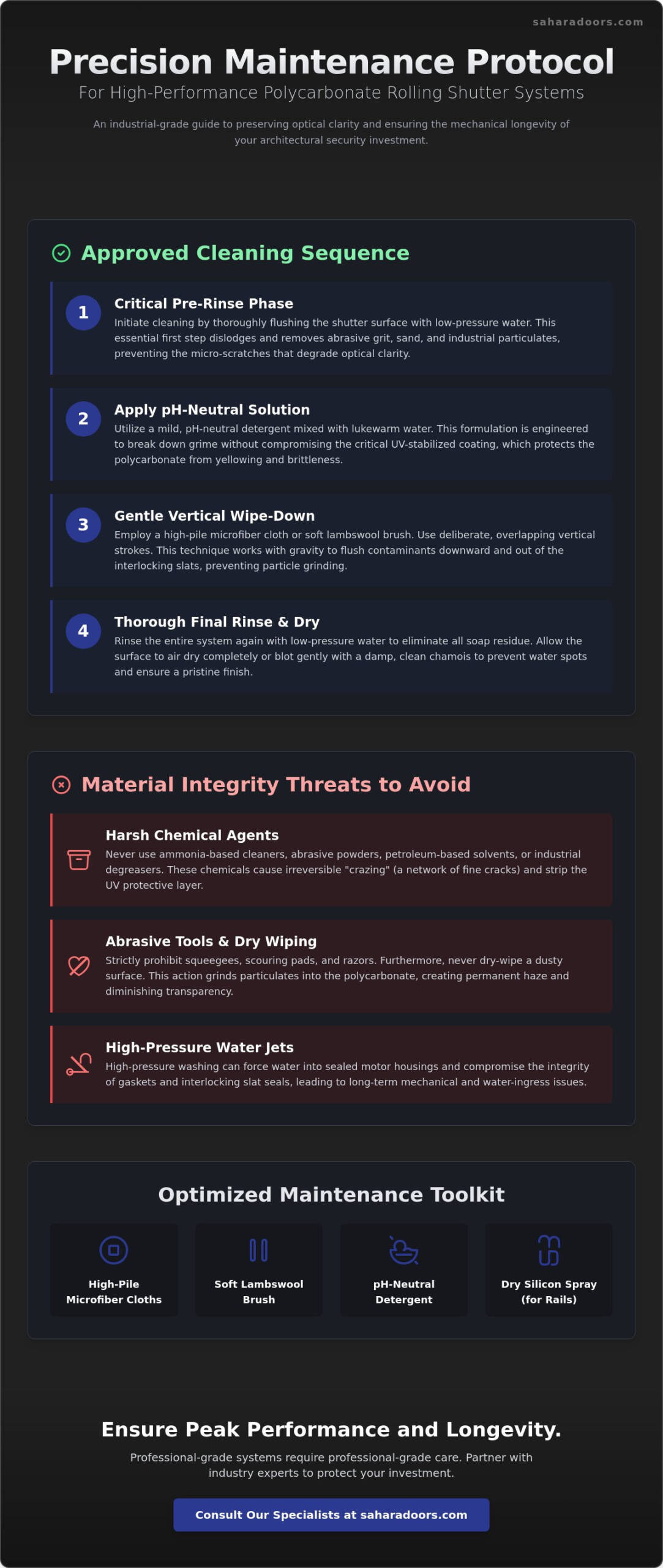
Maintaining optical clarity requires a methodical approach that prioritizes surface protection over aggressive scrubbing. The first and most vital stage of any professional polycarbonate shutter maintenance guide is the pre-rinse phase. You must use low-pressure water to thoroughly drench the slats, which dislodges surface grit and industrial dust. Never skip this step; applying a cloth to a dry, dusty surface effectively turns that dust into sandpaper, causing irreparable micro-scratches that cloud the material over time. By flushing the surface first, you ensure that abrasive particles are washed away before any physical contact occurs.
Choosing the correct cleaning agent is a matter of chemical compatibility. For standard maintenance, pH-neutral soaps are the only recommended solution. These mild detergents break down surface tension without attacking the UV-stabilized coating or the polymer structure itself. While industrial degreasers might seem efficient for heavy grime, they often contain harsh solvents that lead to “crazing” or chemical fogging. When applying the solution, use vertical strokes rather than circular motions. Gravity helps flush debris downward and out of the interlocking hinges, whereas circular scrubbing tends to trap and grind remaining particulates into the surface. If you are overseeing a facility with specialized needs, investing in high-quality polycarbonate rolling shutters from a trusted manufacturer ensures you start with a material grade designed for easier cleaning cycles.
The Essential Maintenance Toolkit
Your toolkit must reflect the delicate nature of the polycarbonate surface. We recommend using soft lamb wool brushes or high-pile microfiber cloths that can trap microscopic debris within their fibers. You must strictly prohibit the use of squeegees, abrasive pads, or high-pressure washers. Squeegees often have hard edges that can catch and drag grit, while pressure washers can force water into the motor housing or strip the protective UV layers. For the best results, use deionized or distilled water; this prevents mineral buildup and white spotting that typically occurs with “hard” tap water in industrial areas.
Dealing with Tough Contaminants
Organic matter and adhesive residues require patience rather than force. If you encounter bird droppings or organic debris, soak the area with a wet cloth for several minutes to soften the material before gently wiping it away. For adhesive residue from promotional tape, use a very small amount of isopropyl alcohol on a soft cloth, but rinse the area with fresh water immediately afterward. In commercial kitchen environments where grease buildup is common, a highly diluted mild degreaser can be used sparingly, provided it is pH-balanced and thoroughly rinsed to prevent any chemical etching of the slats.
Mechanical Maintenance: Motors, Guides, and Hinges
Mechanical reliability is the backbone of any industrial security installation. While optical clarity concerns the visual aspect of your facility, the mechanical components ensure that the system performs under pressure. A comprehensive polycarbonate shutter maintenance guide must prioritize the condition of the guide rails. These side tracks frequently accumulate grit and airborne particulates. If you don’t remove this debris, the resulting friction forces the motor to draw higher amperage, which leads to premature component burnout and erratic movement. Clean tracks are essential for the smooth, quiet operation that clients expect from high-end door systems.
Lubrication is an area where many facility managers make a critical technical error. You should never apply heavy greases or thick oils to the guide rails or hinges of a polycarbonate system. These substances act as magnets for industrial dust and sand, creating an abrasive grinding paste that destroys both the tracks and the polymer slats. Instead, use dry silicon sprays. These lubricants provide the necessary slip for the slats to glide without leaving a sticky residue. Check the alignment of the slats within the side tracks monthly. Because polycarbonate is lighter than galvanized steel, slight shifts can occur, potentially causing the curtain to bind or travel unevenly. Finally, always test the manual override and emergency stop functions to ensure they remain functional for safety compliance.
Motorized System Health Checks
Listen closely to your motor during a full cycle. A healthy system should produce a consistent, rhythmic hum. If you hear grinding, clicking, or straining, it’s an immediate indicator of bearing wear or mechanical resistance. You must also verify the limit switch settings periodically. If these switches drift, the motor may attempt to pull the curtain too far into the hood, putting excessive tension on the top slats and the barrel assembly. For those managing complex industrial entries, reviewing high speed door safety features offers valuable insights into the sensor maintenance and auto-reverse logic required to protect your personnel and assets.
Hardware and Fastener Inspection
Operational vibration is a constant force that can loosen even the most secure installations. Every quarter, you should inspect and tighten all mounting bolts, brackets, and end locks. Check the integrity of the bottom weather seal; a brittle or cracked seal allows dust ingress that compromises your interior environment. While the slats themselves are a high-impact thermoplastic, the supporting barrel and guides are typically metal. Inspect these metal components for any signs of corrosion, particularly at the contact points where moisture can be trapped against the polycarbonate. Early detection of oxidation ensures the long-term structural integrity of your specialized door systems.
Environmental Factors: Managing Heat, Sand, and UV
Environmental stressors in arid and coastal regions present a distinct set of challenges for specialized door systems. While previous sections focused on cleaning chemistry and mechanical lubrication, this polycarbonate shutter maintenance guide must address the impact of extreme ambient temperatures and abrasive sand ingress. Polycarbonate has a higher coefficient of thermal expansion than steel or aluminum. In high-heat environments, individual slats can expand significantly within the guide rails. If your maintenance routine ignores the accumulation of grit in the side tracks, this expansion leads to increased friction, causing the system to stutter or jam during operation. Precision engineering of the original installation is vital, but ongoing environmental management is what preserves that functionality over the long term.
Sand is essentially microscopic silica, making it highly abrasive to the UV-treated surface of your shutters. Coastal industrial sites face the added burden of salt air, which accelerates the oxidation of metal fasteners and barrel assemblies supporting the polycarbonate curtain. Regular freshwater rinses are necessary to neutralize salt deposits before they etch the material or corrode the underlying metalwork. Managing these factors isn’t just about aesthetics; it’s about preventing the structural degradation that occurs when environmental contaminants infiltrate the mechanical core of the system. For those looking to upgrade their facility’s protection against harsh climates, exploring a polycarbonate rolling shutter from a specialized manufacturer ensures the use of superior UV-stabilized materials designed for these extremes.
Post-Storm Maintenance Routine
After a heavy dust storm, you must perform an immediate intervention. Start with a low-pressure air blast or a soft brush to remove loose sand from the curtain roll before the shutter is operated. Rolling a sand-covered curtain into the hood causes the grains to grind against the slats, leading to permanent clouding. Deep clean the guide rails to ensure no sand remains trapped in the brush seals or tracks. Finally, inspect the motor housing; fine dust ingress can infiltrate the gear assembly, leading to overheating or electronic failure. Taking these steps immediately after a storm prevents the long-term abrasive wear that compromises both clarity and security.
Long-term UV Monitoring
Monitor your slats for visual cues of UV degradation, such as a subtle yellow tint or “crazing,” which refers to fine surface cracks. While high-quality slats feature a 10-year warranty against discoloration, extreme exposure can eventually exhaust the sacrificial coating. If you notice surface cloudiness that doesn’t wash away, the UV layer may be failing. You should never apply aftermarket “protectants” unless they are specifically approved by the manufacturer, as many contain petroleum distillates that cause the polycarbonate to become brittle. Timely monitoring allows you to decide when slat replacement is necessary to maintain the professional clear-view aesthetic of your retail or industrial space.
Professional Maintenance vs. DIY: A Balanced Schedule
A rigorous care schedule is the only way to protect the precision engineering of your specialized door systems. While earlier sections of this polycarbonate shutter maintenance guide detailed the “how” of cleaning and mechanical care, establishing the “when” is equally vital for commercial property developers and industrial clients. You don’t need a technician for every task, but you must know where your expertise ends and professional risk begins. A balanced approach ensures that minor debris doesn’t escalate into a catastrophic motor failure or a security breach at your perimeter.
For internal staff, we recommend a tiered maintenance routine that focuses on visual clarity and surface-level mechanical health:
- Daily/Weekly: Conduct a simple visual scan for fresh debris or sand accumulation in the lower guide rails. Remove any obvious obstructions that could interfere with the bottom weather seal.
- Monthly: Execute the full cleaning protocol using pH-neutral agents and vertical strokes. Perform a complete operational test; listen for the rhythmic hum mentioned in our mechanical section and verify that the slats remain perfectly aligned in the side tracks.
- Quarterly: Inspect mounting brackets and fasteners for looseness caused by operational vibration. Apply a light coat of dry silicon spray to the guides if movement feels sluggish.
There are moments when DIY care becomes a liability. You should never attempt to adjust the high-tension springs within the barrel assembly or disassemble the motor housing. These components are under extreme mechanical pressure and involve high-voltage electrical circuits. If your system exhibits erratic stopping, grinding noises, or visible “crazing” on the slats, it’s time for a professional audit. Sahara Doors & Metals LLC provides comprehensive technical inspections that go beyond surface cleaning, ensuring your installation meets the latest safety and wind-load requirements, such as those governed by evolving building codes.
The Value of an Expert Service Contract
An expert service contract transforms reactive repairs into predictive maintenance. Our technicians use specialized diagnostic tools to measure motor torque and amperage draw, identifying internal wear before a breakdown occurs. We provide professional recalibration of the motorized rolling shutter systems to ensure optimal tension across the entire curtain roll. Furthermore, we deliver detailed documentation and service logs. These reports are often essential for insurance compliance and meeting the safety standards required for high-occupancy commercial environments.
Conclusion: Investing in Longevity
Maintaining a polycarbonate system is a dual-discipline task that requires both chemical precision and mechanical awareness. By following this polycarbonate shutter maintenance guide, you protect the transparency that drives retail footfall and the industrial-grade security that protects your assets. Consistent care prevents the yellowing, scratching, and mechanical lag that diminish the value of your architectural investment. Don’t wait for a mechanical failure to address the health of your entryways. We invite you to consult with our technical team to develop a customized service plan tailored to your specific environmental challenges.
Contact Sahara Doors & Metals LLC for Professional Maintenance and ensure your specialized door systems remain clear, secure, and reliable well into the future.
Securing Your Clear-View Investment for the Long Term
Adopting a rigorous care schedule ensures your high-performance shutters continue to deliver the visual transparency and industrial security your facility requires. By mastering the precision cleaning techniques and mechanical health checks outlined in this polycarbonate shutter maintenance guide, you effectively shield your investment from the abrasive effects of sand ingress and UV degradation. Consistent attention to guide rail lubrication and motor alignment prevents minor grit from evolving into a costly system failure. It’s about maintaining a balance between diligent daily inspections and the deep technical oversight that only a specialist can provide.
Sahara Doors & Metals LLC brings over 15 years of industrial door expertise to every project. We specialize in high-durability polycarbonate systems and offer expert UAE-wide installation and support to ensure your specialized door systems operate at peak efficiency. Our technical team understands the unique environmental stressors of the region and is ready to help you implement a predictive maintenance plan that protects your property. Request a Professional Maintenance Consultation from Sahara Doors to maintain your facility’s safety and aesthetic excellence. We look forward to being your trusted partner in physical protection.
Frequently Asked Questions
Can I use a pressure washer to clean my polycarbonate shutters?
No, you should never use a high-pressure washer on polycarbonate slats. The intense force can strip the delicate UV-stabilized coating and drive moisture into the sensitive electrical components of your motorized rolling shutter. Use a low-pressure garden hose for the initial pre-rinse phase instead. This gentle approach protects the structural integrity of the interlocking slats while ensuring that mechanical parts remain dry and functional.
How often should I lubricate the guide rails of my rolling shutters?
You should inspect and lubricate the guide rails at least once every three months, though high-dust environments require monthly attention. Following this polycarbonate shutter maintenance guide ensures that you only use dry silicon sprays rather than heavy greases. Regular lubrication prevents the friction that leads to motor strain and erratic travel, keeping your specialized door systems operating smoothly without attracting abrasive sand particles.
Why are my clear shutters starting to look cloudy or yellow?
Cloudiness or yellowing typically indicates that the microscopic UV-protective layer has been compromised by harsh chemicals or extreme environmental exposure. Using ammonia-based cleaners or abrasive pads creates micro-scratches that trap light and diminish clarity. Once the polymer chains begin to break down from UV radiation, the material loses its clear-view aesthetic and becomes brittle, eventually requiring a professional slat replacement to restore the perimeter’s security.
What is the best cleaning solution for polycarbonate slats?
The best cleaning solution is a mixture of clean, deionized water and a mild, pH-neutral detergent. You must avoid any cleaning agents containing petroleum distillates, alcohol, or ammonia, as these chemicals cause permanent “crazing” on the surface. By using a soft microfiber cloth and vertical strokes, you can effectively remove industrial grime without etching the high-impact thermoplastic or damaging the protective finish of your shutter system.
Is it safe to clean motorized shutters while the power is on?
No, it is not safe to perform detailed cleaning or mechanical maintenance while the power to the motorized system is active. Always isolate the power supply at the circuit breaker to prevent accidental activation during the cleaning process. This precaution protects the operator from moving parts and prevents the motor’s electronic sensors from potential moisture ingress that could occur during the rinsing phase.
What should I do if my shutter gets jammed by sand or debris?
If your shutter jams, you must stop the motor immediately to prevent the slats from buckling or the motor from burning out. Use a low-pressure air blast or a soft brush to dislodge visible sand from the guide rails and the curtain roll. If the system remains stuck, consult a technician to inspect the internal barrel assembly, as forcing the shutter can cause permanent mechanical damage to the tracks.
Can scratches be removed from polycarbonate shutter slats?
Minor surface micro-scratches can sometimes be buffed out using specialized polycarbonate polishing compounds, but deep scratches are usually permanent. Because these shutters rely on a thin UV-protective coating, aggressive polishing can actually remove this vital layer and lead to faster yellowing. It is always better to prevent scratches by following a strict pre-rinse protocol rather than attempting to restore the surface after the damage has occurred.
How long do polycarbonate shutters typically last with proper maintenance?
Polycarbonate rolling shutters typically last between 10 and 15 years when you follow a professional maintenance schedule. Many high-quality slats come with a 10-year manufacturer warranty specifically against discoloration and UV-induced brittleness. By managing environmental factors like heat and sand ingress, you can extend the operational life of the motorized system and maintain the optical clarity of your retail display for well over a decade.