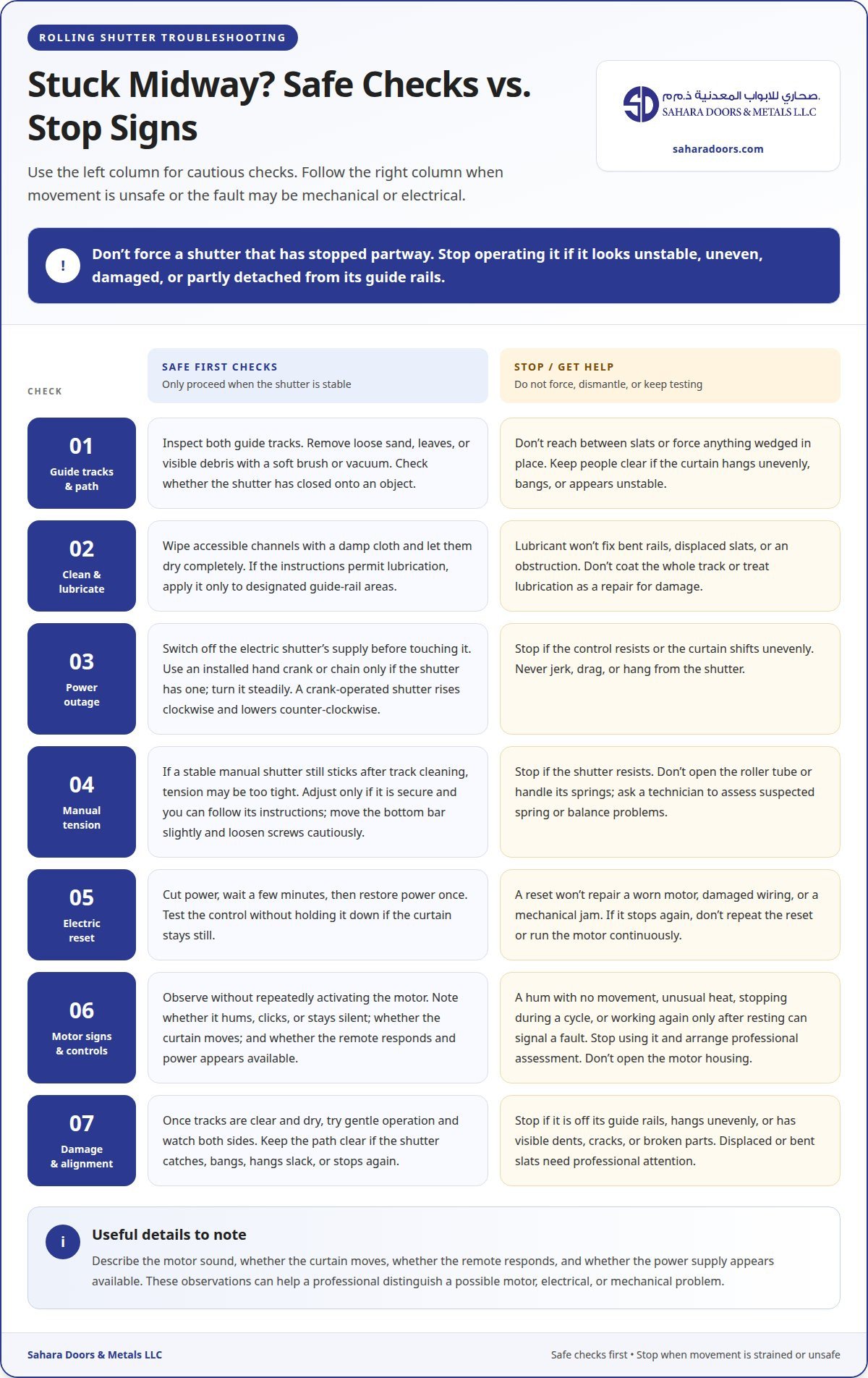
Don’t force a rolling shutter that has stopped partway. If you’re unsure what to do when a rolling shutter is stuck, stop operating it, check for visible obstructions, and clear loose dirt from the guide tracks only if the shutter is stable. An uneven, damaged shutter or one that has come off its tracks needs professional attention.
A stuck shutter can disrupt access and leave a home or business exposed. It’s understandable to want to get it moving again quickly, but forcing it can worsen a jam or misalignment.
This guide covers safe checks to try first, common reasons a shutter stops halfway, and how tension can affect a manual shutter’s movement. It also explains when to stop troubleshooting and seek professional help, particularly if the fault may involve the motor or electrical system.
Key Takeaways
- Learn how shutter tension can affect a manual shutter’s movement and why forcing a resistant curtain can make the problem worse.
- Recognize when a humming motor, overheating, or a shutter that stops at different positions may signal a fault beyond a simple obstruction.
- Use basic power, breaker, switch, and remote checks to narrow down an automatic shutter problem without repeatedly operating the motor.
- Understand when a hand crank or chain may help during a power outage, and why you should stop if the shutter remains jammed or unstable.
- See when a damaged, displaced, or off-track shutter needs professional attention, and how Sahara Doors & Metals’ roll up doors and rolling shutter options fit into the bigger picture.
What Should You Do When Your Rolling Shutter Gets Stuck?
If you’re deciding what to do when a rolling shutter is stuck, start with safe visual checks, not force. Stop operating it if it looks unstable, uneven, damaged, or partly detached from its guide rails.
-
Clear Obstructions from Guide Tracks
Inspect both guide tracks and remove loose sand, leaves, or other visible debris with a soft brush or vacuum. Check the shutter’s path for anything it may have closed onto, especially if it stops at different positions or makes a bang. Don’t reach between the slats or force anything wedged in place. Keep people clear if the curtain hangs unevenly.
-
Clean and Lubricate Channels and Rails
After removing loose dirt, wipe accessible channels with a damp cloth and let them dry completely. Dust and debris can impede the roller and contribute to misalignment. If the shutter’s instructions permit lubrication, apply it only to the designated areas of the guide rails. Don’t coat the whole track: lubricant won’t fix bent rails, displaced slats, or an obstruction.
-
Release the Shutter Manually During a Power Outage
If the power is out, switch off the electric shutter’s supply before touching it. Use an installed hand crank or chain only if the shutter has one, and turn it steadily. A crank-operated shutter rises clockwise and lowers counter-clockwise. Stop if the control resists or the curtain shifts unevenly. Never jerk, drag, or hang from the shutter.
-
Check a Manual Shutter’s Tension Carefully
If a stable manual shutter still sticks after track cleaning, the tension may be too tight. The bottom-bar screws and bar position can affect its travel. Attempt an adjustment only if the shutter is secure and you can follow its instructions. Loosen the screws cautiously and move the bar slightly. Stop if the shutter resists. Don’t open the roller tube or handle its springs.
-
Test Movement Without Forcing the Curtain
Once the tracks are clear and dry, try operating the shutter gently and watch both sides. If it catches, bangs, hangs slack, or stops again, leave it in place and keep the path clear. Knowing what to do when a rolling shutter is stuck also means recognizing when cleaning and basic checks haven’t resolved the fault. Bent rails, damage, or displaced slats need professional attention.
Motor faults, electrical issues and overheating
An electric shutter can stop partway because of a motor, electrical, or control fault. Start with safe observations, and stop operating it if movement becomes strained.
-
Avoid Force and Repeated Motor Operation
Stop pressing the control when the shutter stalls, slows, or moves unevenly. Repeated operation can put further strain on a motor already meeting resistance. Forcing the curtain by hand can shift its slats or worsen damage to the guide rails. If the shutter has closed onto an object, don’t raise it with the motor. Keep people clear until the obstruction or fault is addressed.
-
Check a Humming Motor
Listen to the motor without repeatedly activating it. A humming sound with no shutter movement can indicate internal resistance or motor wear. The curtain may also be jammed, or a drive component may not be transferring movement. Don’t open the motor housing or reach near springs and moving parts. If the power supply and remote work but the shutter remains still, stop testing and arrange a professional diagnosis.
-
Reset the Electric Shutter Motor
Cut power to the electric shutter, wait a few minutes, then restore power once. Test the control without holding it down if the curtain stays still. A reset may restore operation after a temporary interruption, but it won’t repair a worn motor, damaged wiring, or a mechanical jam. If the shutter stops again, leave it alone rather than repeating the reset or running the motor continuously.
- Watch for signs of overheating during normal operation. A motor that becomes unusually hot, stops during a cycle, or works again only after resting may be struggling. Stop using it and have the fault assessed. Repeated cycles can add strain without clearing the cause. A shutter that stops halfway may also have a control fault, motor-limit issue, or mechanical resistance. Don’t adjust internal settings without the right experience.
- Use the sound and movement together to describe the fault. Note whether the motor hums, clicks, or stays silent, and whether the curtain moves at all. Mention whether the remote responds and the power supply appears available. These observations help a professional distinguish a possible motor fault from an electrical or mechanical problem. If the shutter remains stuck or moves unevenly, stop operating it and arrange professional repair.
When to stop DIY repairs and call a professional
Stop troubleshooting if the shutter is unstable, damaged, or off its track. A professional inspection can identify the fault and guide a safe repair.
-
Call a Shutter Repair Professional
Arrange professional help if the curtain has left its guide rails, hangs unevenly, or has visible dents, cracks, or broken parts. Don’t operate a shutter with displaced or bent slats; movement can damage the slats, rails, or motor further. Across the UAE, including Dubai and surrounding emirates, Sahara Doors & Metals LLC technicians can inspect residential, commercial, and industrial shutters, identify the cause, and determine a suitable repair method.
-
Leave Spring Tension Repairs to a Technician
Ask a technician to assess suspected spring or balance problems rather than opening the shutter box. Springs and tension components affect how the curtain moves and can be difficult to handle safely. A shutter that feels unusually heavy, drops unevenly, or stops before its intended position needs inspection. Avoid replacing a manual strap or accessing the box without relevant experience.
-
Decide Whether to Repair or Replace
Have the technician inspect damaged components before deciding on repair or replacement. An individual damaged slat may be replaceable without changing the whole shutter. A rail that cannot be repaired may need professional replacement. The decision depends on the condition of the slats, rails, rollers, springs, and drive components, as well as whether the shutter can travel smoothly and remain aligned.
- Describe the symptoms clearly when arranging an inspection with Sahara Doors & Metals LLC. Note whether the shutter stopped halfway, became uneven, or made a bang, and mention any visible damage. A technician can use these details to focus the inspection on likely causes, such as worn bearings, damaged drive components, or track wear. These faults can affect balance and prevent the shutter reaching its intended position.
- Keep the area clear while waiting for the shutter to be inspected. Don’t push a displaced curtain back into its rails, straighten bent parts with pliers, or tighten components near a loaded spring. If a vehicle has struck a guide rail, mention the impact: a bent or misaligned rail can interfere with travel. Leave repairs to a technician when damage, tension, or alignment is involved.
Why does my shutter stop half way or only move a few inches?
If you’re working out what to do when a rolling shutter is stuck halfway, check its power and controls before assuming a mechanical failure. Make each check once, and stop if the curtain looks damaged or moves unevenly.
-
Check Electrical Power and Breakers
Check whether the outlet or switch supplying the electric shutter has power. If it uses a wall switch, see whether the switch responds normally. Look at the relevant circuit breaker for a trip, but don’t remove electrical covers or touch wiring. If a breaker or ground-fault circuit interrupter trips repeatedly, stop resetting it and have a licensed electrician assess the electrical issue.
-
Test Switches, Remotes, and Batteries
Try the wall switch if the remote gets no response, or test the remote if the switch seems inactive. Comparing the controls can show whether one device is causing the problem. Replace weak remote batteries, then test once. If the remote still fails, reset it through its normal controls if available. Don’t open the shutter housing to inspect internal components.
- Observe what happens after each check. If the wall switch moves the shutter but the remote does not, the remote or its batteries may be at fault. If neither control works, check the power supply and breaker before suspecting the motor. A humming sound without movement can indicate resistance or motor wear. Note whether the motor hums, clicks, or stays silent, and share that detail during diagnosis.
- If the shutter repeatedly stops at the same point, a control fault, limit switch, or incorrect travel setting may be involved. Don’t change internal settings by trial and error. A shutter that stops at different positions or moves unevenly may have a mechanical problem instead. What to do when a rolling shutter is stuck depends partly on whether the fault appears to involve its power, controls, or movement.
- Use a reset only after basic power and control checks, and only if the shutter isn’t visibly jammed or damaged. Switch off its power, wait a few minutes, restore power, and test once. If it still moves only a short distance, repeated resets won’t repair a failed component or travel setting. A practical response to what to do when a rolling shutter is stuck is to stop testing and arrange a professional diagnosis if the same fault returns.
How to release a stuck rolling shutter manually during a power outage
During a power outage, use a manual override only if the shutter has one. Follow these steps without forcing the curtain.
- Keep people away from the shutter’s path before attempting manual operation. Don’t stand beneath a curtain that is partly open, unstable, or uneven. The shutter can shift as you operate it, so keep the floor area clear. Don’t leave it halfway open while people walk underneath, even if access seems convenient.
- Turn off power to an electric shutter before touching its controls or mechanism. An outage may interrupt normal operation, but the power can return unexpectedly. Switching it off reduces the risk of the motor starting while you handle a crank or chain. Don’t touch wiring or open electrical covers.
- Find the shutter’s manual control, such as an installed hand crank or chain. Use only the control provided for that shutter, and keep your hands clear of the curtain and guide rails. If there’s no manual control, don’t pull the bottom bar or improvise a tool. Forcing the curtain can move its slats out of alignment.
- Engage the crank or chain as intended, then turn it steadily rather than jerking it. On a crank-operated shutter, turn clockwise to raise the curtain and counter-clockwise to lower it. Watch both sides as it moves. If one edge rises faster, the curtain catches, or resistance increases, stop instead of applying more force.
- Use small, controlled movements to judge whether the shutter travels smoothly. Don’t hang from the curtain, push it hard, or drag it along the tracks. Forceful movement can shift slats out of alignment and make the shutter harder to operate. Keep people clear while testing, particularly if the curtain remains partly raised.
- If the shutter remains stuck when operated with its electric controls, an installed hand crank or chain may allow manual movement. This option applies only when the shutter has a manual control and moves without unusual resistance. Don’t operate the motor repeatedly or raise a shutter that has closed onto an object.
- Stop if the manual control won’t turn, the curtain stays fixed, or the shutter appears uneven or partly detached. Leave it in place and keep the area below clear. Don’t open the shutter box or attempt spring adjustments during an outage. A shutter that won’t move needs professional assessment, not more force.
Sahara Doors & Metals: Roll up doors
Sahara Doors & Metals LLC manufactures and installs rolling shutters for homes and businesses across the UAE. If an inspection shows that a shutter is damaged beyond repair or no longer suits the opening, consider a GI Rolling Shutter, Motorized Rolling Shutter, or Polycarbonate Rolling Shutter. The right choice depends on the property, the opening, and whether manual or motorized operation suits its use. These options offer a practical next step when troubleshooting cannot restore reliable movement or replacement is more appropriate than continued use of a faulty unit. Contact Sahara Doors & Metals to discuss your rolling shutter requirements.
Choose a Clear Next Step for Your Shutter
If you’re weighing what to do when a rolling shutter is stuck, let its condition guide your next move. A shutter that remains aligned needs a different response from one with damaged slats, a strained motor, or a displaced rail. Note what changed and how the shutter behaves now so you can explain the problem clearly and make a practical decision.
Sahara Doors & Metals LLC can help you consider the next step for your property, whether the existing shutter needs attention or you’re planning a replacement. Think about how the opening is used each day, who needs access, and what type of operation suits the space. These details help you make a decision based on real use, rather than relying on a quick fix that leaves the underlying issue unresolved.
A considered next step can help you move forward with confidence. Choose the option that supports safe, dependable access for your home or business.
Frequently Asked Questions
Repair or replace?
Repair the shutter when the fault is limited to a replaceable component and the rest remains serviceable. For example, an individual damaged slat may be replaced without changing the entire curtain. Consider replacement if inspection finds damage across multiple parts or rails that cannot be repaired. A technician assesses the slats, guide rails, rollers, springs, and drive components to determine whether a targeted repair can restore safe, balanced movement.
What should I do if the shutter is stuck halfway?
Keep the area beneath a partly open shutter clear and treat the opening as out of use. From a safe distance, look to see whether the curtain hangs level or one edge sits lower. Note whether it stopped with a bang, became slack, or landed on an object. These details help distinguish a likely obstruction from a movement or alignment problem. Don’t let people walk beneath the curtain while you arrange the next step.
Why does my crank just click and the shutter won’t go up?
A clicking crank that doesn’t raise the curtain can indicate that the drive isn’t transferring movement or that the shutter is meeting resistance. Check whether the crank turns freely, but don’t force it or dismantle its housing. A jammed curtain, damaged drive component, or broken manual strap can prevent lifting. If the clicking continues without movement, stop using the crank and describe the sound and any recent impact during inspection.
Why has my shutter become so heavy to lift?
A shutter that suddenly feels heavier may have a balance problem, worn bearings, damaged drive parts, or misalignment. Compare its movement with how it operated before, but don’t compensate by pulling harder. Extra force can worsen strain on the curtain and guides. If the weight changed gradually, mention that pattern. If it became heavy after an impact, report that too. The timing helps narrow down which components need inspection.
Why won’t my manual shutter go up?
A manual shutter may fail to rise because its strap is broken, the curtain is obstructed, or its movement is out of balance. Look for a visibly frayed or separated strap without opening the shutter box. A broken strap is a common manual-shutter repair, but replacing it without experience isn’t recommended. If the strap appears intact, note whether the curtain is level or catches on one side, then stop if lifting requires force.
Why won’t my motorized shutter respond to the remote?
A weak remote battery or faulty remote can prevent a motorized shutter from responding. Replace the batteries and test the remote once, then compare its response with the wall switch if one operates the same shutter. If the wall switch works, the remote is the likely control issue. If neither control works, check the power supply and breaker. If the remote still fails after a battery change, arrange further diagnosis instead of pressing the buttons repeatedly.
How can I safely troubleshoot a stuck rolling shutter step by step?
Start by keeping people clear of the shutter’s path. Observe whether the curtain is level, partly detached, or visibly damaged. Check accessible guide tracks for loose debris, then check the power and controls if it’s motorized. Test a remote battery or wall switch without repeatedly running the motor. Stop if you notice unusual resistance, clicking, or uneven movement. Record what happened and when so the inspection can focus on the relevant fault.
What causes an electric rolling shutter to get stuck?
An electric shutter can stop because of a power interruption, a remote or control fault, motor wear, or a mechanical obstruction. Incorrect travel settings or a faulty limit switch can also stop it in the wrong position. Overheating may interrupt a cycle, while damaged slats or rails can prevent smooth movement. A humming motor with a stationary curtain points to resistance or wear, but the sound alone doesn’t identify the exact failed component.