Could a well-meant clean make your pergola harder to operate? It can if the care routine doesn’t suit the roof or mechanism. Knowing how to maintain a retractable pergola starts with identifying whether it has a fabric canopy or a louvered roof, then cleaning and checking each with care.
It’s reasonable to wonder which cleaning methods are suitable, whether leaves or dust could affect movement, and when a concern calls for technical support. A simple, repeatable routine helps keep dirt and debris in check without treating every pergola the same. The right approach also depends on whether the shade operates manually or by motor.
This guide explains how to clean fabric and louvered roofs, inspect visible parts, and operate your system carefully. You’ll also learn when to stop rather than force a mechanism that doesn’t move smoothly. Sahara Doors & Metals LLC manufactures, supplies and installs customized retractable pergola shades, with manual and motorized options, for outdoor spaces.
Key Takeaways
- Learn how to maintain a retractable pergola with care suited to its roof type and operating method.
- See how fabric canopies and louvered roofs differ in their cleaning focus and visible checks.
- Follow a gentle cleaning sequence that starts with the product instructions and avoids unnecessary force.
- Build a recurring visual check around debris, movement, visible damage, and accessible drainage.
- Choose a retractable pergola shade with a roof type and controls suited to your outdoor space.
Why retractable pergola maintenance matters for everyday comfort
A retractable pergola changes how an outdoor area feels as the roof opens or closes. Dust, fallen leaves and other debris can make the space less pleasant and may obstruct moving parts if left to collect. A thoughtful routine helps you spot visible concerns and keep everyday operation smooth, without dismantling the structure.
Retractable pergola maintenance means gentle cleaning, visual inspection and careful operation guided by the product instructions. It does not mean forcing or dismantling components.
The word “pergola” covers structures with different forms and materials. The Pergola Wikipedia article provides a general overview. For care, the key distinction is whether your roof is a fabric canopy or retractable louvers. Their surfaces and moving elements differ, so don’t automatically apply one cleaning method to both. Identifying your roof type is a practical first step in learning how to maintain a retractable pergola.
Which parts of a retractable pergola need routine attention?
Start with what you can see and reach safely: roof surfaces, accessible tracks or joints, operating controls, and any accessible drainage points. Check the product instructions before cleaning or inspecting moving parts, since the approved approach can differ by system. A visual check means noticing debris, visible wear or unusual movement. It doesn’t mean removing covers, tightening hardware or adjusting components.
Why generic pergola cleaning advice can fall short
A retractable roof needs attention not only to its surface but also to how it moves. Fabric canopies and louvered roofs have different surfaces and components, so a method suitable for one may not suit the other. Pergolas can also differ in materials, drainage design and operating method. Use the instructions for your system rather than assuming every pergola follows the same care schedule.
Keep routine care within clear limits. If movement becomes unusual, a component looks damaged, or the roof doesn’t respond as expected, stop operating it rather than pushing through resistance. Cleaning and observation can help you identify a concern, but they aren’t repairs. For technical issues, use Sahara Doors & Metals LLC’s technical support. This keeps routine checks manageable and separates basic upkeep from adjustments that need support.
How fabric and louvered retractable pergola roofs differ
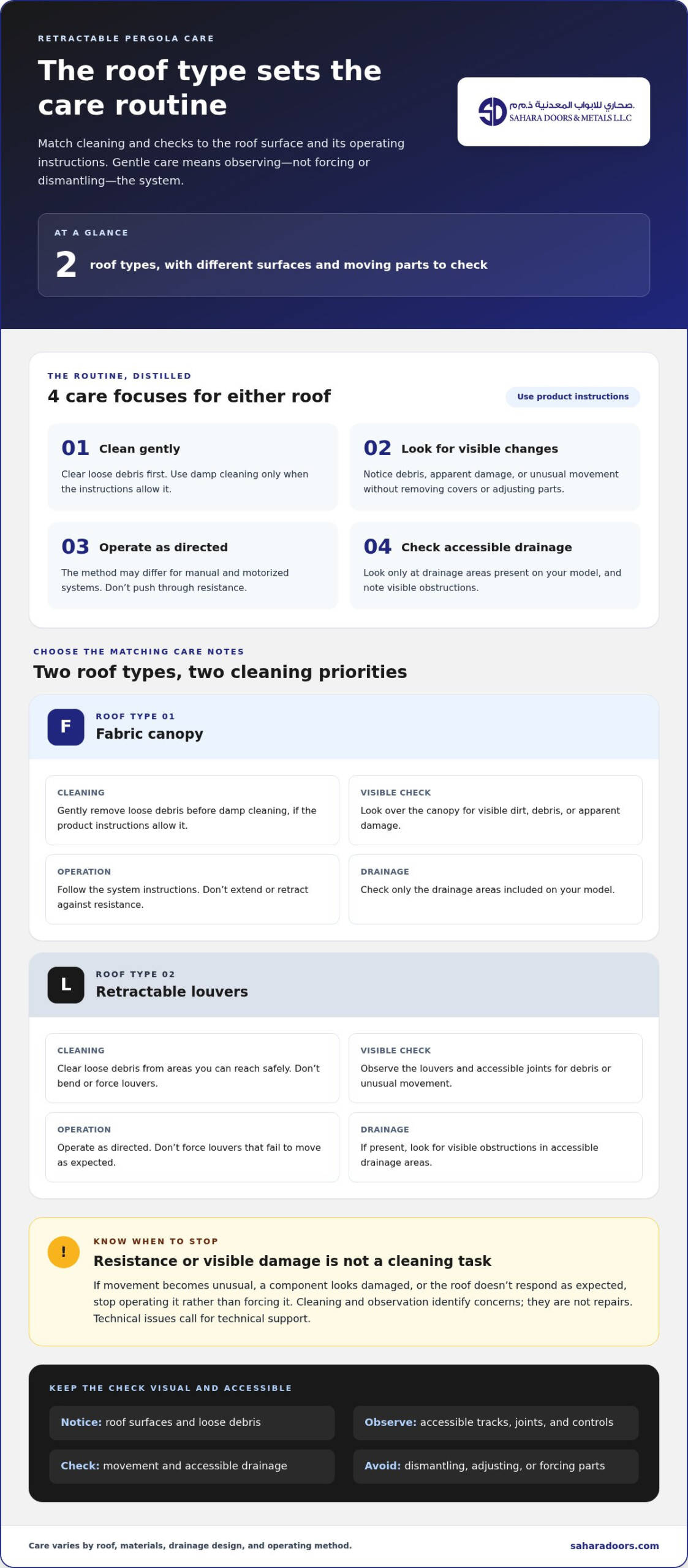
A fabric canopy and a retractable louvered roof both adjust the shade above an outdoor space, but their surfaces and moving parts call for different attention. The roof type shapes the care routine because fabric and louvers collect debris differently and need different visual checks. Follow your product instructions for cleaning and operation.
Sahara Doors & Metals LLC supplies and installs retractable pergola shades, including fabric canopies and retractable louvered roofs. The comparison below covers practical care considerations without assuming every model has the same materials, drainage features or operating method.
| Care focus | Fabric canopy | Retractable louvered roof |
|---|---|---|
| Cleaning | Gently clear loose debris before damp cleaning; follow product-specific instructions. | Remove accessible loose debris without bending or forcing the louvers. |
| Visible checks | Look over the canopy for visible dirt, debris or apparent damage. | Observe the louvers and accessible joints for visible debris or unusual movement. |
| Operation | Use the system as instructed; don’t retract or extend it against resistance. | Operate as directed and don’t force louvers that fail to move as expected. |
| Drainage | Check only the drainage areas present on your model. | Look for accessible drainage areas, if present, and visible obstructions. |
Caring for a retractable fabric canopy
Begin by gently removing loose surface debris so it doesn’t get rubbed into the canopy during cleaning. If damp cleaning is appropriate, use only the method allowed by the product instructions. Follow the same instructions for drying and retracting the canopy. Don’t assume a cleaner, treatment or drying approach is suitable just because it’s used on another fabric roof.
Caring for a retractable louvered roof
Clear loose debris only from areas you can safely reach, taking care not to bend or force the louvers. During a visual check, notice whether the roof moves as expected and whether accessible drainage areas, if present, appear obstructed. Routine cleaning isn’t the time to adjust parts or attempt repairs unless the product instructions specifically describe that task.
The same principle guides how to maintain a retractable pergola: match each cleaning and inspection step to the roof and its operating instructions. If movement feels unusual or you notice apparent damage, stop rather than forcing the system. Sahara provides technical support and customized solutions. Its retractable pergola shade options include different roof types for outdoor spaces.
How to clean a retractable pergola without damaging it
A careful clean removes dirt without putting unnecessary strain on the roof or its operating parts. The safest method depends on the product instructions, roof type and whether the system is manual or motorized. Don’t treat a retractable pergola like a fixed patio surface: water, tools and cleaning methods that suit one area may be unsuitable for another.
What to prepare before cleaning
Before starting, identify whether the roof is fabric or louvered and read the product’s cleaning and operating instructions. Make sure you can reach the areas safely without climbing or leaning across moving parts. Remove loose leaves and surface debris before adding water, and protect controls or powered components from water exposure that the instructions don’t permit.
A gentle cleaning sequence for roof surfaces
Use the sequence below as general guidance, adjusting each step to the product instructions. A soft cloth or brush and mild cleaning are starting points, not permission to use a method the instructions rule out.
- Check the instructions. Confirm which surfaces may be cleaned, how the roof should be positioned, and whether rinsing or particular drying steps are allowed.
- Clear loose debris. Gently remove accessible leaves, dust and other loose material while the roof is in the position specified for cleaning. Don’t pull at anything caught in a joint or track.
- Clean with a light touch. Use a soft, non-abrasive cloth or brush and mild cleaning only if permitted. Work across accessible areas without scrubbing aggressively or pressing on fabric, louvers or moving components.
- Rinse only if allowed. Follow instructions on whether rinsing is suitable and how to keep water away from controls or powered parts. Don’t use a pressure washer, harsh chemicals or abrasive tools unless the product instructions explicitly permit them.
- Inspect after cleaning. Look for remaining debris, visible damage or changes in movement. Follow the product’s guidance for drying and operating the roof again.
For a fabric canopy, don’t assume a cleaner or drying method intended for another fabric is appropriate. For louvers, clean only reachable surfaces and avoid bending or forcing individual parts. If debris is lodged somewhere you can’t safely reach, leave it rather than trying to disassemble the roof.
Stop if the task requires removing components, using unusual force or reaching beyond a safe position. Also stop if the roof moves differently than expected during a permitted check. Cleaning is routine care, not a repair. Follow the product instructions for next steps when a problem appears. These limits are a practical part of how to maintain a retractable pergola carefully, keeping cleaning separate from technical adjustments.
For outdoor shade planned around your space and preferred operating method, explore Sahara’s retractable pergola shade solutions.
Build a simple inspection and maintenance routine
A useful routine doesn’t need a universal cleaning timetable. Set a recurring reminder for a visual check, then follow the manufacturer’s instructions and account for the weather exposure your pergola receives. After dusty or windy conditions, for example, look for leaves or debris around the roof or accessible drainage areas. The aim is to notice changes, not take the system apart.
What to look for during a routine check
Use the pergola’s intended control for a normal operating check, following the product instructions. Whether your system is manual or motorized, pay attention to how it moves and to anything that looks different from usual. Keep observations simple and don’t treat a visual check as permission to adjust components.
- Look for visible dirt, leaves or other debris on accessible roof surfaces and around moving areas.
- Notice whether the roof opens and retracts smoothly using its intended control.
- Check for apparent damage, visible wear or anything that seems out of place.
- Look at accessible drainage areas, if present on your model, and note any visible obstruction.
Checklist rule: observe and record what you notice. Don’t adjust, tighten or repair parts unless the product instructions specifically guide you to do so.
When to stop operating the pergola and seek support
A change in movement is a reason to pause, not apply more force. Stop operating the roof if it sticks, makes an unusual sound or shows visible damage. Don’t try to push a manual system through resistance or keep activating a motorized system in the hope that it will clear itself. For an unfamiliar sound or movement, refer to the product instructions before taking further action.
Keep a brief note of what you observed, such as whether the issue occurred while opening or retracting, and whether debris or visible damage was present. This gives you a clear record without requiring you to investigate internal parts. If the instructions don’t resolve the concern, contact Sahara Doors & Metals LLC technical support. Don’t dismantle the system or attempt a repair as part of routine maintenance.
To learn how to maintain a retractable pergola consistently, pair visual checks with product-specific care instructions and respond to changes before normal operation becomes a struggle. Keep the routine straightforward: look, operate only as directed, and stop if something seems wrong. This helps distinguish ordinary upkeep from a technical issue that needs support.
Choose retractable pergola shades designed for practical outdoor use
Good care starts with a shade that suits how you use the space. Think about when you want cover, how often you expect to adjust the roof, and which operating method feels practical for everyday use. These choices also shape your care routine, since the roof type and controls determine which instructions you’ll follow.
Sahara Doors & Metals LLC manufactures, supplies and installs retractable pergola shades, including fabric canopies and retractable louvered roofs. These shades protect outdoor areas from sun, heat, rain and insects, and can improve outdoor comfort. A tailored solution starts with your space and priorities rather than a one-size-fits-all recommendation.
Match the shade type and controls to everyday use
Consider how you want the roof to function during a typical day. Fabric canopies and louvered roofs have different surfaces and care considerations, so choose the type that fits your intended use and follow its product-specific instructions. Think about whether you want to adjust the shade occasionally or operate it regularly as conditions and activities change.
Operation is another practical choice. Manual operation lets you move the shade by hand, while motorized options can be controlled by remote control, wall switch or smartphone. Select the method that suits the people using the space and how you want to operate the roof. In either case, follow the instructions and don’t force it if movement feels unusual.
- Consider how the roof type fits your preferred balance of shade and open sky.
- Choose a control method that feels straightforward for the people using the outdoor area.
- Keep care instructions for the selected roof type accessible for future cleaning and checks.
Make the next step straightforward
When planning a tailored shade, describe the outdoor space, how you plan to use it and your preferred way to operate the roof. Mention whether you’re considering a fabric canopy or retractable louvers. These details help shape a solution around your project and its specific requirements.
Sahara manufactures, supplies and installs retractable pergola shades, bringing your requirements into the planning of an outdoor shade. A clear discussion of roof type, everyday use and controls helps you make a considered choice. Once installed, follow the product instructions for cleaning and operation, and use the inspection routine in this guide to notice changes without attempting adjustments or repairs yourself.
With the right roof and controls for your space, a retractable pergola shade can make an outdoor area more adaptable while protecting against sun, heat, rain and insects. Choose based on your intended use, then care for the system according to its specific instructions.
Plan an outdoor space that works for you
Let your everyday plans shape the next step. Think about how you want the outdoor area to feel during a typical day, who will use it and how the shade should fit into the space. For broader inspiration on how overhead structures harmonize with surrounding features, exploring project portfolios such as Nu Scape Designs can help you visualize a cohesive, low-maintenance environment. A clear picture of your priorities makes it easier to choose a solution that suits everyday use as well as the finished look.
Knowing how to maintain a retractable pergola is part of making an informed choice, but a good starting point is a shade that suits your routine. Consider what you value most in the space, then select a roof style and setup around those needs. Keep the product instructions close at hand so care guidance remains easy to follow.
A well-planned outdoor shade can help make time outside more comfortable and inviting. Explore a roof style and operating method suited to your space.
With a thoughtful choice and attentive everyday use, your outdoor area can become a more welcoming part of home life.
Frequently Asked Questions
Can I use a pressure washer to clean a retractable pergola?
Don’t use a pressure washer unless the product instructions explicitly allow it. High-pressure water may damage surfaces or reach areas not intended for water exposure. For a dusty roof, first remove loose debris and use gentle cleaning only as directed. Keep water away from controls and powered components unless the instructions permit exposure. If pressure washing isn’t addressed, choose a gentler cleaning method.
Should I lubricate the moving parts of a retractable pergola?
Lubricate moving parts only if the product instructions call for it and identify the appropriate method. A product that suits one mechanism may not suit another, and adding lubricant without guidance can attract debris or interfere with operation. If a hinge, joint or track seems stiff, don’t oil it by guesswork. Pause use and refer to the instructions or Sahara technical support for next steps.
Can I operate a motorized pergola shade during a power outage?
Whether a motorized shade has a manual release or another backup depends on the specific system, so don’t assume it can be moved by hand during an outage. Check the product instructions for an approved procedure. Until you know what they allow, leave the roof in place rather than pulling on the canopy or louvers, which could damage the mechanism.
Do retractable pergola shades protect against insects?
Retractable pergola shades protect against insects, as well as sun, heat and rain. This is a comfort benefit, not a guarantee that an outdoor area will be completely insect-proof; openings around the space may still let insects in. If insect protection is a priority, consider how the roof and any side shades or screens fit the layout, and follow the instructions for each part. For spaces requiring total barrier protection alongside shade, looking at specialized designs from North Florida Screen Enclosures shows how dedicated patio covers and screen systems can create a fully enclosed environment.
Should I retract a pergola shade when strong weather is expected?
Follow the product’s weather guidance rather than assuming one roof position is right for every system. Check the instructions for the recommended position for your roof type and the expected conditions. Fabric canopies and louvered roofs may have different directions. Don’t operate the shade in conditions the instructions warn against, or leave it partly moved unless that position is specifically allowed. Contact Sahara technical support if you need guidance.
What should I do if my retractable pergola stops moving smoothly?
Stop operating it, and don’t repeatedly press the control or pull harder. Note whether the issue occurs while opening or retracting, which control you used, and whether visible debris or damage is present. Don’t reach into the mechanism to investigate. Refer to the product instructions or contact Sahara technical support for guidance. Sharing these observations helps describe the issue without attempting an adjustment or repair.
Can I leave a retractable pergola unused for a long period?
Before leaving it unused, prepare it according to the manufacturer’s instructions instead of choosing a roof position by habit. Clear accessible debris, look for visible damage and leave the shade in the position the instructions recommend. When you return, inspect the area before operating it, then test it only as directed. If movement seems unusual, stop and seek technical support rather than forcing it.