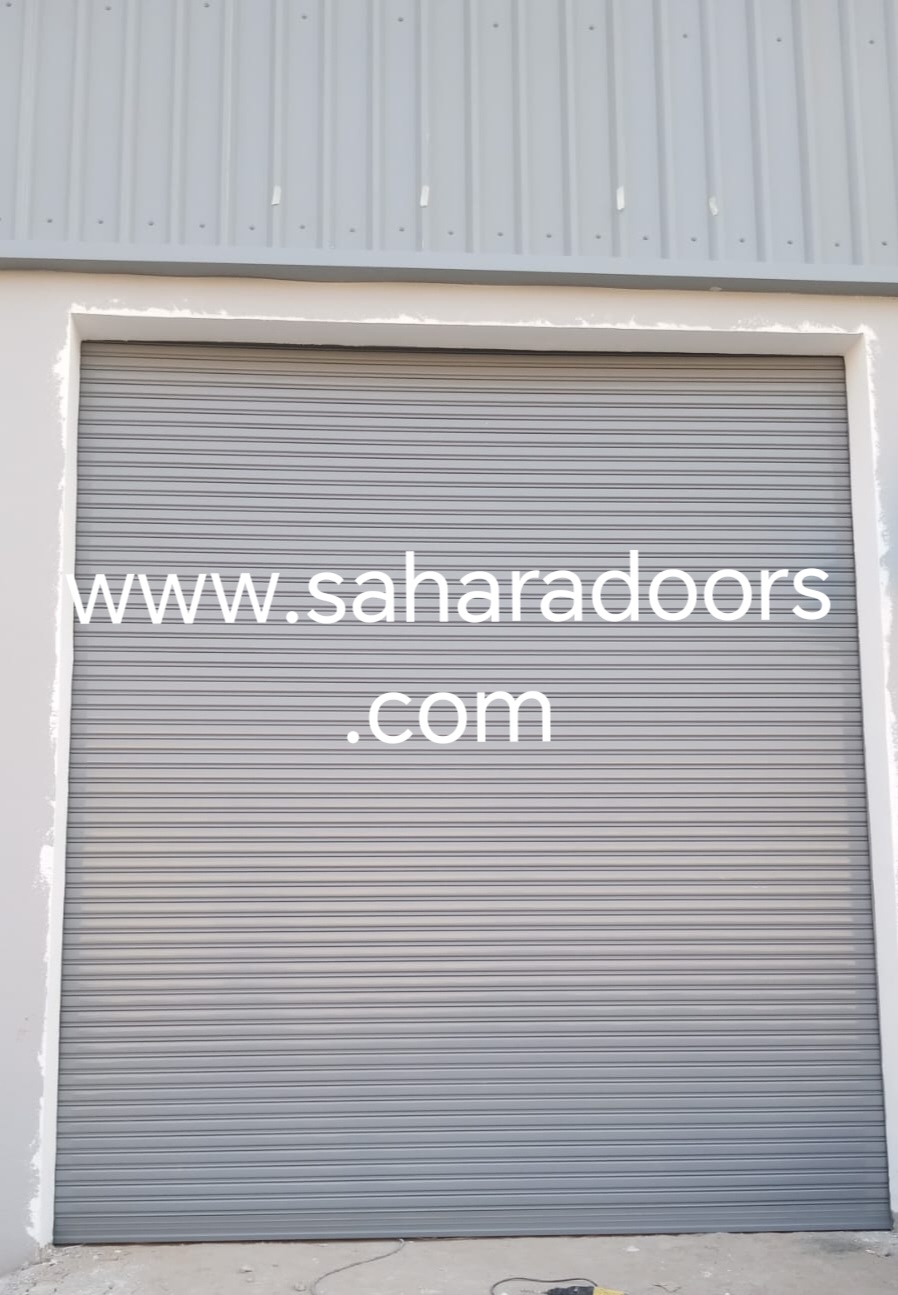
The slats matter as much as the manual mechanism: rolling shutters use interlocking steel or aluminium slats, while sectional doors use panels. For manual rolling shutters across the UAE, choose based on the opening, how the property is used and the conditions the shutter will face.
It’s easy to focus only on how a shutter opens, but its material and curtain design also determine whether it suits a home, shop or warehouse. Heat, dust, wind and coastal humidity across the UAE make these practical details important.
This guide compares shutter types, explains the main cost factors and shows how to measure an opening and assess its use. You’ll also find practical points for choosing a shutter that fits your property and performs reliably in local conditions.
Key Takeaways
- Match shutter construction to the property’s needs, whether it’s a home, shop, warehouse or another commercial space.
- Understand how materials, opening size and operating requirements affect the overall cost before comparing options.
- Measure the opening and plan for the shutter box and guide positions to support a suitable installation.
- Consider how heat, dust, wind and coastal humidity affect shutter performance and ongoing care.
- Compare interlocking slats and other curtain designs to choose a shutter that fits your priorities for visibility, access and protection.
Applications across commercial and residential properties
Across the UAE, a shutter’s role depends on the opening and the activity behind it. A shopfront may need a barrier after trading hours, while a villa may need a shutter for a garage or another external opening. Warehouses and workshops have different priorities, such as frequent access through a larger opening. Start by identifying what the shutter needs to separate, protect or screen.
Commercial properties may have openings with different daily routines. A retail shop might close its street-facing entrance overnight but keep an internal service opening in regular use. A warehouse may need delivery access, while a workshop may need to separate a work area from the outdoors. These examples help you decide whether manual operation suits each opening’s purpose and frequency of use.
Homes have their own practical considerations. A garage opening, ground-floor window or private courtyard entrance may call for a different shutter arrangement. Consider who will operate it, how often it will be opened and whether it faces a shared driveway or public walkway. These details help clarify whether your priorities are access, privacy, visibility or a defined boundary. For properties that also require exterior sun protection and window shading, external treatment specialists like The Window Valet demonstrate how custom exterior coverings can be planned around residential openings.
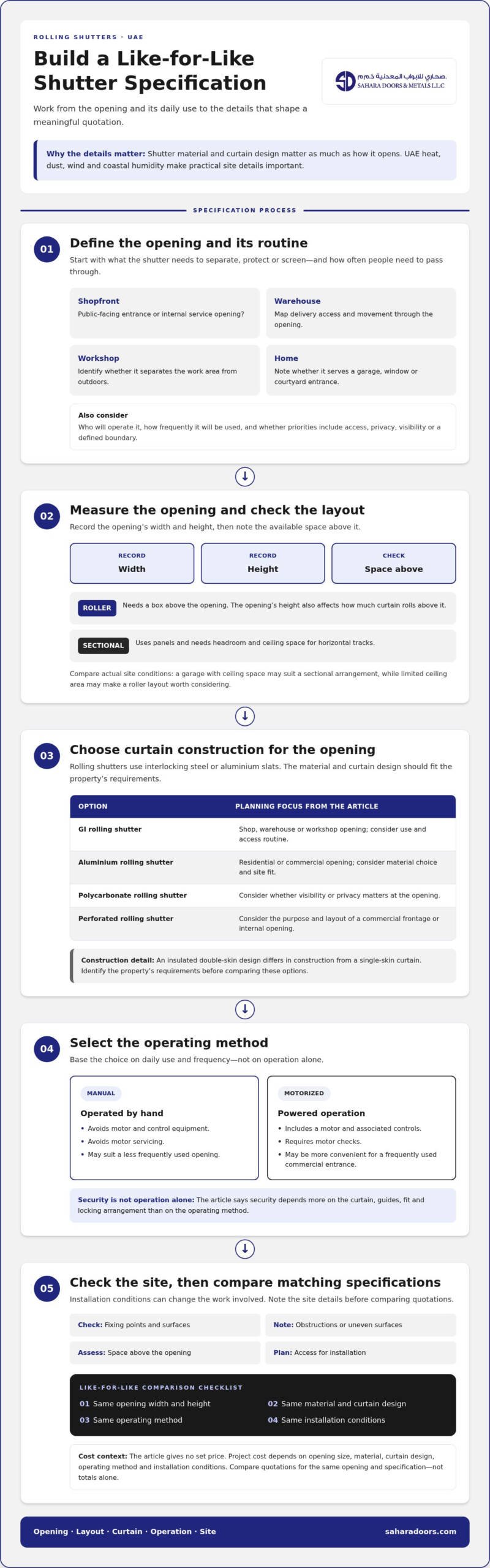
Opening design also affects the choice. Roller shutters use interlocking steel or aluminium slats and require a box above the opening. Sectional doors use panels and need headroom and ceiling space for horizontal tracks. A garage with available ceiling space may suit a sectional arrangement; a commercial opening with limited ceiling area may make a roller layout worth considering. Compare the actual site conditions, not just the building type.
Use these application questions to narrow the options before choosing material or operation:
- Shopfront: Decide whether the shutter closes a public-facing entrance or an internal service opening.
- Warehouse: Map delivery access and the movement of people through each opening.
- Workshop: Identify whether the shutter separates the work area from the exterior.
- Home: Note whether the opening serves a garage, window or courtyard entrance.
| Option | Application to consider | Planning criterion |
|---|---|---|
| GI rolling shutter | Shop, warehouse or workshop opening | Opening use and access routine |
| Aluminium rolling shutter | Residential or commercial opening | Material choice and site fit |
| Polycarbonate rolling shutter | Opening where visibility is relevant | Visibility and privacy priorities |
| Perforated rolling shutter | Commercial frontage or internal opening | Opening purpose and layout |
Choose a format that suits the opening’s daily use, available headroom and privacy requirements.
Factors affecting shutter door costs
A manual shutter avoids motor and control equipment, while an electric shutter includes powered components, so their cost structures differ. Security depends more on the curtain, guides, fit and locking arrangement than on the operating method alone. Manual systems avoid motor servicing, while electric systems require motor checks.
The price depends on the project and is provided after a quote request. Opening size, material, curtain design, operating method and installation conditions all shape the specification. A shop entrance, warehouse opening and residential garage can have different requirements, so compare quotations for the same opening and specification rather than comparing totals alone.
Opening dimensions affect the amount of curtain material and the scale of the installation. A wide warehouse entrance, for example, needs a different arrangement from a narrow shopfront. The opening’s height also affects how much curtain rolls above it. Accurate site measurements help ensure the quotation reflects the finished opening.
Material and curtain construction are also major factors. GI and aluminium shutters use different materials, while polycarbonate and perforated curtains suit different visibility needs. An insulated double-skin design differs in construction from a single-skin curtain. Identify the property’s requirements before comparing these options.
The operating method determines which components are included. A manual shutter is operated by hand; a motorized shutter adds a motor and associated controls. Consider how often staff or residents will use it. Powered operation may be more convenient for a frequently used commercial entrance, while a less frequently used opening may suit manual operation. Either way, assess the shutter’s construction and fit.
Installation conditions can affect the work involved. A clear opening with accessible fixing points differs from a site with obstructions, uneven surfaces or limited space above the opening. Roller shutters need a box above the opening, while sectional doors need headroom and ceiling space for horizontal tracks. These layout differences help explain why openings of similar size may have different installation requirements.
Before comparing quotations, list the details that define your specification:
- Opening: Record its width, height and available space above.
- Use: Describe the property, access routine and expected frequency of operation.
- Curtain: Specify the required material and whether visibility matters.
- Operation: Choose manual or motorized control based on daily use.
- Site: Note obstructions, fixing surfaces and access for installation.
For example, compare a manually operated GI shop shutter with an electric GI shutter only after matching the opening dimensions, curtain construction and installation conditions. This keeps the comparison focused on the actual differences, not just the headline total.
Measuring and preparing a shutter opening
Start by recording the clear opening, not the outside dimensions of the wall. Measure the width at several points and note any differences between the top, middle and bottom. Repeat for the height along both sides and through the centre. An older shopfront, for example, may not be perfectly square, and a single measurement could miss the variation. Record the smallest clear width and height, then note uneven surfaces or obstacles for the installer.
Next, identify where the shutter box and guides can fit. A roller shutter needs a box above the opening, but not ceiling tracks. A sectional door uses panels and needs headroom and ceiling space for horizontal tracks. This distinction matters in a garage with overhead lighting, shelving or a low ceiling. Check for pipes, signs, beams and other items that could interfere with the box or guides.
Installation starts by confirming the opening and shutter arrangement. The installer prepares suitable fixing surfaces, positions the guides and box, then fits the curtain and checks its movement. For a manual system, the operating mechanism also needs to be within practical reach. Final testing should confirm that the curtain moves smoothly within the guides and closes across the opening without obstruction.
Installation time varies with the opening and site conditions. The shutter dimensions, access, condition of the fixing surfaces and any preparation needed before fitting all affect the work. A clear, accessible shop entrance differs from a warehouse opening with obstructions or uneven masonry. These factors shape the work sequence and the preparation required before installation.
Prepare the site before installation to reduce avoidable disruption. Move stock, vehicles or furniture away from the opening and clear access to the fixing areas. In a retail unit, this may mean moving displays beside the shopfront. In a home garage, move parked vehicles and stored items away from the walls and ceiling near the opening. Keep the area clear during fitting and testing.
Use this preparation checklist before work begins:
- Record measurements: Note width and height at several points, including any variation.
- Check clearances: Identify the box location, guide positions and overhead obstructions.
- Inspect fixing surfaces: Note damaged or uneven areas around the opening.
- Clear access: Move vehicles, displays or stored items away from the installation area.
- Plan operation: Keep the manual control reachable and clear of everyday obstructions.
These checks give the installer useful information about the opening before fitting begins. Accurate measurements, clear access and space for the shutter box help ensure the chosen arrangement suits the property’s actual layout.
Performance in UAE heat, dust, wind and coastal humidity
Site exposure matters across the UAE: an inland warehouse and a coastal shopfront face different conditions. Dust in the guides or a curtain that no longer travels smoothly can cause jamming. Corrosion may affect metal exposed to coastal conditions, while difficult operation can signal an obstruction or misalignment. Don’t force a stiff shutter, as this can strain its moving parts.
For wide external openings exposed to wind, stronger slat profiles, deeper guides and wind locks can help address wind loads. These details matter at an exposed warehouse entrance or broad shopfront. Specify the shutter according to the opening’s width and exposure, not appearance alone. A sheltered opening and a wind-exposed frontage have different requirements.
Dust and sand can collect in the guides and interfere with curtain movement. Brush seals and a shutter box help address this exposure, while cleaning the guides during maintenance removes accumulated debris. For a workshop facing an open yard, include the guides in routine care. If a shutter becomes harder to operate, inspect it for dirt or an obstruction rather than applying more force.
Coastal humidity raises corrosion concerns for metal shutters. Galvanised or powder-coated steel and rust-free aluminium are suitable choices for addressing this exposure. For example, a coastal retail frontage needs a material decision that considers humid air as well as daily use. Inspect the surface and guides during maintenance for signs of wear or corrosion.
Heat is another factor when assessing an external opening. A west-facing shopfront in direct sun differs from a shaded internal passage. Consider the opening’s exposure and the property’s screening and access needs. If an insulated design is a priority, assess it alongside the material, opening dimensions and operating requirements.
Use these practical checks to match local conditions with shutter care:
- Wind: Note whether a wide opening faces exposed outdoor conditions.
- Dust: Keep guides clean and consider brush seals and a shutter box.
- Coastal air: Choose galvanised or powder-coated steel, or rust-free aluminium.
- Operation: Investigate stiffness, debris or misalignment instead of forcing the curtain.
- Heat: Record direct sun exposure and whether insulated construction suits the opening.
Match the shutter design to the site: exposure, opening width, material and access for maintenance all matter. Regular guide cleaning supports smooth movement, while suitable materials and wind-focused components address the conditions around the opening.
Types of rolling shutter slats and curtains
For a UAE project, use the written product warranty and the project’s stated safety, fire-rating and building-code criteria. Slat material alone doesn’t establish a fire rating, so assess any required performance against the project specification before selecting a curtain.
Rolling shutters use interlocking steel or aluminium slats. Sectional doors use panels with locks, creating a different curtain construction and opening arrangement. For a shop entrance, start with the opening’s use, available space and desired appearance. A roller curtain coils above the opening, while a sectional door’s panels travel along ceiling tracks.
GI and aluminium curtains offer different material choices for a solid shutter appearance. Compare them against the opening’s exposure and intended use rather than treating the material name as a complete performance specification. A warehouse entrance may prioritise a robust, enclosed curtain, while a residential opening may place more emphasis on the shutter’s appearance against the facade.
Polycarbonate balances enclosure with visibility. A clear polycarbonate curtain lets people see through a closed shopfront, which may suit a display area where products remain visible after hours. Perforated curtains also change the appearance of a closed opening, but consider their pattern and intended purpose before choosing one. The label alone does not tell you how much visibility a particular design provides.
An insulated double-skin curtain has a different construction from a single-skin shutter. Consider it when the project calls for an insulated design, then weigh that requirement against the opening’s dimensions and use. Slat profile and curtain construction affect the specification, so compare complete options rather than choosing on material alone.
Use these distinctions to make the comparison practical:
- Interlocking steel or aluminium slats: Consider a conventional roller curtain for a fully enclosed opening.
- Clear polycarbonate: Consider it when visibility through the closed curtain matters.
- Perforated curtain: Compare its pattern with the frontage and the opening’s purpose.
- Insulated double-skin: Assess this construction when insulation is part of the project brief.
- Sectional panels: Compare the panel format where ceiling tracks and headroom suit the layout.
Confirm the selected curtain’s material, construction and intended use against the opening plan. Treat warranty terms and project-specific safety or fire criteria as separate checks; a material description is not a substitute for documented performance.
Explore polycarbonate rolling shutters
Apply the written product warranty and the project’s stated safety, fire-rating and building-code criteria. Verify required fire performance against the project specification, because slat material alone does not establish a fire rating.
Sahara Doors & Metals: GI Rolling Shutter
Sahara Doors & Metals LLC supplies and installs GI Rolling Shutters for residential and commercial openings. If you’re comparing a solid curtain with options that preserve visibility, the company also offers Polycarbonate Rolling Shutters and Perforated Rolling Shutters. A Motorized Rolling Shutter is another option when powered operation better suits the opening’s routine.
Use your opening measurements, property use and site exposure to narrow the choice. A shopfront, warehouse entrance and home opening may each call for a different curtain design. Matching the shutter to these practical requirements helps you define a clear project specification.
Contact Sahara Doors & Metals to discuss a rolling shutter suited to your property.
Make the Right Shutter Choice for Your Property
Choosing manual rolling shutters across the UAE means deciding how each opening should serve your property. Before moving ahead, turn your priorities into a clear project brief: describe the opening’s purpose, preferred curtain type and operating method. This gives you a focused starting point for discussing a suitable configuration.
Sahara Doors & Metals LLC offers GI Rolling Shutters, Motorized Rolling Shutters and Polycarbonate Rolling Shutters. These options suit different priorities, from a solid curtain to visibility through a closed opening or powered operation. Share the intended use and preferred style to focus the discussion on your requirements.
A considered choice brings together everyday access, the property’s appearance and the protection you expect from a shutter. When you’re ready, turn your requirements into a project discussion.
With a clear brief, you can move forward confidently toward a shutter solution suited to your space.
Frequently Asked Questions
What are manual rolling shutters and what materials and designs are available across the UAE?
Manual rolling shutters are hand-operated curtains that move along guides and roll above an opening. UAE options include GI and aluminium slats, clear polycarbonate, perforated curtains and insulated double-skin construction. Each suits different priorities: polycarbonate can retain visibility, while a solid GI curtain creates a more enclosed frontage. Choose based on the opening’s use, desired appearance and whether visibility through the closed shutter matters.
How much do manual rolling shutters cost across the UAE?
The price depends on the project and is provided after a quote request. The main cost factors include the opening’s dimensions, curtain material and construction, operating method and installation conditions. For a useful comparison, describe the intended use and specify the same requirements for each quotation. This helps you assess whether differences relate to the shutter, site work or operating system.
Which companies supply and install manual rolling shutters in the UAE?
Sahara Doors & Metals LLC supplies and installs rolling shutter systems in the UAE. Its options include GI Rolling Shutters, Polycarbonate Rolling Shutters and Perforated Rolling Shutters, alongside Motorized Rolling Shutters for projects requiring powered operation. For a residential frontage, commercial entrance or industrial opening, start by identifying the shutter type and intended use. That gives the project discussion a clear practical focus.
What factors affect the price of a manual rolling shutter, including size, material, and installation?
Opening dimensions, curtain material, design and site conditions all influence the price. A wide opening needs a different amount and arrangement of curtain material from a compact shop entrance. Materials also differ: GI, aluminium, polycarbonate and perforated designs have distinct constructions. Installation requirements can vary with fixing surfaces, available space and obstructions. Compare quotations using one shared specification, including the opening measurements and preferred curtain type.
How do I measure an opening and choose the right manual rolling shutter?
Measure the clear opening’s width and height at several points, then record any variations or uneven edges. Note the space above the opening for the shutter box, along with any beams, pipes or signage that could affect placement. Then match the opening’s purpose with the curtain design: a shop display may benefit from visibility, while a warehouse may prioritise an enclosed curtain. Keep measurements and site notes together.