Article by
Sahara Doors & Metals LLC
Leaders in rolling shutters
The most transparent choice for your storefront might actually be your strongest security asset. When evaluating polycarbonate vs aluminum rolling shutters, many facility managers assume they must trade 24/7 visibility for rugged physical strength. You’ve likely faced the challenge of showcasing luxury products after hours while ensuring your perimeter remains impenetrable. It’s a stressful balance, particularly with the added pressure of meeting the UAE’s 2026 building standards and avoiding materials that yellow or degrade under extreme desert heat.
We understand that your project’s success depends on technical excellence and long-term reliability. This guide will help you master the material differences so you can secure your facility with the right balance of transparency and protection. You’ll gain the technical justification needed for your next proposal and a clear understanding of the ROI for each system. We’ll explore how these materials perform in coastal humidity and explain why modern aluminum shutters can offer a 30-year service life. With recent innovations reducing installation weights by 28 percent, choosing the right precision engineering for your specific site is more critical than ever.
Key Takeaways
- Master the technical differences when comparing polycarbonate vs aluminum rolling shutters to determine whether your facility requires 24/7 visual marketing or total thermal privacy.
- Discover how weight-to-strength ratios influence motorized operation and why aluminum remains the preferred standard for high-security industrial environments.
- Examine the resilience of materials against extreme UAE heat, including how modern stabilizers prevent UV degradation and yellowing in polycarbonate systems.
- Identify the specific ROI benefits for different commercial applications, from retail showrooms that prioritize aesthetics to warehouses requiring heavy-duty protection.
- Understand the role of precision engineering in custom metalwork to ensure long-term mechanical reliability for non-standard opening sizes.
The Material Showdown: Understanding Polycarbonate and Aluminum Rolling Shutters
Choosing the right barrier for a commercial entrance involves more than just picking a color. The debate over polycarbonate vs aluminum rolling shutters centers on a fundamental choice between visual engagement and structural privacy. A Roller shutter serves as the first line of defense for any facility, but the material composition dictates how that defense functions. While polycarbonate relies on high-impact synthetic polymers to offer a window into your business, aluminum utilizes architectural-grade metal to create a solid, impenetrable wall. The 2026 industrial selection process for polycarbonate vs aluminum rolling shutters focuses on balancing these specific material strengths with your project’s unique environmental demands.
You’ll find these materials in distinct configurations designed for specialized roles. Polycarbonate systems typically utilize link-and-slat designs that maximize clarity and airflow. Aluminum systems favor double-skin slats, which are often filled with polyurethane foam to enhance thermal performance. In 2026, UAE commercial developments are increasingly adopting hybrid systems. These innovative designs integrate both materials, providing crystal-clear visibility at eye level for shoppers while maintaining the heavy-duty security of metal at the base and top sections of the opening. This dual-material approach addresses the need for 24/7 marketing without compromising on site hardening.
Polycarbonate: The ‘Transparent Steel’
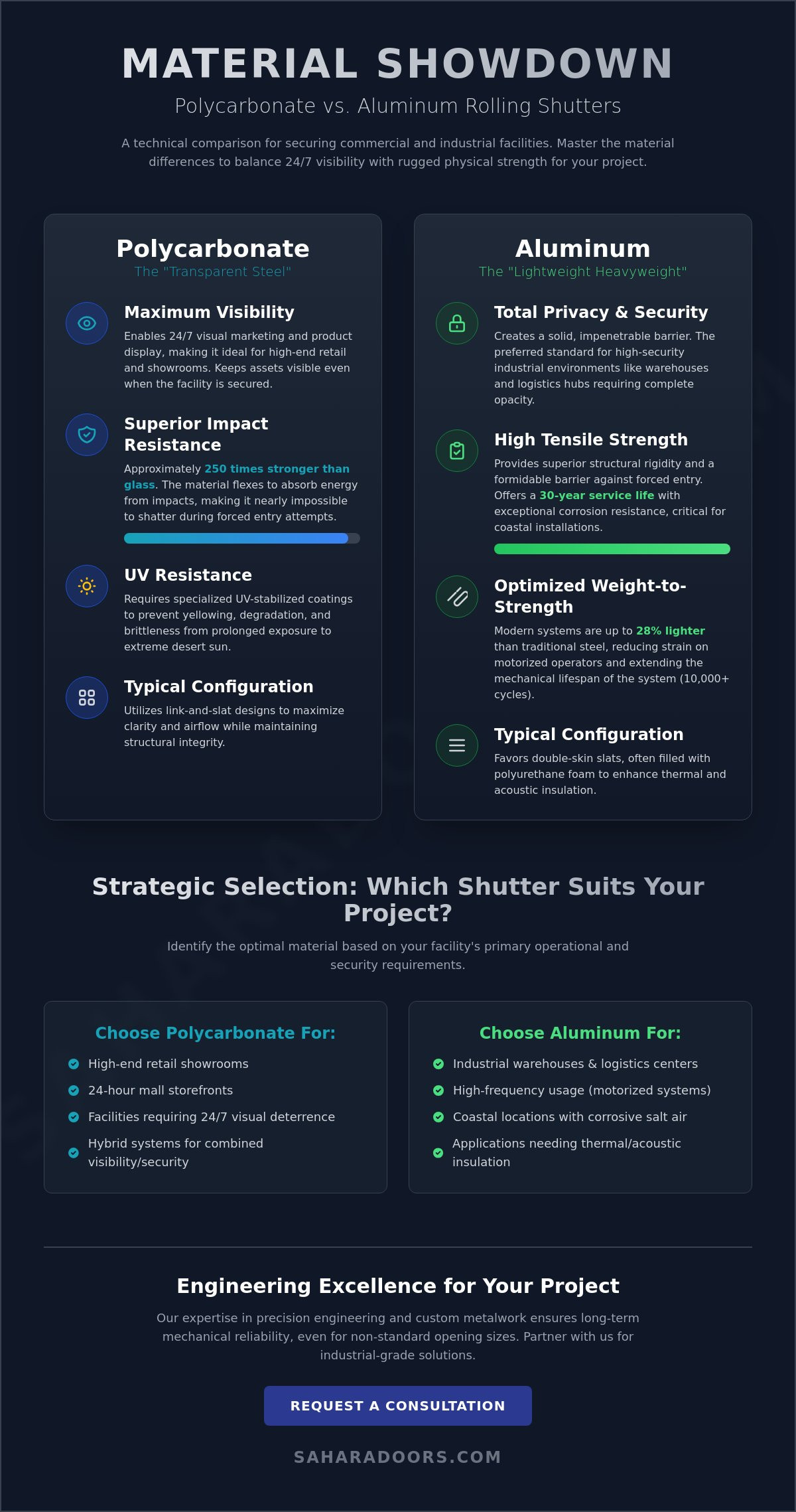
It’s often called “transparent steel” because of its incredible impact resistance. This material is approximately 250 times stronger than glass, making it nearly impossible to shatter during a forced entry attempt. For high-end retail in 24-hour malls, it remains the gold standard because it keeps products visible even when the store is closed. To combat the intense Gulf sun, we apply UV-stabilized coatings to every slat. These coatings are essential. They prevent the polymer from becoming brittle or yellowing over time, ensuring your display remains clear and your investment stays protected for years of continuous operation.
Aluminum: The Lightweight Heavyweight
Aluminum is the industry’s lightweight heavyweight. It offers exceptional corrosion resistance, which is vital for coastal UAE installations where salt air can degrade lesser metals like untreated steel. We use extruded aluminum profiles for wide spans because they provide superior structural integrity without adding excessive weight to the drive system. These systems integrate perfectly with a Motorized Rolling Shutter for high-frequency industrial use. They provide a dependable, low-maintenance solution for warehouses and logistics hubs that require total privacy, maximum durability, and a professional aesthetic that matches modern industrial architecture.
Performance Metrics: Strength, Durability, and Impact Resistance
Selecting between polycarbonate vs aluminum rolling shutters requires a deep dive into the mechanical endurance of each material. While both offer significant protection, they respond differently to physical stress and concentrated pressure. Aluminum provides high tensile strength and structural rigidity, making it a formidable barrier against forced entry. In contrast, polycarbonate acts as a high-performance architectural glazing that absorbs energy rather than resisting it through sheer hardness. This elastic property allows the slats to flex under impact without shattering, which is why it’s often rated for high-security commercial zones.
The weight-to-strength ratio is another critical factor for long-term facility management. Modern innovations have reduced the weight of these materials by up to 28 percent compared to traditional steel. This reduction is vital for the longevity of your motor. A lighter curtain puts less strain on the drive system during its operational lifespan, which typically spans 10,000 cycles or more. If you’re managing high-traffic entryways, the lighter profile of an Aluminium Rolling shutters system ensures faster operation and fewer mechanical failures over time. If you’re unsure which material fits your span, request a technical consultation with our fabrication experts to review your site requirements.
Surface durability also dictates the aesthetic lifecycle of your installation. Aluminum slats usually feature a powder-coated finish that is highly resistant to scratches and chemical cleaning agents. Polycarbonate, while impact-resistant, is a softer polymer. Over thousands of cycles, micro-abrasions can occur if the side guides aren’t properly maintained. For retail environments where visual clarity is the priority, ensuring the guides are free of debris is essential to prevent the transparency from dulling over years of use.
Mechanical Integrity and Load Bearing
In 2026, architectural standards specify that aluminum systems can safely span widths up to 12 meters, whereas polycarbonate systems are generally optimized for openings up to 6 meters. Aluminum’s inherent rigidity allows it to maintain its shape under heavy wind loads, while polycarbonate slats require deeper side channels to manage their natural flexibility. We utilize precision-engineered interlocking slats in both systems to ensure the curtain remains stable and cannot be easily pulled out of the tracks during a storm or attempted breach.
Operational Lifespan and Wear
Maintenance needs vary significantly between these two specialized door systems. Aluminum shutters require minimal attention beyond routine lubrication of the hinges and checking the motor’s limit switches. Polycarbonate systems demand more frequent cleaning because dust accumulation in the desert can settle between the links, potentially affecting transparency. While powder-coated aluminum maintains its color for decades, we ensure our polycarbonate is treated with UV stabilizers to prevent the material from becoming brittle after constant exposure to the Gulf’s intense solar radiation.
Environmental Resilience: Navigating High-Heat and Dust Conditions
In the UAE, environmental resilience isn’t a luxury; it’s a survival requirement for industrial infrastructure. When comparing polycarbonate vs aluminum rolling shutters, the decision often hinges on how each material reacts to 50°C+ temperatures and the abrasive nature of desert sand. While polycarbonate offers transparency, it can act like a greenhouse, trapping solar heat inside a facility. Aluminum, specifically an insulated rolling shutter uae, provides a thermal break that significantly reduces HVAC loads. This material choice directly impacts your operational costs and the comfort of your workforce.
A common concern for project developers is the yellowing of polymers. Modern polycarbonate slats are now co-extruded with UV-stabilized layers that filter out damaging radiation. This prevents the material from becoming brittle and losing its structural integrity over time. Aluminum is naturally opaque and immune to UV degradation, maintaining its structural finish for decades without the risk of material fatigue. Near the coastline, salinity poses a constant threat. Aluminum is the superior choice here. It naturally forms a protective oxide layer, and when paired with professional anodizing, it resists the “pitting” corrosion common in humid, salty air. For coastal warehouses, this durability is non-negotiable.
Heat Management and Energy Efficiency
Clear polycarbonate has a high solar heat gain coefficient. In direct sunlight, this can raise interior temperatures rapidly, forcing cooling systems to work harder. In contrast, double-skin aluminum slats filled with high-density polyurethane foam offer a much lower U-value, providing a superior thermal barrier. To further optimize climate control in loading bays, many facilities install pvc strip curtains uae as a secondary barrier. This combination keeps cooled air inside even when the primary shutter is cycled for vehicle access.
Weatherproofing and Coastal Protection
Dust ingress is the silent enemy of mechanical systems. We utilize specialized brush seals and anti-static treatments to ensure that fine desert sand doesn’t compromise the operation of your shutters or scratch the polycarbonate surface. For high-rise commercial structures, wind load is a critical engineering factor. Both materials must meet rigorous ASTM E1996 impact resistance standards to ensure they can withstand the pressure of seasonal shamals and localized wind tunnels. Our precision engineering ensures that whether you choose the transparency of polycarbonate vs aluminum rolling shutters, your facility remains sealed against the elements.
Strategic Selection: Which Shutter Suits Your Project?
The final decision in the polycarbonate vs aluminum rolling shutters debate isn’t just about material costs; it’s about the strategic function of your entryway. Your choice should align with the primary mission of your facility. If you’re managing a high-end showroom in a major UAE mall, your shutters serve as a 24/7 marketing tool. For a logistics hub or a manufacturing plant, they’re a defensive perimeter designed to withstand heavy-duty cycles. We categorize these selections based on the specific operational goals of the property owner, ensuring that every installation provides maximum ROI.
Retailers generally prioritize the ability to showcase inventory after hours, making transparency a non-negotiable requirement. Conversely, industrial clients often require a total visual blackout to protect sensitive inventory and high-value equipment. In these high-security cases, a gi rolling shutter or a heavy-duty aluminum system is the industry standard. Residential projects occupy a middle ground. Homeowners often choose perforated aluminum or specialized residential shutters to balance natural airflow with the need for privacy and a modern facade aesthetic.
The Retail Case for Polycarbonate
In competitive retail environments, your storefront shouldn’t stop working when the lights go out. Polycarbonate shutters maximize window shopping revenue by keeping your products visible to late-night mall traffic. Many mall management aesthetic regulations now mandate high levels of transparency, making our link-and-slat systems the ideal solution for compliance. You can even integrate LED lighting to create a glow effect through the transparent slats, turning your security barrier into a high-impact architectural feature that draws the eye of every passerby.
The Industrial Case for Aluminum
For warehouses and logistics centers, privacy is often as important as physical strength. Aluminum shutters provide a total visual barrier, preventing outsiders from cataloging your inventory or identifying security vulnerabilities. These systems are designed for rapid operation and high-frequency use at loading docks. If your facility requires extreme operational speed for specialized climate-controlled zones, you might compare standard aluminum shutters with high speed doors uae. Aluminum provides the primary security barrier, while high-speed systems handle the constant flow of traffic. To find the right fit for your facility, request a tailored project proposal from our engineering team today.
High-traffic pedestrian zones, such as airport terminals or metro stations, require a unique blend of safety and visibility. In these environments, we recommend shutters that allow security personnel to maintain a clear line of sight through the barrier while ensuring the curtain can withstand the pressure of large crowds. Whether your project demands the crystal-clear marketing power of polycarbonate or the sturdy, opaque protection of aluminum, our precision engineering ensures your facility remains secure and professional.
Engineering Excellence: Why Sahara Doors & Metals LLC is Your National Partner
Choosing between polycarbonate vs aluminum rolling shutters is the first step in a successful facility plan; the second is ensuring the installation meets rigorous industrial specifications. At Sahara Doors & Metals LLC, we bridge the gap between material selection and long-term mechanical reliability. Our precision engineering ensures that every custom metalwork project we undertake aligns with the 2026 UAE safety and sustainability standards. We provide direct consultation for contractors and architects working on large-scale developments, offering technical insights into material performance and structural integration from the design phase through to final commissioning.
Our commitment to quality extends beyond the manufacturing floor. We understand that a security barrier is only as effective as the team that installs it. Our expert technicians ensure that every Polycarbonate Rolling Shutter or aluminum system is perfectly aligned, balanced, and calibrated for thousands of seamless cycles. This focus on craftsmanship minimizes the risk of operational downtime and extends the service life of your specialized door systems. By choosing a partner with deep regional expertise, you’re investing in a solution that is specifically built to withstand the unique pressures of the Middle Eastern industrial landscape.
Our Fabrication Capabilities
We maintain full control over the production process through our in-house metalwork and polymer assembly facilities. This centralized approach allows us to uphold strict quality control standards for every component, from the smallest hinge to the largest industrial slat. We offer custom powder coating and finishing services to ensure your shutters match your architectural branding perfectly. Our engineering team specializes in the seamless integration of motorized rolling systems with advanced building management software to provide centralized control and real-time operational monitoring.
National Support and Maintenance
Reliability doesn’t end at installation. We offer comprehensive preventative maintenance contracts for industrial and commercial clients, designed to catch minor wear before it leads to costly failures. If an unexpected issue arises, our rapid response teams are available for emergency repairs and part replacements across the region. We pride ourselves on being a dependable partner that values your facility’s security as much as you do. Whether you need an industrial barrier or want to consult with our experts for a tailored residential garage doors uae solution, we provide the technical excellence required for 2026 and beyond.
Our transparency in communication and dedication to project timelines makes us the preferred choice for major developers. We don’t just sell products; we provide engineered security solutions that enhance the functionality and aesthetic value of your property. Reach out to our team today to discuss your project requirements and discover how our specialized fabrication can secure your assets with the right balance of polycarbonate vs aluminum rolling shutters.
Secure Your Facility with 2026 Precision Engineering
The strategic decision between polycarbonate vs aluminum rolling shutters ultimately defines your facility’s operational efficiency and security posture. You’ve seen how polycarbonate maximizes retail engagement through 24/7 visibility, while aluminum provides the thermal insulation and privacy essential for industrial hubs. Success in the UAE’s harsh climate requires more than just material choice; it demands precision engineering and specialized door systems that meet 2026 standards.
Sahara Doors & Metals LLC brings 15+ years of UAE industrial expertise to every project. Our ISO 9001:2015 certified manufacturing process ensures that your custom metalwork is built for durability and technical excellence. We’re proud to be trusted by major national retailers and developers to deliver reliable, high-performance solutions that protect your assets and enhance your property’s value.
Don’t leave your perimeter security to chance. Request a Professional Consultation and Quote for Your Project today. We’re ready to help you build a safer, more efficient future for your space.
Frequently Asked Questions
Is a polycarbonate rolling shutter as secure as a steel or aluminum one?
Polycarbonate offers exceptional impact resistance but functions differently than architectural-grade metals. It is approximately 250 times stronger than glass, making it nearly unbreakable during forced entry attempts. While it provides excellent security for retail environments, solid aluminum remains the preferred standard for high-security industrial zones because it creates a total physical and visual blackout that prevents intruders from identifying internal vulnerabilities.
Can polycarbonate shutters withstand the extreme summer heat in the UAE without yellowing?
Modern polycarbonate shutters are specifically engineered with co-extruded UV-stabilized layers to prevent yellowing and material fatigue. These protective coatings filter out the intense radiation common in the Gulf, ensuring the polymer doesn’t become brittle over time. Our precision engineering ensures these systems maintain their clarity and structural integrity even when exposed to the 50°C+ temperatures typical of the UAE summer months.
How much maintenance do aluminum rolling shutters require compared to polycarbonate?
Aluminum shutters generally demand less frequent maintenance because the metal is naturally corrosion-resistant and features a durable powder-coated finish. Polycarbonate systems require more regular cleaning to prevent fine desert sand from accumulating between the links, which could cause micro-abrasions over thousands of cycles. Both systems benefit from periodic lubrication of the side guides and inspection of the motorized components to ensure long-term mechanical reliability.
Are transparent rolling shutters allowed in all UAE shopping malls?
Most major UAE shopping malls mandate high-transparency shutters to ensure visual marketing continues even after business hours. While specific aesthetic regulations vary by mall management, transparent polycarbonate is often the required standard for high-end retail storefronts. We recommend reviewing your lease agreement or consulting with our team to ensure your chosen system complies with the specific architectural guidelines of your commercial development.
What happens if a single slat of a polycarbonate shutter is damaged?
You don’t need to replace the entire curtain if a single slat is compromised. Our modular link-and-slat design allows our technicians to replace individual sections quickly and cost-effectively. This targeted repair approach ensures your facility’s security is restored without the expense of a full system overhaul, making it an efficient solution for high-traffic areas where accidental damage might occur.
Can I automate an existing manual aluminum shutter?
You can automate most existing manual shutters by integrating a specialized tubular or side-mounted motor. This process involves a technical assessment of your current barrel and side guides to ensure they can handle the mechanical stress of automated operation. Automating your Aluminium Rolling shutters improves operational speed and enhances safety by removing the need for manual lifting in industrial or commercial settings.
Which material is more cost-effective over a 10-year period?
Aluminum is often more cost-effective over a decade due to its superior thermal insulation and lower maintenance requirements. When evaluating polycarbonate vs aluminum rolling shutters, you must account for the HVAC savings provided by insulated aluminum slats. While polycarbonate offers distinct marketing value through 24/7 visibility, the structural durability of metal typically results in a lower total cost of ownership for industrial facilities.
Do aluminum shutters provide better sound insulation than polycarbonate?
Aluminum shutters provide significantly better acoustic insulation, particularly when utilizing double-skin slats filled with high-density polyurethane foam. This composition creates a dense barrier that absorbs external noise more effectively than transparent polymer sheets. For facilities located near high-traffic zones, airports, or busy industrial corridors, the sound-dampening properties of an insulated aluminum system offer a much more controlled and quiet interior environment.