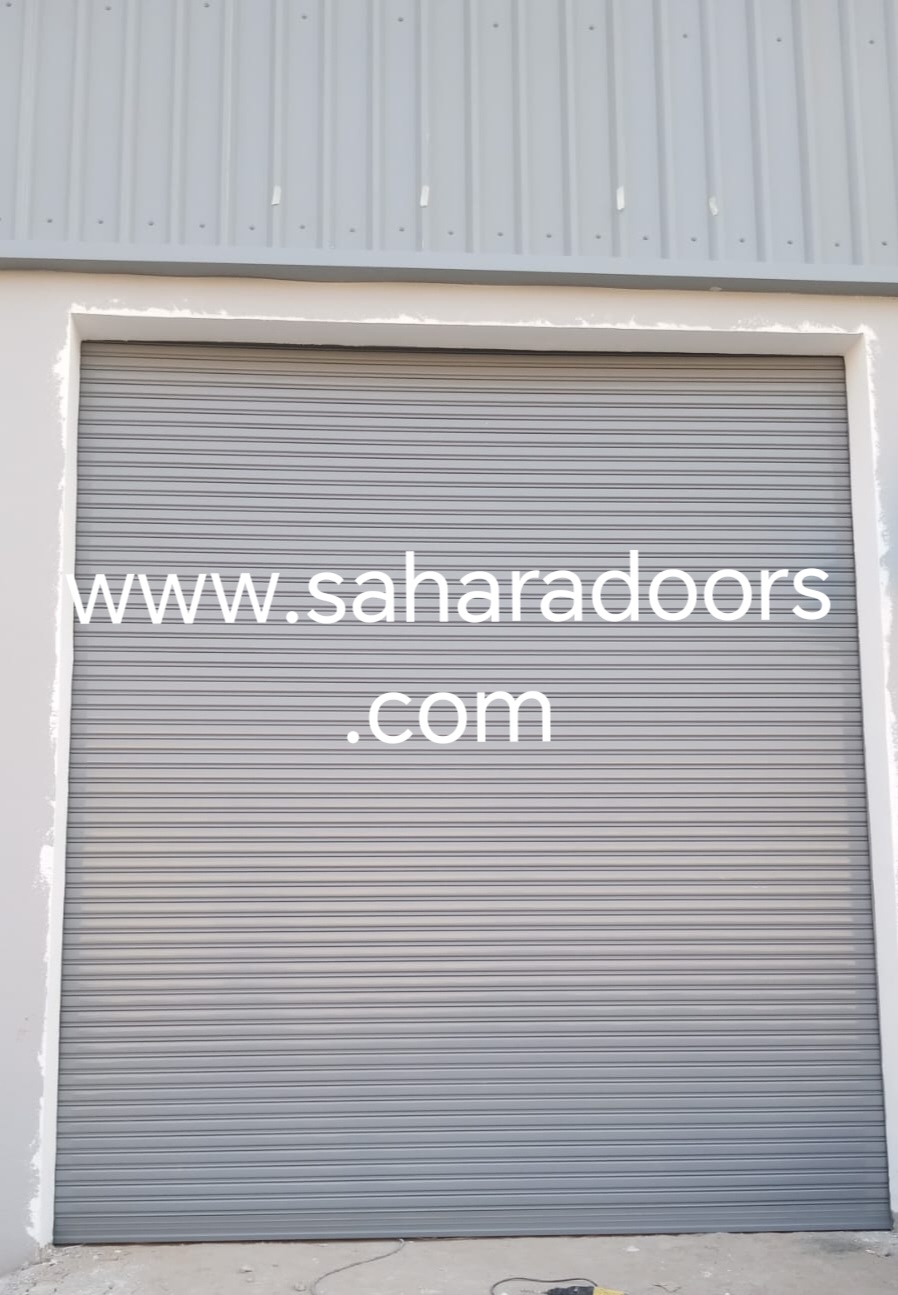
Choosing Manual Rolling shutters projects need starts with the opening’s purpose, setting and everyday use, not appearance alone. The right material and configuration depend on what the shutter needs to do.
A manual option can be practical when operation by hand suits the people using the space. To compare materials, consider the opening’s visibility needs and setting: GI and aluminium offer metal constructions, while transparent polycarbonate allows light and visibility through the shutter. Perforated and insulated options address different requirements.
This guide compares manual shutter options and explains how to plan around material, configuration and intended use for residential, commercial and industrial openings. You’ll also learn how customization, site surveys, installation and post-installation support fit into the process, so you can define what your opening needs before choosing a shutter.
Key Takeaways
- Manual shutters suit openings where operation by hand fits the way the space is used; compare that preference with motorized operation before deciding.
- Match GI, aluminium, polycarbonate or another configuration to the opening’s purpose, visibility needs and setting.
- Plan around the opening’s measurements, intended use and preferred finish to guide customization.
- A site survey and tailored installation help align the shutter with the specific opening and project requirements.
- Sahara Doors & Metals LLC manufactures, supplies and installs rolling shutters, with technical support and Annual Maintenance Contracts available.
What Are Manual Rolling Shutters, and Where Are They Used?
A rolling shutter covers an opening with connected sections that move into a compact position when raised. With manual operation, the user opens and closes the shutter by hand. A motorized shutter uses powered operation instead. These are separate decisions from material: a shutter can be manual and made from GI, aluminium or polycarbonate.
A manual rolling shutter is operated by hand; its material describes what it is made from. Keeping those choices distinct helps you compare options according to the opening and its use. A roller shutter overview also explains the broad range of applications and operating types.
What does manual operation mean for everyday use?
Manual operation means opening and closing the shutter without a motor. It doesn’t identify the material: GI and aluminium describe construction, while manual and motorized describe how the shutter operates. Consider both decisions when planning. The suitable combination depends on the opening, its setting and how the property will use it.
For example, a window and a warehouse opening may need different configurations even if both shutters are operated manually. Sahara Doors & Metals LLC offers GI rolling shutters in manual or motorized operation, including variants for different applications.
Which openings can manual rolling shutters serve?
In a home, rolling shutters can be fitted to windows and other openings. A window shutter can form part of the property’s everyday use. At a shop or commercial storefront, a rolling shutter provides a movable closure for an entrance or display opening. The opening’s dimensions and purpose help guide the choice.
Warehouses and factories may have different requirements from a home window or shopfront. GI shutters include heavy-duty industrial, perforated and grill-type variants, while insulated window shutters offer another configuration. Polycarbonate shutters are a distinct option when visibility through the closed shutter matters. Consider the application before choosing a type rather than assuming every shutter serves the same purpose.
Material and configuration describe different aspects of a product. GI shutters are made from galvanized iron coated with zinc for rust and corrosion resistance. Aluminium is another material option. Perforated, grill-type and insulated window shutters describe configurations, while polycarbonate shutters use a transparent material that allows light and visibility. Compare the opening’s purpose with the available construction and operation.
How Do GI, Aluminium, and Other Manual Shutter Options Differ?
Material and configuration affect how a shutter suits an opening. A GI shutter, a perforated design and a transparent polycarbonate shutter differ in construction and visibility, even when they share manual operation. GI and aluminium provide metal shutter options, perforated and grill-type designs have openings, and polycarbonate suits openings where light and visibility through the shutter matter.
Start by comparing the opening’s purpose with its visibility needs. Sahara Doors & Metals LLC offers several materials and configurations, so the table can help organize the options before you select one for the application.
| Material or configuration | Visibility | Potential application |
|---|---|---|
| GI, including perforated, grill-type and heavy-duty industrial variants | Depends on the configuration; perforated and grill-type designs have openings | Residential, commercial and suitable industrial openings |
| Aluminium | Depends on the selected configuration | Residential or commercial openings |
| Polycarbonate | Transparent, allowing light and visibility | Openings where visibility through the shutter is useful |
| Insulated window or continuous-profile configurations | Depends on the selected configuration | Applications suited to these shutter types |
What should readers know about manual GI rolling shutters?
GI rolling shutters are made from galvanized iron coated with zinc for rust and corrosion resistance. The range includes perforated and grill-type options as well as heavy-duty industrial variants. Consider whether the opening calls for a more closed appearance or a design with openings, then relate that preference to the intended use. Sahara Doors & Metals LLC offers GI rolling shutters in manual or motorized operation.
When might another shutter configuration fit the opening?
Polycarbonate rolling shutters are made from high-strength transparent material, allowing light and visibility through the shutter. They can suit an opening where seeing through the closed shutter is important. This is different from GI construction. Explore the polycarbonate rolling shutter range for this visibility-focused option.
Aluminium provides another material choice, while insulated window and continuous-profile shutters are separate configurations in the range. Compare the opening’s purpose and visibility needs, then consider which material or configuration fits the application. This keeps the decision focused on what the shutter needs to do, rather than assuming one material or design suits every opening.
Manual or Motorized Rolling Shutters: Which Option Suits the Opening?
There isn’t one operating choice for every opening. A shutter used in a home may have different priorities from one serving a shop, warehouse or factory. Start with how the opening is used, who operates it and what the project requires. Manual and motorized describe operation, not material: a GI shutter, for example, can be available with either operating method.
Sahara Doors & Metals LLC supplies manual and motorized rolling shutters. The useful question isn’t which option is always better, but which operating style fits this opening. Weigh everyday use and operating preference alongside the opening’s requirements.
When can a manual shutter be the practical choice?
Think through a typical day at the opening. Who will use the shutter, and as part of what routine? Is operation by hand the preferred approach for the people responsible for opening and closing it? These questions help clarify whether a manual configuration fits the way the space is managed. Manual operation is one option in Sahara Doors & Metals LLC’s rolling shutter range, not a material category of its own.
Consider the opening’s role as well as user preference. A window, shop entrance or industrial opening may each have a different pattern of use. Assess those requirements rather than assuming that manual shutters suit only one type of property.
When may motorized operation better match the requirement?
Motorized operation is the alternative available from Sahara Doors & Metals LLC. Include it in the comparison if powered operation better aligns with the project’s intended use. Base the decision on the requirements for the opening and the preferred way of operating it, rather than assumptions about speed, effort or performance.
Before choosing, compare both options against the same practical considerations:
- Use pattern: Think about the opening’s role and how it fits into a normal day.
- Operating preference: Decide whether the people using the space prefer manual or motorized operation.
- Project requirements: Keep the opening and its intended application at the centre of the decision.
- Product selection: Choose the operating option separately from the shutter’s material and configuration.
This distinction prevents a common mix-up. Material answers what the shutter is made from; operation answers how it is opened and closed. A material name alone doesn’t tell you whether the shutter is manual or motorized. Consider both decisions together, but evaluate them separately.
Once you’ve identified the opening’s use and preferred operating style, you’ll have a clearer basis for planning the configuration. Sahara Doors & Metals LLC’s site surveys and technical support help relate shutter choices to project requirements, so the selection is based on the opening rather than a one-size-fits-all assumption.
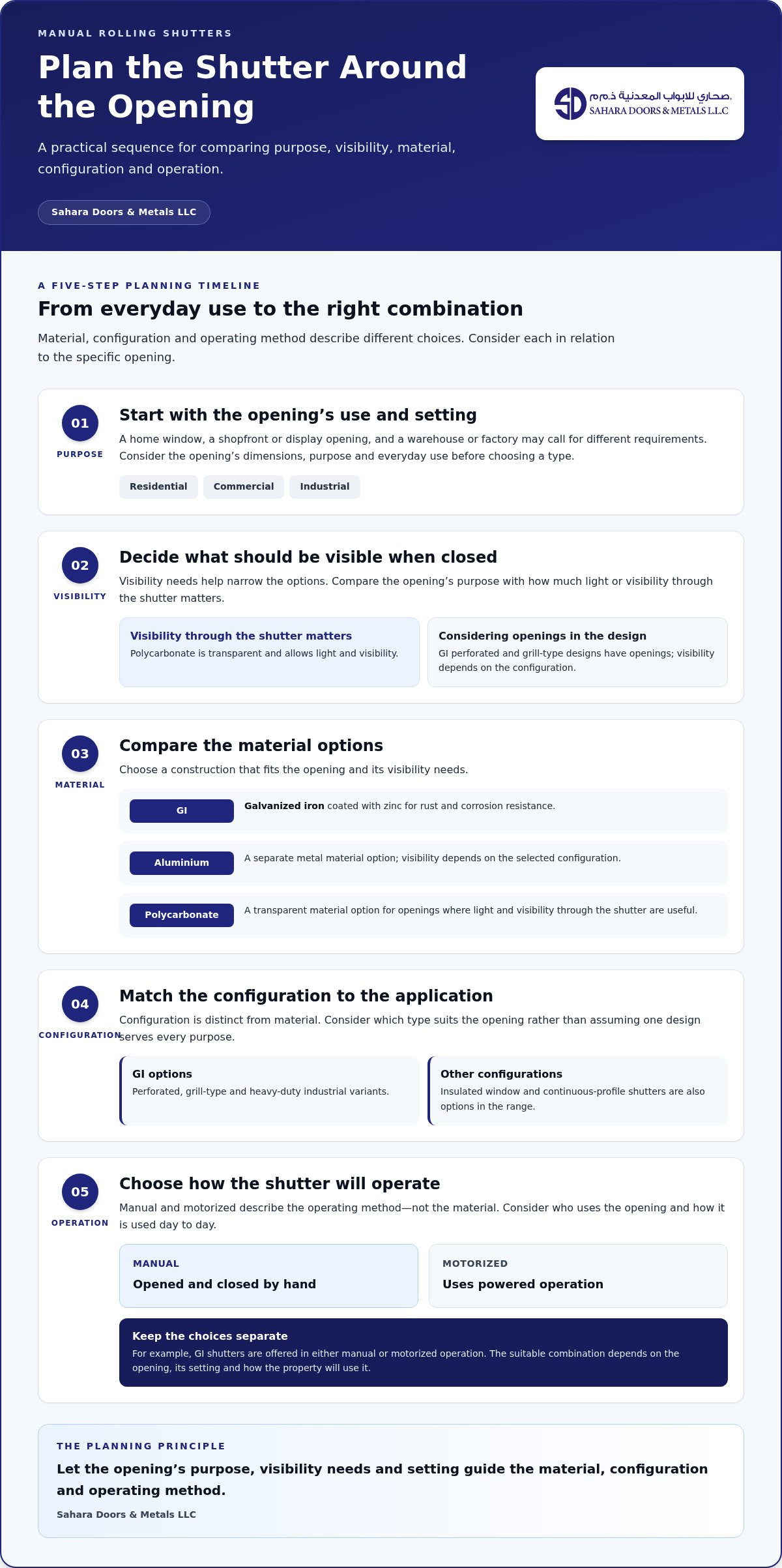
How to Plan a Manual Rolling Shutter for a Specific Opening
A well-planned shutter begins with understanding the opening and the job it needs to do. Its setting and intended use help guide the configuration, while the project’s preferred appearance informs the finish and colour. A clear sequence turns a general idea into defined requirements.
Identify the opening and its use, establish the project requirements, choose a suitable material and operation, then tailor the shutter’s size, finish and colour. This keeps planning focused on the actual opening instead of assuming one configuration suits every property.
- Describe the opening. Note whether the project involves a window, storefront or another opening, and explain how the space is used.
- Set the priorities. Define the intended application and preferred operation so they can guide the configuration.
- Select the shutter type. Compare options against the opening’s requirements and the way it will be used.
- Choose the finish details. Consider the size, finish and colour that will suit the specific opening and its surroundings.
What information helps tailor a shutter to its opening?
The opening and its purpose help determine which configuration fits the project. A window, shopfront and industrial opening each have a distinct setting, so explaining how the space is used gives the planning process useful context. Sahara Doors & Metals LLC conducts site surveys to help connect project requirements with the opening.
Rolling shutters are available in various sizes, finishes and colours and can be customized for specific openings. Start with the intended application, then consider the desired appearance and how the opening will be used. This gives the survey and planning process a clear foundation without relying on assumptions about standard dimensions or finishes.
What should readers expect from supply and installation?
Sahara Doors & Metals LLC manufactures, supplies and installs rolling shutters. The process takes the selected shutter from project planning through supply and fitting. Technical and post-installation support are also available, and the company provides training for troubleshooting. GI rolling shutters are available in manual and motorized options, allowing the project’s requirements to guide the operating choice.
A site survey supports planning around the opening, while customization helps tailor the product to the project. Installation puts the selected shutter in place, and technical support continues after handover. This provides a clear process, from defining what the opening needs to installing a shutter suited to it.
Sahara Doors & Metals Manual Rolling Shutters: Tailored Supply and Support
A shutter project involves more than selecting a product type. The opening, intended use, preferred operation and desired appearance all shape the configuration. Sahara Doors & Metals LLC manufactures, supplies and installs rolling shutters, with manual and motorized options for different project requirements. Support includes site surveys, technical assistance and post-installation support.
How does the product range support different project needs?
The range includes GI, aluminium, perforated, insulated window and polycarbonate shutters. These options let residential, commercial and industrial projects consider different materials and configurations according to the opening and its application. Polycarbonate is transparent and allows light and visibility through the shutter. GI, aluminium, perforated and insulated window options address different requirements, so select according to the project rather than assuming one type fits all.
Rolling shutters can be customized in size, finish and colour for specific openings. This lets the product be planned around the opening and the property’s appearance, rather than relying on a standard look or a single configuration. When comparing manual rolling shutters for Doha/Oman searches, consider these details alongside the intended use and preferred operation.
What support accompanies the shutter project?
The process can begin with a site survey to understand the opening and project requirements. Sahara Doors & Metals then manufactures and supplies the selected rolling shutter and carries out installation. Technical and post-installation support are available after handover, and Annual Maintenance Contracts are available for rolling shutters.
For a homeowner, the discussion may centre on a particular window or property opening, its appearance and the preferred way to operate the shutter. A commercial or industrial project may have different application requirements. In either case, sharing the opening’s purpose, preferred material or configuration, operation and finish helps structure the project. A site survey supports project-specific planning, while installation puts the selected shutter in place.
Sahara Doors & Metals brings manufacture, supply, installation and technical support together for rolling shutter projects. The aim is a considered fit for the opening, from initial requirements through post-installation assistance. If you’re planning a manual shutter, start with the opening and how it needs to serve your space.
Turn Your Shutter Plans into a Clear Next Step
Before moving ahead, decide what matters most for your opening and what you’re willing to adapt. A short note on the intended use, preferred operation and appearance can keep the project discussion focused. It also helps distinguish essential requirements from preferences, making it easier to compare suitable options.
For Manual Rolling shutters Doha/Oman, bring those priorities together around your specific opening. Think about how the shutter should fit the space and how you want to operate it. A well-framed discussion can turn an initial idea into a clearer direction for your property, whether it’s a home or working space.
Start with your requirements, then contact Sahara Doors & Metals LLC to discuss a manual rolling shutter tailored to your opening.
Frequently Asked Questions
Can GI rolling shutters be operated manually?
Yes. GI rolling shutters are available with manual or motorized operation. For manual rolling shutter projects, the opening’s use and preferred operating method can guide the choice. GI shutters use galvanized iron coated with zinc for rust and corrosion resistance. Material and operation are separate decisions, so selecting GI doesn’t determine how the shutter operates.
Are manual rolling shutters available in different sizes and finishes?
Yes. Rolling shutters are available in various sizes, finishes and colours and can be customized for specific openings. This lets you consider how the shutter will fit the property’s appearance as well as the opening itself. For example, the finish can be selected to coordinate with the surrounding facade. Customization means the product can be tailored instead of relying on one standard size or look for every project.
What is the difference between a GI and a polycarbonate rolling shutter?
GI shutters are made from galvanized iron coated with zinc, while polycarbonate shutters use high-strength transparent material that allows light and visibility. That difference can guide the choice for a shopfront: polycarbonate may suit an opening where seeing through the closed shutter matters, while GI offers a metal construction. Match either option to the opening’s purpose and the visibility desired.
Can a rolling shutter have a perforated or grill-type design?
Yes. GI rolling shutters include perforated and grill-type variants, as well as other configurations. These designs differ in appearance and visibility from a solid shutter, which can matter for a shop or commercial opening. Consider what the opening needs to show when closed, along with its intended use. Design is one part of the selection, alongside operation and the requirements of the opening.
Are manual rolling shutters difficult to maintain?
Rolling shutters are designed for low maintenance and long service life, and manual versions are part of the range. Sahara Doors & Metals LLC provides technical support and offers Annual Maintenance Contracts for rolling shutters. If a shutter’s operation changes or troubleshooting is needed, technical support is available to help address the issue.
Can rolling shutters be customized for a particular opening?
Yes. Rolling shutters can be customized to suit a specific opening, including through size, finish and colour choices. Sahara Doors & Metals LLC conducts site surveys to support project planning and relate the product to the opening. A window and a commercial entrance have different settings to consider, so sharing the opening’s purpose and preferred appearance helps shape the configuration.
Does Sahara Doors & Metals install manual rolling shutters?
Yes. Sahara Doors & Metals manufactures, supplies and installs rolling shutters, including manual options. Installation is part of the project scope, alongside site surveys and technical support. The company also provides post-installation support, so assistance can continue after the shutter has been fitted. Share whether the shutter is for a home, shop or industrial opening so the project can be planned around its intended use.