Article by
Sahara Doors & Metals LLC
Leaders in rolling shutters
Did you know that a car parking shade failing during a high wind event isn’t just a material loss, but a structural liability that could void your facility’s insurance? In the UAE, the sun and humidity are relentless. You likely already know that standard fabrics often turn brittle within two seasons, and salt-laden air in coastal areas can corrode substandard steel supports before the paint even fades. Finding reliable carparking shades suppliers Dubai/ UAE means looking beyond the lowest quote to find a partner who understands precision engineering and the harsh reality of our climate.
This article provides a rigorous technical analysis of high-performance PVC and PTFE materials, engineering standards, and the critical criteria for selecting a supplier that prioritizes structural integrity. We’ll examine the ROI of different fabric grades, explain the mandatory 2026 RTA permit requirements for residential projects, and break down the wind load calculations mandated by the Dubai Building Code. By the end, you’ll have the technical knowledge to ensure your shading investment remains standing for 15 years or more.
Key Takeaways
- Understand how precision-engineered shading mitigates the impact of 50°C+ ambient temperatures on vehicle electronics and paintwork.
- Compare the technical performance of HDPE for cost-effective UV protection against high-tensile PVC for industrial-grade waterproofing.
- Evaluate structural designs like Cantilever and Pyramid systems to maximize site maneuverability and ensure effective water drainage.
- Learn to vet carparking shades suppliers Dubai/ UAE by identifying direct manufacturers with internal fabrication control and ISO credentials.
- Identify the engineering requirements for GI steel structures to ensure long-term durability and compliance with UAE wind load regulations.
The Critical Role of Precision-Engineered Shading in the UAE
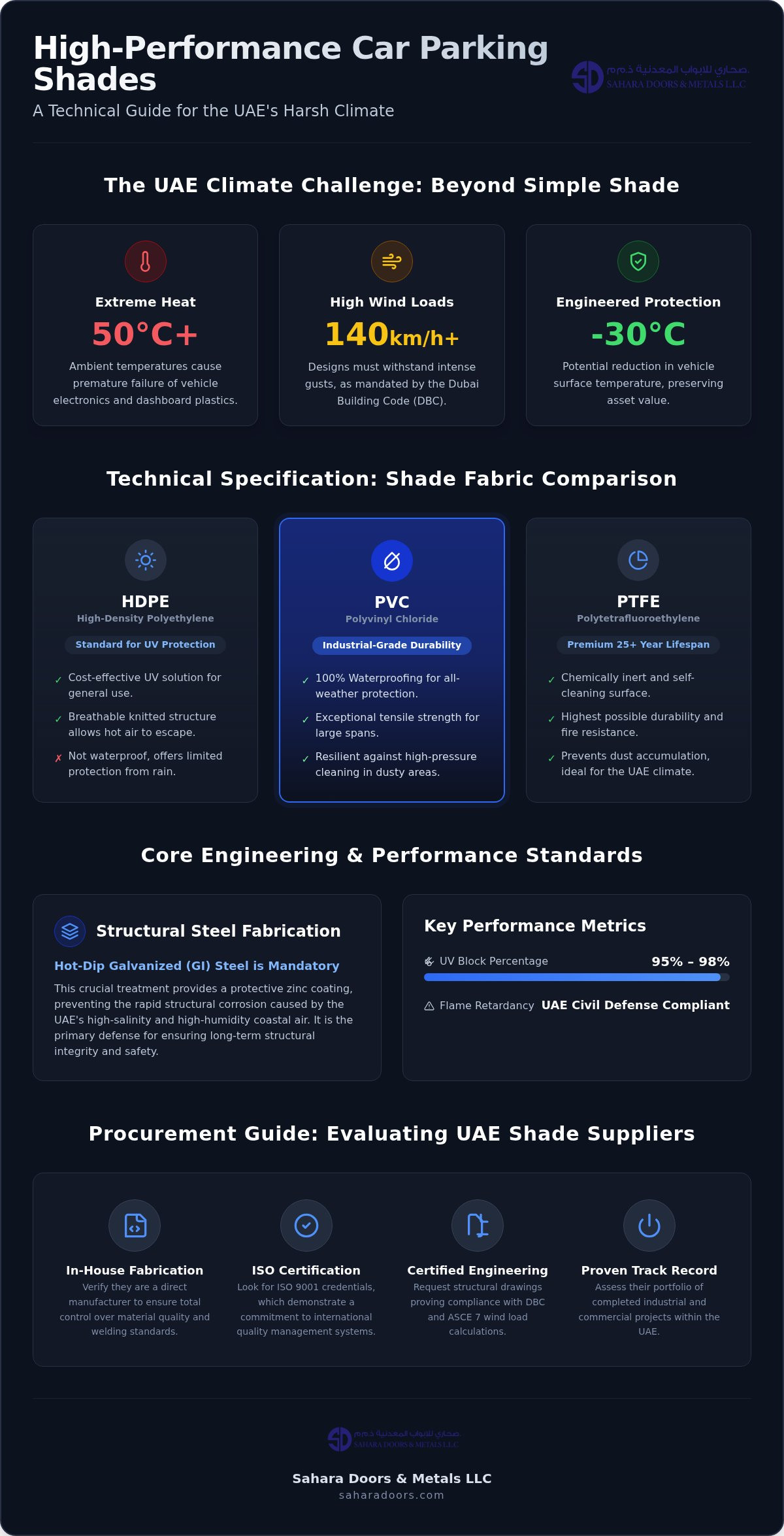
In the UAE, ambient temperatures regularly exceed 50°C during the summer months. This isn’t just a matter of discomfort; it’s a direct threat to vehicle longevity and safety. Intense thermal radiation causes interior cabin temperatures to skyrocket, which leads to the outgassing of dashboard plastics and the premature failure of sensitive electronics. Precision-engineered shading acts as a critical thermal barrier. By blocking direct solar radiation, these structures create a distinct micro-climate that can reduce surface temperatures by up to 30°C compared to vehicles left on exposed asphalt.
Viewing a car parking shade as temporary furniture is a mistake that often leads to catastrophic structural failures. For commercial developers and industrial facility managers, these are permanent structural assets that require the same level of architectural scrutiny as the buildings they serve. High-quality installations provide a tangible ROI by reducing the heat island effect around facilities. This reduction in radiant heat lowers the cooling load on adjacent building HVAC systems. Additionally, integrated shading solutions significantly enhance property valuation by providing essential protection for high-value assets in a region where sun damage is a primary concern for buyers and tenants.
UV Degradation and Material Fatigue
Polymers used in lower-grade fabrics undergo rapid photo-oxidation under the relentless Arabian sun. Over a typical five-year cycle, untreated materials lose their tensile strength and become dangerously brittle. Professional Tensile Structure Engineering utilizes specialized PVDF or PTFE coatings to combat this. These top-tier finishes don’t just repel dust; they provide a chemical shield against the high-salinity humidity found in coastal UAE regions. This prevents material fatigue and ensures the fabric remains flexible enough to handle the pressure changes associated with seasonal sandstorms.
Compliance with UAE National Building Standards
Structural safety isn’t optional in the Emirates. Leading carparking shades suppliers Dubai/ UAE must adhere to the Dubai Building Code (DBC) and international standards like ASCE 7 for wind load calculations. This means every structure must be backed by certified engineering drawings that account for uplift and lateral forces. A permanent shade must be designed to withstand wind gusts exceeding 140km/h. Without these technical credentials and proper GI steel fabrication, a structure becomes a significant liability during the sudden, high-velocity wind events that characterize the region’s shoulder seasons.
Technical Specification: Comparing Shade Materials and Fabrics
Selecting the right material is a balance of performance, longevity, and environmental resistance. While many carparking shades suppliers Dubai/ UAE offer generic fabrics, professional engineering requires a deeper look at the technical specifications of the membrane. High-Density Polyethylene (HDPE) remains the industry standard for breathability. Its knitted structure allows hot air to rise through the fabric, preventing heat from being trapped underneath. For heavy-duty industrial applications, Polyvinyl Chloride (PVC) is the superior choice. It provides total waterproofing and exceptional tensile strength, making it resilient against the high-pressure cleaning often required in dusty desert environments.
For projects requiring the highest possible durability, Polytetrafluoroethylene (PTFE) is the premium option. PTFE is chemically inert and offers a 25-year service life. Its self-cleaning properties are particularly valuable in the UAE, as the slick surface prevents dust accumulation. Regardless of the fabric choice, the supporting skeleton must be constructed from Hot-Dip Galvanized (GI) steel. This treatment is essential to prevent the structural corrosion that often plagues low-quality installations in high-humidity coastal areas.
Fabric Performance Metrics
Performance isn’t just about shade; it’s about measurable protection. High-quality membranes must achieve a UV block percentage between 95% and 98% to preserve vehicle paintwork and interior components. Thermal control is another critical metric. The fabric should reflect the majority of infrared radiation while still allowing enough natural light transmission to ensure visibility and safety. Safety compliance is equally vital. All materials must meet UAE Civil Defense flame retardancy standards to ensure they don’t contribute to fire spread in residential or commercial complexes.
Structural Steel and Fabrication Excellence
The integrity of a cantilever shade depends on the grade of steel used in its fabrication. We typically utilize Grade 350 or 450 steel to ensure the structure can handle significant lateral forces without deformation. Welding standards are a primary differentiator between specialized manufacturers and general brokers. Seamless, high-quality welds are necessary to prevent moisture from entering the hollow sections of the frame. Finally, foundation engineering must be site-specific. This involves concrete pier specifications and soil analysis to ensure the structure remains anchored during severe wind events. You can explore our project portfolio to see how these technical standards are applied in real-world UAE installations.
Design Architecture: Optimizing Space and Functionality
Designing for the UAE’s specific landscape requires more than just fabric and steel; it demands an understanding of spatial flow and site-specific constraints. Finding the right carparking shades suppliers Dubai/ UAE involves evaluating how a design interacts with your specific site layout. Cantilever structures represent the pinnacle of functional design in this sector. By eliminating front-row support pillars, these shades maximize maneuverability and reduce the risk of vehicle collisions. This makes them the ideal choice for high-traffic commercial zones and residential villas where space is at a premium.
Pyramid and cone configurations remain favorites for residential compounds and public parks. These designs aren’t just for traditional aesthetics; their steep pitch ensures highly effective water drainage during the UAE’s occasional but intense winter rainstorms. For large-scale commercial parking lots, such as those found at shopping malls or airports, flat sail and wave structures offer superior architectural flexibility. These systems can span massive areas without requiring excessive internal supports, creating a clean, modern look that complements contemporary UAE architecture.
Wall-mounted systems solve the specific challenge of narrow industrial driveways or side-access points. By anchoring the structure directly to an existing building wall, we remove the need for ground-based columns entirely. This keeps pathways clear for forklifts and delivery vehicles while providing the necessary UV protection for parked assets. Each of these designs must be fabricated with precision engineering to ensure the tension is distributed evenly across the membrane, preventing the sagging that often leads to material failure.
Industrial vs. Residential Design Requirements
Industrial requirements center on durability and heavy-duty spans. Logistics hubs and commercial fleets need structures that can accommodate larger vehicles and withstand the vibration of constant heavy-traffic movement. Modular systems are particularly valuable here, as they allow for rapid expansion as an industrial zone grows. Residential projects, however, prioritize aesthetic integration. Modern villa owners often request custom fabric colors and sleeker steel profiles that match the building’s facade. For these residential installations, complying with the mandatory 2026 RTA permit regulations is a critical part of the design phase to ensure the structure doesn’t interfere with public utilities.
Innovative Features in 2026 Shading Systems
The 2026 market is seeing a massive shift toward solar-integrated carports. These systems turn your parking shade into a renewable energy generator, offsetting facility electricity costs while protecting vehicles. We’re also seeing increased demand for smart lighting and security camera integration, allowing for 24/7 monitoring of the parking area directly through the shade’s structural frame. Finally, self-cleaning nanocoatings are becoming standard for high-end PVC and PTFE membranes. These coatings use the sun’s UV rays to break down organic dirt, which then washes away during rain or scheduled maintenance, significantly lowering long-term cleaning costs in dusty desert environments.
Procurement Guide: How to Evaluate UAE Shade Suppliers
Choosing between carparking shades suppliers Dubai/ UAE involves more than comparing bottom-line figures. You must distinguish between a direct manufacturer and a trading broker. Brokers often outsource the fabrication of GI steel components, which leads to inconsistent weld quality and potential structural weaknesses. A manufacturer with internal fabrication control ensures that every beam and membrane meets specific project tolerances. This direct oversight is vital for maintaining the structural integrity required for permanent UAE installations.
Verify technical credentials by requesting ISO certifications and a detailed project portfolio. A professional supplier shouldn’t hesitate to provide case studies of past industrial or residential projects. When you analyze a quotation, look for transparency regarding foundation work and structural approvals. Many low-cost quotes omit the cost of concrete piers or municipal permit processing. These hidden expenses can significantly impact your total project budget later on, making an initially cheap quote far more expensive in the long run.
Warranty transparency is another critical factor. You shouldn’t confuse a 10-year fabric manufacturer warranty with a supplier’s installation warranty. The former covers the polymer’s UV resistance and color fastness, while the latter covers the structural engineering and tensioning. You need both to protect your investment. Ensure your contract clearly outlines the scope of these guarantees to avoid disputes during the structure’s service life.
The Importance of On-Site Technical Surveys
A ‘per-meter’ price given without a site visit is a major red flag. Every site has unique underground utilities and soil stability profiles that dictate foundation depth and concrete specifications. A technical survey allows for customization, such as adjusting clearance heights for high-clearance industrial vehicles or logistics fleets. This step is essential to ensure the structure doesn’t interfere with existing facility operations or underground infrastructure.
Long-Term Maintenance and Service Agreements
High-performance shades require periodic tensioning to prevent fabric sagging and the destructive wind-slap effect. Regular cleaning is also necessary to remove abrasive sand and salt deposits that can degrade specialized coatings over time. Many facility managers find value in bundling these services with their industrial door maintenance schedules for total facility management. This integrated approach ensures all protective barriers and shading assets remain in peak condition throughout the year.
Contact our engineering team to request a comprehensive site survey and quotation for your next shading project.
Sahara Doors & Metals LLC: Integrated Shading and Architectural Solutions
Sahara Doors & Metals LLC has been a specialized UAE manufacturer since 2010, focusing on the intersection of structural engineering and architectural metalwork. We don’t simply assemble pre-made components; we handle the full fabrication of GI steel structures in-house. This ensures that the structural integrity and precision engineering discussed in previous sections are maintained from the initial weld to the final site installation. As one of the most dependable carparking shades suppliers Dubai/ UAE, our national network provides consistent quality and technical support across all seven emirates.
We offer a unique industrial synergy by combining shading assets with our broader range of specialized entry systems. For commercial facility managers, this means you can coordinate the deployment of your car shades with GI rolling shutters for total perimeter control. This integrated approach simplifies project management for contractors and ensures that all protective barriers share the same industrial-grade craftsmanship and durability standards required for the desert climate.
Why Sahara Doors & Metals LLC is the Preferred Choice for 2026
Our in-house design team utilizes advanced structural modeling software to simulate wind and load stress, ensuring every structure exceeds current national safety codes. We specialize in complex logistics environments where shading structures must integrate seamlessly with high speed doors to maintain operational efficiency. Our reputation among carparking shades suppliers Dubai/ UAE is built on this technical versatility and our commitment to using premium materials like PTFE and heavy-duty PVC for maximum industrial longevity.
Next Steps for Your Project
Ready to enhance your facility’s asset protection? You can begin by reviewing our extensive portfolio of completed national projects or scheduling an on-site technical evaluation with our engineers. We provide the detailed documentation and certified drawings necessary for municipality approvals and structural certifications. Contact our engineering team at Sahara Doors & Metals LLC for a customized quote and experience the reliability of working directly with a specialized manufacturer.
Secure Your Assets with Precision-Engineered Shading
Choosing the right shading solution is the final step in securing your facility’s long-term operational efficiency. As we’ve explored, the harsh UAE climate demands a transition from temporary fixes to permanent, engineered structures that can withstand extreme heat and high-velocity winds. By prioritizing high-tensile membranes and galvanized steel foundations, you ensure that your assets remain protected while your property maintains its architectural value for years to come.
Finding a partner among carparking shades suppliers Dubai/ UAE who understands these technical nuances is essential for project success. Sahara Doors & Metals LLC brings over 15 years of manufacturing expertise to every installation, specializing in the custom fabrication of GI and tensile structures. Our national UAE installation team provides the localized knowledge and technical precision needed to deliver consistent results across any commercial or residential site.
It’s time to transform your facility with a solution that combines safety, durability, and craftsmanship. Request a Professional Technical Consultation from Sahara Doors & Metals LLC to get started on a site-specific evaluation. We’re ready to provide the engineering expertise your project deserves.
Frequently Asked Questions
What is the best fabric for car parking shades in the UAE climate?
PTFE is widely considered the best fabric for the UAE climate due to its 25-year service life and exceptional resistance to UV degradation. While high-grade PVC is the industrial standard for waterproofing, PTFE remains chemically inert and withstands extreme coastal salinity without becoming brittle. Professional carparking shades suppliers Dubai/ UAE recommend PTFE for projects where long-term durability and self-cleaning properties are the primary objectives.
Do I need municipality approval for installing a car parking shade?
Municipality approval is mandatory for all permanent shading structures in the UAE. You must obtain a No Objection Certificate (NOC) from the relevant local authority, such as Dubai Municipality or the Sharjah Planning Department. For residential villa projects, a digital permit from the RTA is also required as of January 2026 to ensure the structure doesn’t interfere with public utilities or pedestrian pathways.
How long does a professional car parking shade installation take?
A professional installation usually takes between 7 and 14 working days once the design is finalized and permits are secured. This timeline accounts for the excavation and curing of concrete foundations, followed by the on-site erection of the GI steel frame. The final step involves precision tensioning of the fabric membrane to ensure structural stability and aesthetic uniformity across the entire span.
What is the difference between HDPE and PVC shade covers?
The primary difference lies in waterproofing and air circulation. HDPE is a knitted fabric that allows heat to escape through its pores, making it ideal for cost-effective UV protection in residential areas. PVC is a coated, non-porous membrane that provides total waterproofing and higher tensile strength. This makes PVC the preferred material for industrial facility managers who need to protect assets from both solar heat and seasonal rain.
Can car parking shades withstand sandstorms and high winds?
Engineered shade structures are specifically designed to withstand sandstorms and high winds exceeding 140km/h. Compliance with the Dubai Building Code and ASCE 7 standards is essential to ensure the cantilever or pyramid design can handle the uplift forces generated during severe weather. High-quality carparking shades suppliers Dubai/ UAE provide certified engineering drawings that verify these wind load calculations before fabrication begins.
How often should I clean or maintain my tensile shade structure?
You should schedule a professional cleaning every 6 to 12 months to remove abrasive sand and salt deposits. Maintenance isn’t just about aesthetics; it includes checking the tension of the membrane and the integrity of the GI steel connections. Regular inspections prevent fabric sagging and wind-slap damage, which significantly extends the overall lifespan of the tensile structure and ensures the safety of the parked vehicles.
Is it possible to install solar panels on top of a car parking shade?
Installing solar panels on car parking shades is an increasingly popular trend for 2026 projects. These solar carports require specialized structural reinforcement to support the weight of the photovoltaic panels and the additional wind load they create. Integrating renewable energy into your shading design turns a protective asset into a functional power generator for your facility, helping to offset electricity costs while protecting your fleet.
What is the typical lifespan of a galvanized steel shade structure?
Hot-dip galvanized (GI) steel structures typically have a lifespan of 20 to 30 years in UAE conditions. The zinc coating provides a sacrificial barrier that prevents oxidation, even in high-humidity coastal environments. While the fabric membrane may require replacement every 10 to 15 years depending on the material grade, the underlying metal skeleton remains a permanent architectural asset with minimal maintenance requirements beyond periodic inspections.