Article by
Sahara Doors & Metals LLC
Leaders in rolling shutters
Did you know that in cold storage environments, WAREHOUSE PVC CURTAINS can lead to energy savings between 35% and 50%? For many facility managers, an open loading bay is a constant source of frustration as expensive treated air escapes and desert sand invades sensitive inventory zones. You’re likely already feeling the impact of rising electricity costs and the pressure to meet stricter safety regulations. It’s a common challenge, but maintaining a consistent internal climate doesn’t have to be a losing battle against the elements.
In this article, you’ll learn how to master the technical specifications and selection criteria required to optimize your facility’s thermal control. We’ll provide a detailed look at material grades, the latest EN 13501-1 fire safety standards that took effect in January 2026, and the maintenance protocols that keep your operations moving. By understanding how to match specific PVC thicknesses to your forklift traffic and environmental pressures, you can ensure improved hygiene compliance and a seamless flow between warehouse zones.
Key Takeaways
- Learn how to optimize environmental control by selecting industrial-grade barriers that mitigate thermal loss and prevent dust ingress in large-scale facilities.
- Identify the correct material specifications, such as 2mm for pedestrians or 4mm ribbed for machinery, to ensure your WAREHOUSE PVC CURTAINS withstand heavy traffic.
- Compare the operational efficiency of fixed strip systems against sliding PVC solutions to find the right balance between constant access and occasional full clearance.
- Master the essential hardware requirements, from structural lintel assessments to choosing between stainless and galvanized steel tracks for maximum durability.
- Discover the advantages of precision engineering and custom fabrication when tailoring specialized door systems to meet unique architectural and industrial needs.
The Role of Warehouse PVC Curtains in Modern Logistics
Industrial facilities require more than just a physical door; they need a dynamic system that manages the internal atmosphere while allowing for high-frequency traffic. WAREHOUSE PVC CURTAINS serve as these essential environmental control systems. By utilizing high-grade Polyvinyl chloride (PVC), these barriers create a flexible but durable seal across large openings. This material is chosen for its resilience and ability to withstand the mechanical stress of constant forklift passage without losing its structural integrity.
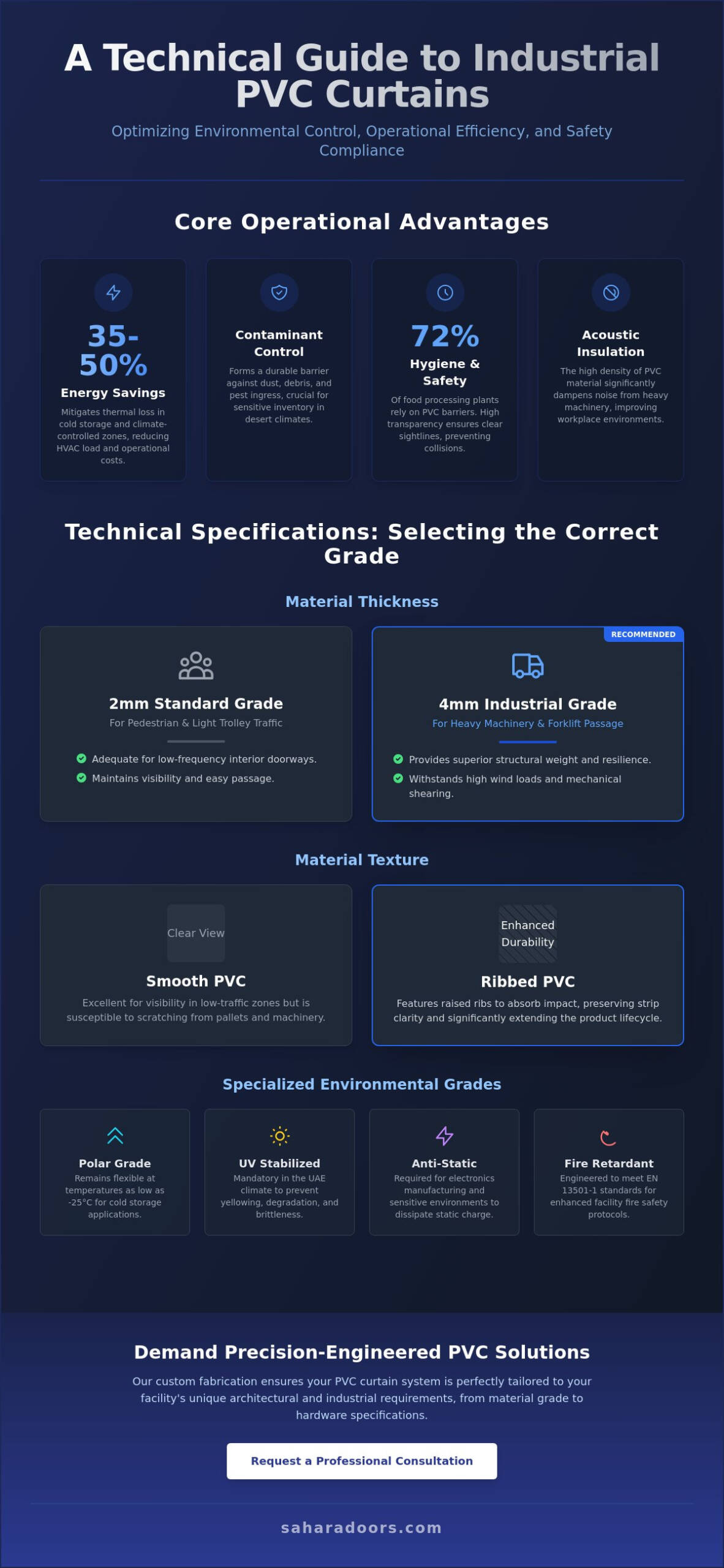
Thermal separation is the primary function in temperature-controlled logistics. These curtains function by creating a localized air pocket that blocks the exchange of indoor and outdoor air. Research indicates that in cold storage applications, installing PVC strip curtains can lead to energy savings of 35% to 50% by preventing the escape of refrigerated air. Beyond temperature, these barriers address the persistent industrial challenges of dust ingress and pest control. They act as a physical shield against airborne contaminants, which is vital for maintaining the purity of sensitive inventory in desert climates. Additionally, the density of the PVC provides a layer of acoustic insulation, significantly dampening noise pollution from heavy machinery in manufacturing zones.
Environmental Control and Energy Efficiency
Optimizing energy efficiency at loading docks requires a reduction in the overall HVAC load. Over 68% of industrial zones currently utilize WAREHOUSE PVC CURTAINS to minimize air leakage and effectively separate different climate zones within a single facility. This is particularly important for maintaining precise humidity levels required for pharmaceutical or electronics storage. A thermal bridge is a specific point in the building’s exterior where heat is transferred at a higher rate, and an open warehouse bay represents the ultimate thermal bridge if left unshielded.
Hygiene and Safety Standards
Compliance with international hygiene standards is a non-negotiable requirement for many commercial operators. Approximately 72% of food processing plants worldwide rely on PVC barriers to maintain strict hygiene zones and prevent cross-contamination. These systems are also engineered with safety in mind; the high transparency of industrial-grade PVC ensures that forklift operators maintain clear lines of sight. This visibility is crucial for preventing collisions in high-traffic areas where personnel and machinery frequently intersect. By combining environmental protection with operational safety, these curtains become an indispensable asset for any modern logistics hub.
Technical Specifications: Choosing the Right PVC Grade
Selecting the right grade for WAREHOUSE PVC CURTAINS requires a deep understanding of your facility’s specific operational environment. It isn’t a one-size-fits-all solution. Material thickness is a primary factor in longevity. While 2mm strips are adequate for pedestrian doorways or light trolley traffic, heavy machinery and frequent forklift passage demand 4mm industrial-grade PVC. This thicker variant provides the structural weight necessary to resist the “chimney effect” in high-wind areas and withstand the mechanical shearing forces of heavy tires.
Texture also plays a vital role in maintenance and safety. Smooth PVC is excellent for visibility in low-traffic areas, but it’s prone to scratching when in constant contact with pallets. Ribbed PVC features raised “ribs” that take the brunt of the impact; this preserves the clarity of the main strip and extends the product’s lifecycle. In the intense UAE climate, UV stabilization is a mandatory specification. Without it, direct sunlight causes rapid degradation, leading to yellowing and brittleness within months. For facilities managing cold chains, Polar grade PVC remains flexible at temperatures as low as -25°C, whereas standard grades would shatter under stress.
Material Composition and Resilience
Quality fabrication starts with the chemical makeup of the material. We prioritize cadmium-free PVC to ensure long-term flexibility and safety. Performance is often measured by “shore hardness,” a metric that determines how the material reacts to temperature fluctuations. A balanced shore hardness ensures the curtain remains pliable enough for easy passage but firm enough to maintain a seal. Beyond standard applications, specialized environments may require anti-static variants for electronics or fire-retardant grades that assist in complying with health and safety regulations. If your project involves specialized metalwork or unique entryways, exploring our specialized door systems can provide the precision engineering your facility needs.
Sizing and Overlap Configurations
The relationship between strip width and door height is a matter of precision engineering. Typically, a 200mm width is used for heights up to 3 meters, while 300mm or 400mm widths are reserved for taller industrial bays. Overlap percentages (50%, 75%, or 100%) determine the barrier’s strength against air pressure. A 100% overlap is critical for exterior-facing warehouse doors because it creates a double-layered seal that prevents high-velocity wind from compromising the internal climate. This configuration ensures that WAREHOUSE PVC CURTAINS remain effective even during seasonal dust storms or high-pressure weather events.
Strip Curtains vs. Sliding PVC Solutions: A Comparison
Choosing between fixed and sliding configurations is a decision that impacts both your daily operational speed and long-term maintenance budget. Traditional fixed-strip WAREHOUSE PVC CURTAINS are the industry standard for lanes with constant, high-frequency traffic. These systems use a modular design where individual strips are hung from a static rail. If a single strip is damaged by a forklift, you don’t need to replace the entire barrier; you simply swap the affected component. This modularity makes fixed systems highly cost-effective for zones where mechanical contact is inevitable.
Sliding solutions serve a different purpose. These systems allow you to move the entire PVC barrier out of the way, which is essential for bays that occasionally handle oversized loads or require unobstructed ventilation. While the initial fabrication of a sliding track system involves more complex hardware, it reduces the “drag factor” on the PVC material itself. By retracting the curtains during periods of low environmental pressure, you extend the lifespan of the strips and minimize the accumulation of industrial grime. Maintenance for sliding systems requires periodic inspection of the rollers and track lubrication, whereas fixed hangers only require occasional cleaning of the hook-on points.
Operational Flow and Traffic Analysis
Fixed strips are ideal for automated conveyor belts where a constant seal is required. However, for flexible warehouse partitioning, sliding PVC curtains offer superior versatility. We analyze your traffic patterns to determine the drag factor, which is the friction created as vehicles pass through the strips. High drag leads to faster material fatigue, so in lanes with heavy machinery, we often recommend specific track configurations to mitigate this wear and ensure your personnel move efficiently through different climate zones.
Integration with High-Speed Doors
A highly effective strategy for temperature-controlled facilities is the creation of an “airlock” system. By combining WAREHOUSE PVC CURTAINS with high speed doors, you create a dual-layered barrier. The high-speed door provides a secure, insulated seal during idle periods, while the PVC curtains maintain thermal separation during the brief moments the door is open. This hybrid approach maximizes thermal efficiency and ensures that your logistics speed isn’t compromised by environmental requirements. It’s a precision engineering solution that addresses both security and atmospheric control in a single entryway.
Professional Installation and Lifecycle Maintenance
Installing WAREHOUSE PVC CURTAINS is a precision task that begins with a comprehensive structural assessment. Unlike domestic applications, industrial headers must support significant static and dynamic loads. We begin by evaluating the lintel or header to ensure it can accommodate heavy-duty hangers without deflection. Once the structure is verified, selecting the appropriate hardware is the next critical step. Galvanized steel tracks offer excellent durability for most dry warehouse environments, while stainless steel is the mandatory choice for facilities requiring high hygiene standards or those exposed to corrosive elements.
Precision during the cutting and hanging phase determines the system’s effectiveness. Strips must be trimmed to achieve the ideal floor clearance; if they’re too long, they become a tripping hazard and collect floor debris, but if they’re too short, the thermal seal is compromised. After the initial setup, a lifecycle maintenance plan is essential. This includes a routine inspection schedule to identify worn or damaged strips before they affect operational flow. Cleaning protocols are also vital, as dust accumulation reduces transparency and can impact safety by obscuring the view of approaching machinery.
Industrial Mounting Systems
The choice of mounting system impacts how easily your team can perform modular replacements. The “Hook-On” system is highly favored for its efficiency, as it allows for rapid strip replacement without the need for specialized tools. For high-security zones or areas with extreme wind pressure, bolt-on tracks provide a more permanent, rigid alternative. A 5-meter high PVC curtain using 400mm strips requires a header capable of supporting a weight-bearing load of approximately 18kg per linear meter when configured with a 100% overlap. If you require a quote for a custom installation, you can contact our technical team for a detailed site evaluation.
Safety Inspections and Compliance
Regular safety audits help prevent accidents caused by material fatigue. Over time, exposure to industrial stress leads to cracking, curling, or a loss of transparency. Strips that have become opaque or brittle must be replaced immediately to maintain visibility for forklift operators. We also ensure that all strips are trimmed to a specific safety height above the finished floor level to avoid snagging. This maintenance mindset should extend across your facility, linking the care of your curtains to the servicing of your insulated rolling shutter systems. By treating these components as part of a holistic environmental control strategy, you ensure the longevity of your investment and the safety of your personnel.
Custom Fabricated PVC Solutions by Sahara Doors
At Sahara Doors & Metals LLC, our approach to WAREHOUSE PVC CURTAINS is rooted in our heritage of precision metalwork and high-end industrial fabrication. We don’t just provide plastic strips; we deliver engineered entry systems designed for the rigors of the UAE’s industrial landscape. Our fabrication process ensures that every component, from the heavy-duty mounting tracks to the custom-cut PVC material, meets the specific architectural requirements of your facility. This commitment to technical excellence allows us to provide solutions that are both durable and functionally superior to generic off-the-shelf products. We understand that a warehouse bay is a critical point of operational flow, so we treat every installation as a vital part of your building’s infrastructure.
The “Sahara Advantage” lies in our ability to combine specialized metallurgy with high-quality synthetic materials. While many providers focus solely on the curtain material, we recognize that the longevity of the system depends on the strength of its mounting hardware. Our in-house fabrication team produces custom brackets and tracks that are specifically engineered to support the weight and mechanical stress of industrial-grade curtains. This holistic perspective ensures that your facility benefits from a barrier that doesn’t just look professional but also stands up to years of constant forklift traffic and environmental pressure.
Why Choose Sahara Doors & Metals LLC?
With over a decade of experience in the UAE construction and industrial sectors, we’ve established ourselves as a dependable partner for contractors, architects, and facility managers. We offer access to specialized PVC strip curtains that are specifically chosen for their resilience against the region’s intense heat and airborne contaminants. Our team understands the local regulatory landscape and the technical requirements of high-end logistics hubs. We provide a level of craftsmanship and technical support that is essential for maintaining the integrity of temperature-controlled and hygiene-sensitive environments.
Request a Technical Consultation
A successful installation begins with an accurate assessment of your specific environment. Our technical experts evaluate critical factors such as wind pressure, traffic frequency, and temperature differentials to recommend the ideal material grade and overlap configuration. We provide a transparent and detailed quoting process for large-scale warehouse projects, ensuring that developers have the precise specifications needed for project compliance. Our nationwide service covers every stage of the project, from the initial technical consultation to final professional installation. Contact our technical team today for a custom warehouse solution.
Optimizing Your Industrial Environment for Long-Term Efficiency
Investing in high-grade WAREHOUSE PVC CURTAINS is a strategic move that pays dividends in reduced energy costs and improved operational safety. We’ve explored how matching material thickness to your forklift traffic and ensuring optimal overlap can transform a standard loading bay into a high-performance thermal barrier. It’s clear that the right combination of precision-engineered hardware and UV-stabilized material is essential for thriving in the UAE’s demanding industrial climate. Professional maintenance and structural assessments are not just suggestions; they’re the foundation of a safe, compliant facility.
Since 2010, Sahara Doors & Metals LLC has combined specialized metal fabrication with high-quality synthetic solutions to serve the region’s most demanding logistics hubs. Our team provides nationwide installation and technical support to ensure your specialized door systems meet the highest standards of craftsmanship. We’re committed to delivering durable, custom-tailored solutions that align with your specific traffic frequency and hygiene requirements. Let’s build a more efficient workspace together.
Request a Professional Quote for Warehouse PVC Curtains
Frequently Asked Questions
What is the best PVC strip thickness for a warehouse with heavy forklift traffic?
Heavy-duty applications require 4mm industrial-grade PVC strips to withstand the mechanical stress of constant forklift contact. This thickness provides the necessary weight to prevent excessive swaying and resists tearing under the high shearing forces of heavy machinery tires. For openings exceeding 4 meters in height, these thicker strips are essential for maintaining a stable environmental seal against external wind pressure and mechanical wear.
Can PVC curtains help reduce electricity bills in a temperature-controlled warehouse?
WAREHOUSE PVC CURTAINS act as a secondary thermal barrier that effectively isolates climate-controlled zones from ambient heat. By creating a localized air pocket at open bays, they significantly reduce the load on your HVAC systems. This optimization directly lowers electricity consumption by preventing expensive treated air from escaping while machinery or personnel transition between different facility zones, ensuring a more stable internal temperature.
How do I calculate the number of PVC strips needed for a standard warehouse door?
To determine the required quantity, divide the total opening width by the selected strip width, then account for the overlap percentage. For example, a 300mm strip with a 50% overlap effectively covers only 150mm of space per strip. We recommend consulting our technical team for precise calculations to ensure the structural header or lintel is fabricated to support the cumulative weight of the overlapping system.
What is the difference between ribbed and smooth PVC strip curtains?
Ribbed strips feature raised longitudinal ridges that absorb the impact of pallets and machinery, preventing the main surface from scratching. This design maintains long-term transparency in high-traffic forklift lanes by keeping the contact area away from the main strip body. Smooth strips are better suited for pedestrian doorways or areas where maximum visibility is required, though they’re more susceptible to surface wear in industrial zones.
Are PVC strip curtains fire-rated for industrial use?
Specific industrial-grade PVC variants are engineered to meet stringent fire safety standards, such as the EN 13501-1 classification. These fire-retardant curtains are designed to be self-extinguishing and minimize smoke production in the event of an emergency. It’s vital to specify these requirements during the fabrication stage to ensure your facility remains compliant with local civil defense regulations and your overall building safety protocols.
How often should warehouse PVC strips be replaced to maintain safety?
Replacement frequency depends on traffic volume and environmental exposure, but most WAREHOUSE PVC CURTAINS require evaluation every 12 to 24 months. You should replace individual strips immediately if they show signs of curling, deep cracking, or a significant loss of transparency. Maintaining clear visibility is a critical safety requirement for forklift operators to prevent collisions and ensure a smooth operational flow.
Do you provide specialized PVC curtains for cold storage and freezer rooms?
We provide specialized Polar grade PVC designed specifically for freezer rooms and cold storage environments. Unlike standard materials that become brittle and shatter in sub-zero conditions, Polar grade remains flexible at temperatures as low as -25°C. This resilience ensures a consistent seal at the doorway, preventing frost buildup on equipment and maintaining the integrity of the cold chain during frequent logistics operations.
Can PVC curtains be installed alongside existing rolling shutters?
PVC curtains are frequently installed alongside existing motorized rolling shutters to create a dual-barrier system for the facility. The shutter provides high-level security during idle hours, while the PVC strips maintain environmental control when the main door is open for traffic. This hybrid configuration is a precision engineering solution that maximizes both facility security and thermal efficiency without requiring significant structural modifications to the header.