Repeated garage door trouble can point to a worn-out door, but the opener or a maintenance issue may also be involved. The signs you need a new garage door aren’t always obvious, and one fault doesn’t automatically mean replacement is the right move. Still, damage, unreliable operation, or problems that keep returning deserve attention, especially when dependable access matters.
Before committing to a new door, use this checklist to identify warning signs, distinguish recurring problems from one-off issues, and prepare useful details for an assessment. Note what happens, how often it occurs, and whether your current door is manual or motorized. These observations help clarify what needs attention without assuming the cause.
Sahara Doors & Metals LLC supplies and installs residential garage doors in manual and motorized options, with custom fabrication to your specifications. A site survey and technical support help assess the door and its operation, so you can make a more informed plan for your property.
Key Takeaways
- Learn which signs you need a new garage door may include, and why one symptom alone doesn’t settle the decision.
- Describe noise, movement problems, and closure issues clearly, while remembering that symptoms alone don’t identify hidden faults.
- Compare isolated problems with recurring faults and visible damage when weighing repair against replacement.
- Record when an issue occurs, what damage you can see, and how you want the door to operate.
- Explore manual and motorized garage door options, including standard Beige and White colours and custom fabrication to your specifications.
Signs You Need a New Garage Door: Start With This Checklist
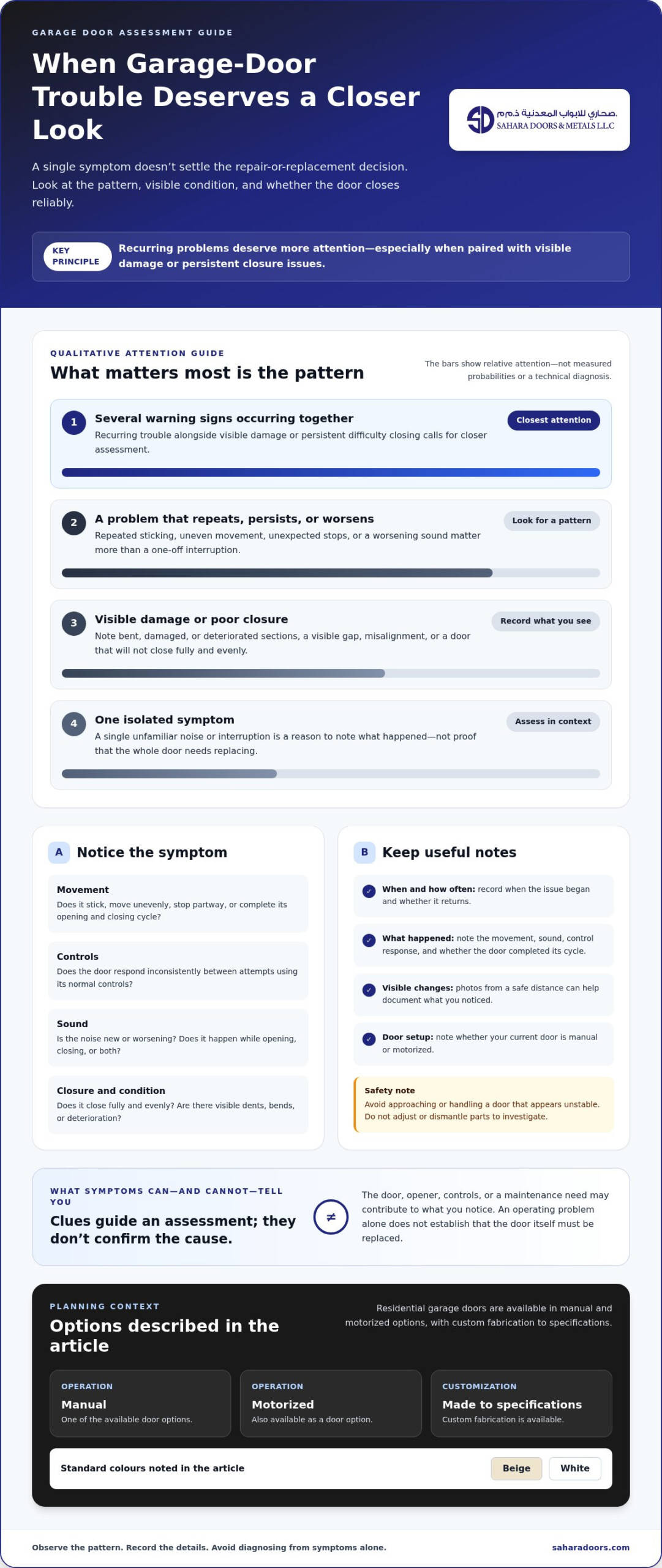
One problem doesn’t automatically mean the whole garage door needs replacing. A door may stick once or make an unfamiliar sound for a reason that can be assessed and addressed. The signs you need a new garage door matter more when they persist, worsen, or occur alongside visible damage or trouble closing. Start by noting what you observe instead of guessing at the cause.
- Visible damage: Door sections are bent, damaged, or visibly deteriorated.
- Unreliable movement: The door repeatedly sticks, moves unevenly, or stops unexpectedly.
- Recurring issues: The same disruption returns after the door has been operating normally.
- Poor closure: The door no longer closes fully or sits evenly when closed.
Recurring problems are worth a closer assessment when they affect reliable operation, especially alongside visible damage or persistent closure problems. This is a reason to investigate, not a diagnosis. The door, opener, controls, or maintenance needs may all contribute to what you notice.
Which visible signs deserve attention?
Look for clear changes in the door sections, such as dents, bends, or deterioration. Notice whether the door closes evenly and fully. If it leaves a visible gap or appears misaligned when closed, record what you see rather than assuming why it is happening. For a general overview of door types and mechanisms, see Garage door. Take photos from a safe distance and note when you first noticed the change. Avoid approaching or handling a door that appears unstable.
What changes in everyday operation should you notice?
Pay attention to repeated sticking, uneven movement, or unexpected stops during normal use. A new or worsening noise is a reason to investigate, but it doesn’t prove the door needs replacing. Note how often the issue happens, whether the door completes its opening or closing cycle, and whether the behaviour changes over time. A pattern that repeatedly disrupts daily access deserves more attention than a one-off interruption.
Several warning signs together deserve closer attention than one occasional symptom. Recording visible changes and operating patterns gives a technical team a clearer picture and helps assess the door as a whole before repair or replacement is considered.
How Damage, Noise, and Unreliable Movement Point to Different Problems
A symptom can be a clue, but it doesn’t reveal the cause on its own. Trouble may involve the door, opener, controls, or a maintenance need. A checklist can help you describe what is happening, but it can’t diagnose hidden components. This matters when weighing the signs you need a new garage door: an operating problem doesn’t automatically mean the door itself must be replaced.
Symptom | What to observe and record
The door doesn’t move as expected | Note whether it sticks, moves unevenly, stops partway, or completes its cycle.
The controls respond inconsistently | Record whether the door responds differently between attempts when using its normal controls.
A new or worsening sound | Describe when the noise occurs, such as during opening, closing, or both.
The door doesn’t close as expected | Note whether it closes fully and evenly, and whether the issue repeats.
Before choosing replacement, consider the timing, frequency, and effect of recurring symptoms. These details help clarify whether the door or another part of its operation needs attention. They guide an assessment but aren’t a definitive technical diagnosis.
Is the door itself failing, or could the opener be involved?
Notice the difference between the door’s movement and the system’s response to a normal control. For example, record whether the control appears to respond but the door stops, or whether the response itself is inconsistent. These observations don’t confirm which component is responsible. Don’t try to adjust or dismantle parts to find out. Note when the problem happens and whether it returns.
Why do noise and uneven movement matter?
A change in sound or movement is a reason to pay attention, not proof that replacement is needed. A one-time noise differs from a sound that becomes more noticeable or occurs alongside repeated uneven movement. When movement is unpredictable, it can be harder to rely on the door for everyday access. If symptoms persist, worsen, or affect closure, arrange an assessment of the complete door and its operation.
Keep a short record of what happened, when it occurred, and whether the door opened and closed as expected. This gives a technical team useful context and helps distinguish an isolated interruption from an ongoing pattern. If you are considering replacement, explore garage door options.
Garage Door Repair or Replacement? Compare the Signs Before Deciding
A useful decision starts with the pattern, not a single symptom. One interruption or recently noticed noise may call for assessment before you consider replacing the door. Repeated operating problems alongside visible damage or persistent difficulty closing can make replacement worth discussing. The signs you need a new garage door should be considered in context, since the opener, controls, or maintenance may affect operation without meaning the door itself has failed.
| What you notice | What it may mean for your decision |
|---|---|
| One isolated symptom | Assess it before deciding. A one-off interruption doesn’t establish that replacement is needed. |
| A fault that keeps returning | Track its frequency and effect on everyday access. Recurrence deserves closer assessment. |
| Visible damage | Consider its extent and whether the door still operates and closes as expected. |
| Unreliable closure | Persistent difficulty closing fully or evenly warrants assessment of the complete door and its operation. |
When might inspection or maintenance be the sensible first step?
If a symptom has appeared once or only recently, an inspection can help distinguish a concern with the door from one involving its operating system or maintenance needs. Describe what happened and whether it has repeated. A service issue may be straightforward to address and doesn’t automatically mean the door needs replacing. For general upkeep context, read about garage door maintenance and safety tune-ups.
When should you seriously consider a new garage door?
Give replacement serious consideration if reliability problems keep disrupting access, visible damage is substantial, or the door persistently fails to close as expected. Several ongoing issues can strengthen the case, but they don’t make replacement automatic. An assessment of the door as a whole can clarify the options before you decide. For planning, explore garage door options.
In practical terms, an isolated symptom may call for assessment, while a continuing pattern that affects movement or closure calls for a fuller evaluation. Understand the condition of the door and its operation before choosing repair or planning replacement. Not every fault means a new door is needed.
What to Check Before Replacing Your Garage Door
A practical replacement plan starts with useful observations and clear priorities. The signs you need a new garage door can prompt an assessment, but the next decision is what a replacement needs to do for your property and routine. Work through these steps before comparing options.
1. Document symptoms. Note what happens, how often, and under what circumstances. Record whether the door sticks, moves unevenly, stops unexpectedly, makes a new sound, or fails to close fully. Include how the issue affects everyday access.
2. Assess your needs. Consider the closure concerns you want addressed, the door’s visible condition, and how it fits the property. A site survey helps assess the installation setting and tailor the door to your requirements.
3. Plan how the door should operate. Decide whether manual or motorized operation better suits your household’s routine. Consider who uses the door and what feels practical for regular access.
4. Review appearance and options. Consider how the door should look alongside the property. Standard Beige and White colours are available, and custom fabrication can be planned to your specifications.
What information helps make a replacement plan practical?
Bring together your notes on recurring symptoms, closure concerns, visible damage, and preferred operation. For example, distinguish a door that stops during opening from one that reaches the closed position unevenly. These details make the discussion specific without relying on assumptions about the cause. Also note appearance preferences, including Beige or White, and any custom fabrication requirements.
How should you compare replacement options?
Compare manual and motorized operation, appearance, and suitability for the property rather than focusing on one feature alone. A site survey helps connect the property’s requirements with a suitable plan, while custom fabrication allows the door to be made to your specifications. Explore residential garage doors as part of reviewing options. A technical team supports the process through the survey, installation, and post-handover stages.
Clear notes and priorities make it easier to plan a practical next step. Focus on how the door needs to work, which concerns you want addressed, and what appearance suits your property.
Plan a Dependable New Garage Door With Sahara Doors
Once an assessment points towards replacement, choose a door that suits both the property and its everyday use. Sahara Doors & Metals LLC supplies and installs manual and motorized garage doors. A site survey helps shape the plan around your property and requirements, rather than treating every opening as the same.
What can you expect when planning a Sahara Doors garage door?
Start with the operation that fits your routine, then consider how the door should look. Standard colours are Beige and White, and custom fabrication to your specifications is available. Sahara Doors’ technical team conducts site surveys, installs doors, and provides post-handover technical support. Troubleshooting training and Annual Maintenance Contracts are also available, supporting you beyond installation.
A considered plan looks at the door as a whole. The symptoms you recorded, how you use the entrance, and your appearance preferences all help inform the discussion. The signs you need a new garage door can point towards replacement, but matching the new door to your functional and visual needs is an important part of moving forward.
How do you take the next step?
Bring your symptom checklist and property requirements into the discussion. Note recurring interruptions, closure concerns, visible damage, and whether manual or motorized operation better suits your routine. Include colour preferences and any custom fabrication requirements. A site survey provides an opportunity to consider these details together and plan a suitable option for your application.
Explore Sahara Doors’ garage door options and discuss your project requirements with the team. Clear observations and priorities help guide the next step towards a suitable replacement plan.
Choose Your Next Garage Door With Confidence
One symptom doesn’t automatically mean it’s time for a new door. Look for patterns: recurring movement problems, visible damage, or trouble closing deserve closer assessment, while an isolated issue may have another explanation. Recording what happens can help clarify whether repair or replacement is the practical next step.
If replacement is appropriate, consider how you want the door to operate and look. Sahara Doors & Metals LLC offers manual and motorized garage doors, with custom fabrication to your specifications. Site surveys, installation, technical and post-handover support, troubleshooting training, and Annual Maintenance Contracts help you plan beyond the initial selection. The signs you need a new garage door are most useful when considered alongside the condition of the whole door and your property’s requirements.
With clear observations and a considered plan, you can take the next step towards dependable access with confidence.
Frequently Asked Questions
What are the clearest signs you need a new garage door?
The clearest signs are recurring movement problems, significant visible damage, or persistent difficulty closing the door fully and evenly. Several issues occurring together deserve closer assessment than one isolated interruption. These signs don’t prove replacement is the only answer, since the opener, controls, or maintenance needs may also affect operation. Record what you notice and how often it happens, then have the complete door and its operation assessed.
Is a noisy garage door a sign that it needs replacing?
Not necessarily. A new or worsening sound is a reason to investigate, but noise alone doesn’t establish that the door needs replacement. Note when the sound occurs, whether it repeats, and whether movement or closure has also changed. One unusual noise is different from ongoing noise accompanied by unreliable operation. If the sound persists, worsens, or comes with difficulty closing, an assessment can help clarify the next step.
Can a garage door be repaired instead of replaced?
Yes. Repair may be appropriate when an assessment finds an isolated service issue and the door remains suitable for continued use. Replacement may be worth considering if problems recur, visible damage is significant, or reliable closure remains a concern. An assessment of the whole door and how it operates helps distinguish these possibilities. Don’t treat every malfunction as a reason to replace the entire door before evaluating its condition.
How do I know whether the opener or the garage door itself is failing?
You can’t reliably identify hidden component faults from symptoms alone. Note whether the door moves unevenly or stops, whether the controls respond consistently, and whether the issue happens on every attempt. These observations help describe the problem but don’t confirm its source. The door, opener, controls, or maintenance needs may contribute. An assessment can evaluate the complete system and help clarify whether the door itself needs attention.
Should I replace my garage door if it no longer closes properly?
A door that repeatedly fails to close fully or evenly should be assessed, but replacement isn’t automatic. Record when the closure problem occurs and whether it happens consistently. The cause may relate to the door or another part of its operation, so avoid guessing or attempting adjustments to components. An assessment of the complete door can clarify whether a service issue may be addressed or replacement is worth considering.
What should I consider when choosing a replacement garage door?
Consider the property’s requirements, your preferred operation, appearance, and how the door will be used day to day. Sahara Doors & Metals offers manual and motorized garage doors in standard Beige and White, with custom fabrication to your specifications. A site survey helps tailor the plan to the property. Also consider installation, technical and post-handover support, troubleshooting training, and the availability of Annual Maintenance Contracts.