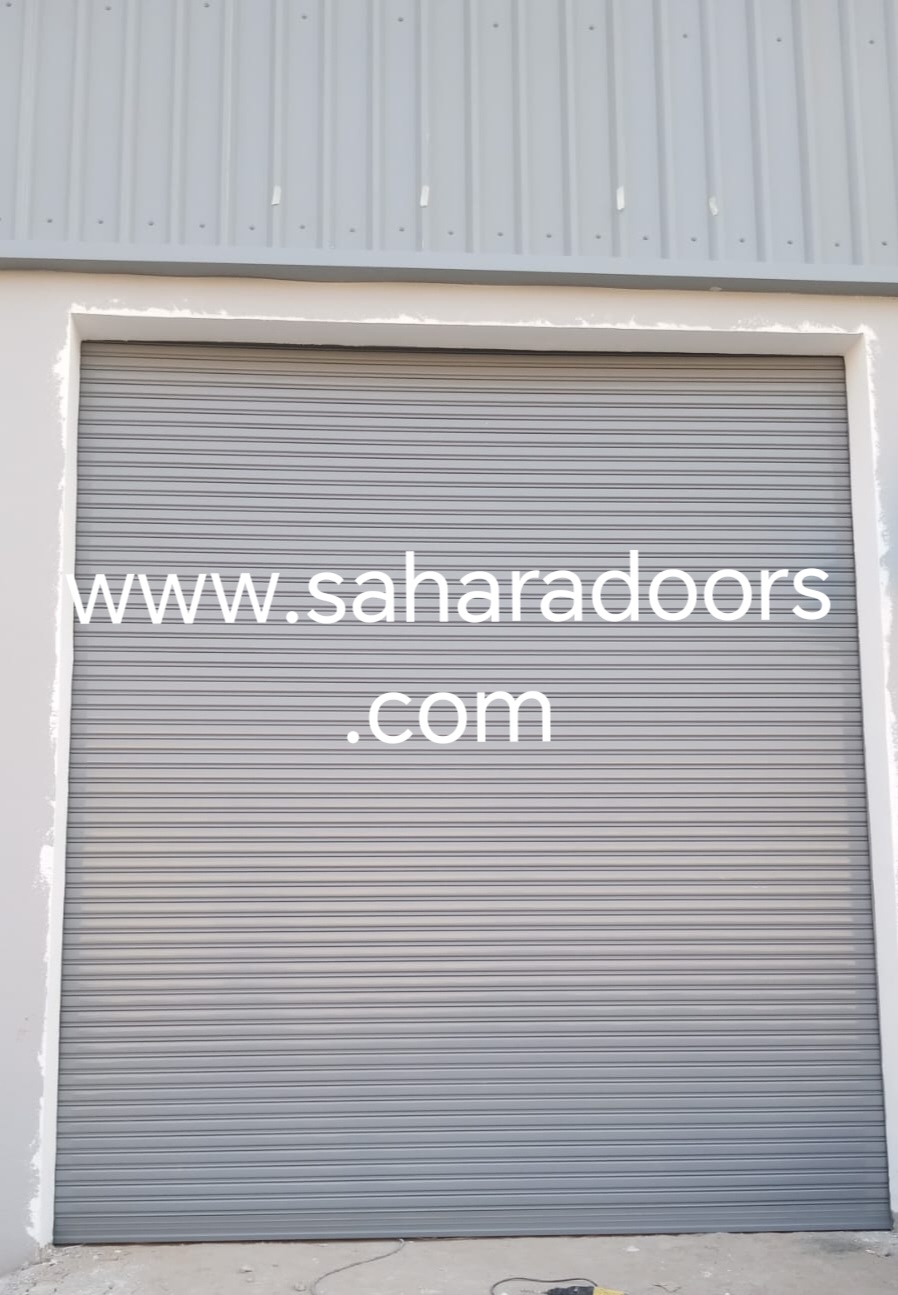
Choosing ROLLER SHUTTERS is not just a matter of picking a material. A shutter for a warehouse entrance may not suit a retail frontage or a home, because opening size, visibility and daily access needs can differ.
When comparing GI, aluminium and polycarbonate, consider what you need the shutter to do when it is closed. GI shutters are made from zinc-coated galvanized iron for rust and corrosion resistance. Transparent polycarbonate shutters provide security while allowing light and visibility. This guide compares the practical differences and helps you match the shutter type and operating method to residential, retail or industrial use.
Sahara Doors & Metals LLC manufactures, supplies and installs rolling shutters in a range of sizes, finishes and colours, customised to suit specific openings. The range includes GI, aluminium, polycarbonate, perforated and window rolling shutters, with manual or motorized operation. Site surveys, installation and post-handover support help take a project from specification through to use.
Key Takeaways
- Start with the opening’s purpose and everyday access pattern to narrow down a suitable shutter type.
- Compare GI, aluminium and polycarbonate according to their stated properties, visibility needs and intended application.
- Choose manual or motorized ROLLER SHUTTERS DUBAI based on how the opening is used and how you want to operate it.
- Set your priorities for privacy, visibility, material and operation before specifying a shutter.
- Sahara Doors & Metals LLC manufactures, supplies and installs rolling shutters customised to project requirements.
What Rolling Shutters Do: Security, Access and Everyday Use
A rolling shutter is a movable barrier that raises to allow access and lowers to close an opening. Depending on the product and application, it can help control entry, provide privacy and secure an opening when it is not in use. For a general overview of shutter applications, types and components, see the Roller shutter Wikipedia article.
The right design depends on the opening’s purpose. A home may need privacy, while a shopfront may need a balance between closing the frontage and maintaining visibility into the space. An industrial opening has its own access requirements, shaped by what passes through and how regularly it is used. One shutter design does not suit every situation.
Where rolling shutters are commonly used
At home, rolling shutters can suit garage and window openings, as well as other access points where a roll-up barrier works for the space. In shops and commercial storefronts, they provide a way to close the frontage outside operating hours. The material and design should reflect whether visibility or privacy matters more. Warehouses, factories and other industrial facilities use shutters for openings with different access patterns and operational needs.
Some entrances need a different access solution. An opening designed for frequent pedestrian passage, for example, has different everyday demands from a shuttered garage or service entrance. Sahara Doors & Metals also offers automatic door systems for access needs beyond rolling shutters.
What to establish before comparing shutter options
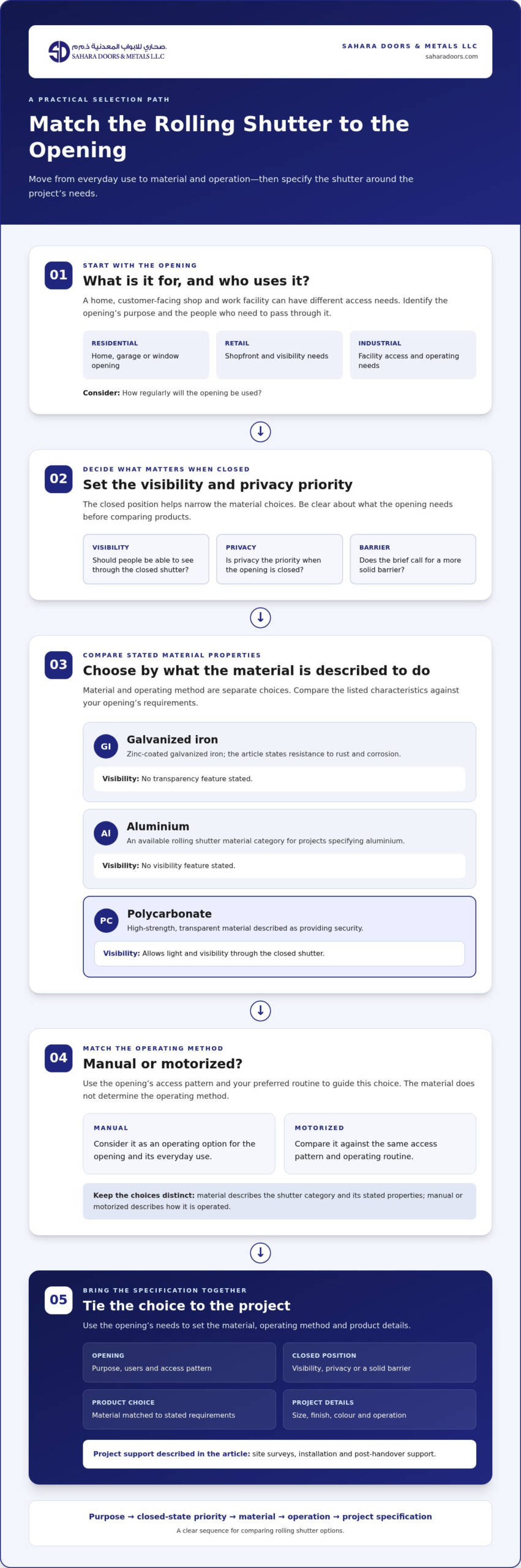
Start with the opening’s purpose and the people who use it. Is it for a home, a customer-facing shop or a work facility? Do people pass through regularly, or is the opening mainly closed between periods of use? These details help clarify which operating method to compare, rather than assuming manual or motorized is automatically the better fit.
Next, decide what matters when the shutter is closed. Do you need visibility through it, greater privacy or a more solid barrier? The answer helps narrow the shutter type. With ROLLER SHUTTERS DUBAI, matching the product to the opening and its everyday use is a more useful starting point than choosing by name alone.
Use these questions to frame your decision:
- Purpose: What does the opening serve, and who needs access?
- Closed position: Should the shutter allow visibility, provide privacy or form a solid barrier?
- Use pattern: How often will it be opened and closed, and what operating method suits that routine?
Clear answers make the next comparison more practical. You can assess materials and operation against the actual demands of the opening, rather than treating every home, storefront and facility alike.
Rolling Shutter Materials Explained: GI, Aluminium and Polycarbonate
Compare materials according to the property that matters to your opening. GI, aluminium and polycarbonate have different stated characteristics, so avoid assuming that one material shares another’s features. Use the table to identify a suitable direction, then consider the opening’s purpose and project requirements.
| Material | Stated property | Visibility | Relevant application |
|---|---|---|---|
| GI | High-quality galvanized iron coated with zinc for rust and corrosion resistance | No transparency feature stated | Openings where a GI shutter suits the project requirements |
| Aluminium | Available as a rolling shutter category | No visibility feature stated | Projects specifying an aluminium shutter |
| Polycarbonate | High-strength transparent material that provides security | Allows light and visibility | Openings where visibility through the closed shutter is required |
In brief: GI shutters are made from zinc-coated galvanized iron, while polycarbonate shutters are transparent and allow light and visibility.
When GI rolling shutters are a practical option
GI is worth considering when its galvanized iron construction and resistance to rust and corrosion suit the project brief. Sahara Doors & Metals offers GI shutters with manual or motorized operation. GI options include perforated, grill-type and heavy-duty industrial variants, so the opening’s purpose and visibility needs can guide the product discussion. See the GI rolling shutter range for more information.
Keep material properties separate from operating choices and other project requirements. A shutter’s material helps determine its physical characteristics, while manual or motorized describes how it is operated. Consider both as part of the specification, rather than assuming that choosing a material also determines the operating method.
When visibility makes polycarbonate relevant
Polycarbonate is a suitable option to consider when visibility through the closed shutter is part of the brief. This distinction can help narrow the choices for a shopfront or another opening where light and visibility matter. Be specific about what needs to remain visible, then assess other requirements separately, including the opening’s purpose and preferred operating style.
Aluminium is another available category. Compare it against the project’s requirements without attributing GI’s stated corrosion resistance or polycarbonate’s transparency to it. For ROLLER SHUTTERS DUBAI, a clear comparison means matching known material characteristics to the opening, then considering the dimensions, finish and operation needed for the project.
Manual or Motorized Rolling Shutters: Compare Operation and Fit
Once you understand the opening and its purpose, decide how it will be operated. Manual and motorized shutters can both suit an opening. The better fit depends on its access pattern and who will use it, so focus on the everyday routine rather than assuming automation is always preferable.
For a shutter opened occasionally, a straightforward operating method may be enough. At an entrance opened and closed repeatedly, convenient access may carry more weight. Consider the opening’s size and use, as well as how often people need to operate it, before choosing.
How to assess manual operation
Manual operation is available for rolling shutters. Before selecting it, consider who will operate the shutter and how often it will be opened or closed. Is one person responsible, or will different users need access? These questions help establish whether manual operation suits the opening and its routine.
When motorized operation may suit the use
Motorized operation may suit an opening where convenient access is important, particularly when it is used repeatedly as part of a regular routine. Weigh it against how often the shutter moves and who needs to operate it. Sahara Doors & Metals LLC offers motorized rolling shutters, allowing you to include the preferred operation in your project specification.
Use the opening’s normal schedule to make the comparison concrete. A shutter opened only as needed may have different priorities from one used throughout the workday. Ask yourself:
- Who operates it? Consider the people responsible for opening and closing the shutter.
- How often is it used? Map the routine across a typical day, not just an occasional busy period.
- What matters most? Decide whether manual operation meets the need or motorized operation better suits your preference for convenience.
These questions separate the choice of material from the choice of operation. Material addresses the opening’s physical and visibility requirements; manual or motorized operation describes how people access it. Treat them as related but distinct decisions. A preference for one material does not automatically determine the operating method.
For ROLLER SHUTTERS DUBAI, the right fit comes from aligning the opening, its access pattern and the preferred operating method. Sahara Doors & Metals manufactures, supplies and installs rolling shutters with manual or motorized options, customised to project requirements. Define the routine first, then compare the operating choices against it. A clear brief keeps the decision practical for a home, shop or facility.
How to Specify a Rolling Shutter for Your Opening
A useful shutter brief starts with the opening, not a preferred material or operating style. Record what the opening is for, how it fits into the building and what you need the shutter to do. This gives the technical team a clear basis for shaping a solution around the project.
Shutter selection depends on the opening’s requirements and intended use. Use this checklist to organise the key details before a project survey:
- Describe the opening and its purpose. Record its dimensions and whether it serves a residential, commercial or industrial application. Note what passes through it and who needs access.
- Set your visibility and privacy priorities. Decide whether you want to see through the closed shutter, keep the opening private or prioritise a solid barrier. This helps narrow the material options.
- Choose a material direction. Consider GI, aluminium or polycarbonate in relation to the opening’s requirements. For example, visibility through a closed shutter may make polycarbonate relevant, while GI has its own stated material properties.
- Record finish and colour preferences. Note how the shutter should complement the surrounding space. Sahara Doors & Metals offers shutters in various finishes and colours.
- Describe the operating routine. State whether you prefer manual or motorized operation and how the shutter will be used during a typical day. Include who will operate it and how frequently access is needed.
Information that shapes a suitable shutter
Bring these details together rather than treating them as separate decisions. A home window, a shop entrance and an industrial opening can have different dimensions, access patterns and visibility needs. A concise brief covering the application, opening measurements, material preference, finish, colour and operating style gives the project team practical information for developing a tailored option.
Sahara Doors & Metals offers rolling shutters in various sizes, finishes and colours, customised to suit specific openings. A site survey helps assess the project requirements as a whole. The technical team conducts site surveys to shape customised shutter solutions around the opening and its intended use.
From site survey to installation
The survey connects the opening’s requirements with product choice and project scope. Sahara Doors & Metals LLC manufactures, supplies and installs rolling shutters for residential, commercial and industrial applications. Technical assistance and post-handover support are part of the service, carrying the project from specification through installation and beyond.
Clear information helps develop a suitable supply and installation plan. For ROLLER SHUTTERS DUBAI, prepare the opening’s purpose, dimensions, visibility and privacy priorities, material preference, finish and operating routine. This gives the survey and technical discussions a focused starting point.
Sahara Doors & Metals Rolling Shutters: From Product Choice to Support
A suitable shutter project brings product choice and opening requirements together. Sahara Doors & Metals LLC manufactures, supplies and installs rolling shutters for residential, commercial and industrial applications. Its range includes GI, aluminium, polycarbonate, perforated and window rolling shutters, with manual or motorized operation. Shutters are available in various sizes, finishes and colours and can be customised to suit specific openings.
The range lets the project discussion focus on how the opening will be used. A requirement for visibility, for example, calls for a different consideration from a preference for privacy. Material, operating style, dimensions and finish can then be assessed together as parts of a tailored solution.
What the project service includes
The process can start with a site survey, allowing the technical team to understand the opening and its intended application. Site surveys and technical support help shape a solution around the project details. This matters in residential, commercial and industrial settings, where opening dimensions and access needs vary.
Sahara Doors & Metals’ project scope includes manufacturing, supply and installation. Shutters can be customised for specific openings, with size, finish, colour and operating preference considered in relation to the client’s requirements. Installation is followed by post-handover support and technical assistance, extending the process beyond product selection.
Selected project experience includes rolling shutter work for Amazon Facility and Etihad Rail Maintenance Centre. Each opening has its own requirements, so a site survey and a clear project brief help connect the product choice to its intended use.
Take the next step with a tailored shutter solution
To start a focused discussion, gather the opening’s dimensions and purpose, then note your preferred material, visibility or privacy needs, finish and operating style. Include whether the project is residential, commercial or industrial. Technical support and a site survey can help develop a solution shaped around the opening rather than relying on a one-size-fits-all approach.
For ROLLER SHUTTERS DUBAI, Sahara Doors & Metals brings product selection, customised manufacturing, supply and installation into one project process. Explore the shutter option that best matches your opening and requirements.
Explore GI rolling shutter solutions
Move Your Rolling Shutter Project Forward
A good project decision should work for the opening and the people who use it in their everyday routines. Before taking the next step, consider how the space is used and which priorities matter most: controlled access, privacy, visibility or ease of operation. That perspective keeps the discussion focused on practical needs as well as appearance.
For ROLLER SHUTTERS DUBAI, a clear description of your opening and its intended use is a constructive starting point. Bring forward the requirements that matter to your home, storefront or facility. Sahara Doors & Metals can shape a shutter solution around those needs, with support from planning through to installation and after handover.
Prepare your project brief and take the next step toward a rolling shutter suited to the way you use the space.
Frequently Asked Questions
Can rolling shutters be customised to fit different openings?
Yes. Sahara Doors & Metals LLC offers rolling shutters in various sizes, finishes and colours, customised to suit specific openings. If a property has more than one shutter, describe each opening separately rather than treating them as identical. Note finish preferences for each one, too. This gives the project team a clear picture of how the shutters should suit the individual openings and the wider property.
Are GI rolling shutters resistant to rust and corrosion?
Yes. GI shutters are made from galvanized iron coated with zinc, which provides resistance to rust and corrosion. When preparing a project brief, describe the opening’s setting and intended use alongside your material preference. This helps the technical team consider the stated material property in the context of the project.
Do polycarbonate rolling shutters allow light and visibility?
Yes. Polycarbonate shutters are made from high-strength transparent material that provides security while allowing light and visibility. If you are considering this option, describe what needs to remain visible through the closed shutter and why it matters for the opening. This helps clarify the role visibility plays in the project brief.
Are rolling shutters available with manual and motorized operation?
Yes. Sahara Doors & Metals LLC offers both manual and motorized rolling shutters. To make the choice more specific, note who will operate the shutter and describe a typical access routine, including how often it is used. This helps frame the preferred operating style as part of the project requirements.
Are rolling shutters suitable for homes as well as commercial and industrial properties?
Yes. Rolling shutters are used in residential, commercial and industrial applications. If you are planning shutters for several openings, identify each one and its role separately in the project brief. For example, distinguish a window opening from a main access point, even when both are in the same property. An opening-by-opening description keeps the product discussion focused on the actual project.
Do rolling shutters require a lot of maintenance?
Rolling shutters from Sahara Doors & Metals LLC are designed for low maintenance and long service life. For a useful project discussion, describe how the shutter will be used and note any operational requirements. Sahara Doors & Metals LLC provides technical assistance and post-handover support as part of its service.
What happens after a rolling shutter site survey?
The survey helps the technical team understand the opening and the project requirements. Sahara Doors & Metals LLC then manufactures, supplies and installs the rolling shutter solution tailored to the project. Have the opening details and intended use ready so the technical discussion can focus on the requirements that matter.